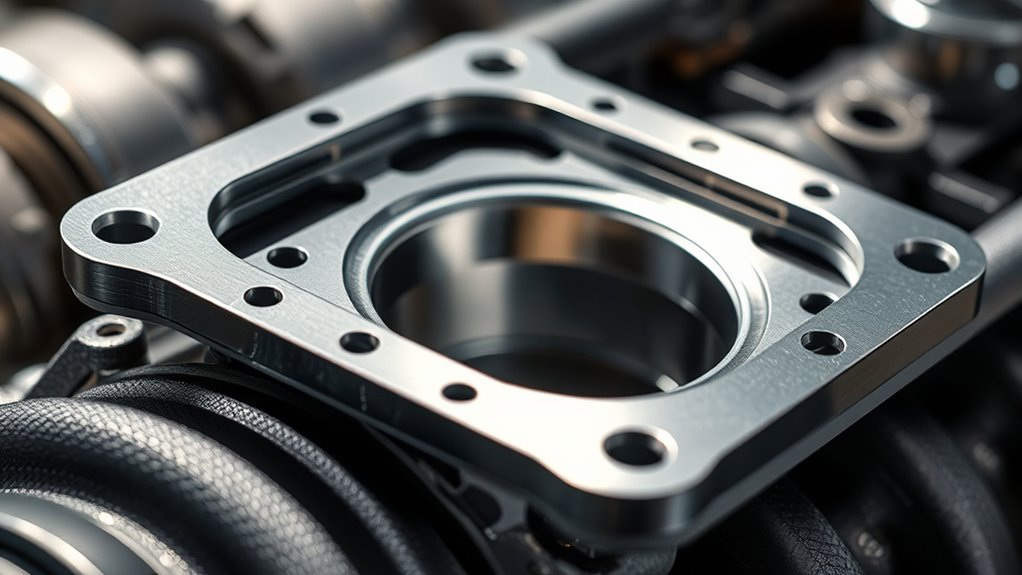
When selecting a gasket for high-boost applications, prioritize materials like multi-layer steel (MLS) that can handle extreme pressure and heat reliably. Make certain the gasket is rated for high-boost environments and compatible with your engine’s fluids. Proper torque application in a crisscross pattern is vital for a secure seal. Choosing the right material and installation method helps prevent leaks and damage. Keep exploring to discover more tips for peak gasket performance under high-stress conditions.
Key Takeaways
- Choose multi-layer steel (MLS) gaskets for durability under high pressure and heat.
- Verify gasket material compatibility with engine fluids and high-temperature conditions.
- Follow manufacturer’s torque specifications precisely to ensure proper sealing.
- Use crisscross tightening patterns for even gasket compression and longevity.
- Select gasket materials rated for high-boost environments to prevent leaks and failures.

Are you choosing the right gasket for your application? When dealing with high-boost setups, selecting the proper gasket is critical to guarantee reliable performance and prevent costly damage. The first thing you need to consider is material compatibility. High-boost engines generate extreme pressure and heat, so your gasket material must withstand those conditions without degrading or losing sealing integrity. For instance, materials like multi-layer steel (MLS) are popular because they handle high pressure and temperature well, offering durability and a reliable seal. Compressed fiber gaskets with metal inserts can also be effective, but make sure they are rated for high-boost environments. Avoid materials that soften or break down under intense heat, as that can lead to leaks or gasket failure. Always check the manufacturer’s specifications to confirm that the gasket material is compatible with the fluids, temperatures, and pressures specific to your application.
Torque specifications are equally crucial when installing your gasket. Proper torque ensures that the gasket is compressed enough to create a tight seal without over-tightening, which can damage the gasket or the mating components. Too little torque, and you risk leaks; too much, and you could warp the surfaces or cause the gasket to fail prematurely. High-boost applications often demand precise torque values, as the increased pressure demands a more careful installation process. Use a calibrated torque wrench, and follow the manufacturer’s recommended torque settings closely. When tightening bolts, do so in a crisscross pattern to ensure even pressure distribution. Also, think about the gasket’s thickness and the gasket surface finish, as these factors influence how much torque is needed for an effective seal. Some high-performance gaskets come with specific torque guidelines to optimize their sealing capabilities, so don’t ignore these instructions. Proper torque not only helps achieve a secure seal but also extends the gasket’s lifespan, saving you time and money on future repairs.
In high-boost scenarios, the combination of suitable material choice and precise torque application makes all the difference. Take the time to research and select a gasket that matches your engine’s demands. Double-check material compatibility to ensure it can take the heat and pressure, and always adhere to torque specifications during installation. Doing so will help you maintain a reliable seal, prevent leaks, and ultimately, keep your engine running at peak performance under demanding conditions. Remember, the right gasket and proper installation are your best defenses against the intense environment of high-boost applications.
Frequently Asked Questions
How Do Temperature Fluctuations Affect Gasket Performance in High-Boost Engines?
Temperature fluctuations can considerably impact gasket performance by causing thermal expansion and contraction, which may lead to leaks or gasket failure. When temperatures rise, materials may degrade faster, reducing their sealing effectiveness. Conversely, sudden cooling can cause the gasket to contract, losing its grip. To maintain reliability, you should choose gaskets with materials resistant to thermal expansion and degradation, ensuring they withstand temperature swings in high-boost engines.
What Materials Are Best for Gaskets Under Extreme Pressure Conditions?
Your best bet for extreme pressure conditions is using materials with unmatched durability like multi-layer steel or graphite. These materials withstand the punishing forces, guaranteeing sealing effectiveness even under the most intense conditions. They resist deformation, heat, and pressure, making them almost indestructible in high-boost engines. By choosing these robust options, you ensure your gasket performs flawlessly, no matter how fierce the engine’s demands become.
How Can I Ensure Gasket Compatibility With Turbocharger Components?
You can guarantee gasket compatibility with turbocharger components by performing thorough material testing to confirm it withstands high temperatures and pressures. Additionally, follow proper installation techniques, such as cleaning surfaces and applying even torque, to prevent leaks. Regularly inspect the gasket during maintenance to catch any signs of wear early. These steps help maintain peak performance and prevent damage to your turbocharger system.
What Maintenance Practices Extend Gasket Lifespan in Boosted Applications?
To extend gasket lifespan in boosted applications, regularly perform gasket inspection for signs of wear or damage. Use proper sealing techniques during installation to guarantee a secure fit and prevent leaks. Keep the turbocharger system clean and maintain proper torque specifications. Avoid rapid temperature changes and over-boosting, which can stress gaskets. Consistent maintenance and careful handling help optimize gasket durability and prevent costly failures in high-boost environments.
Are There Specific Gasket Designs Optimized for High-Boost Systems?
Yes, there are gasket designs optimized for high-boost systems. Look for gaskets with enhanced gasket sealing features, such as multi-layered or textured surfaces, to withstand increased pressures. Material selection is essential; choose high-temperature, high-strength materials like graphite or metal composites that resist deformation. These designs and materials ensure reliable sealing under extreme boost pressures, reducing leaks and maintaining system integrity in high-performance applications.
Conclusion
Choosing the right gasket is like finding the perfect key for a lock; it guarantees everything fits tightly and works smoothly. I once saw a high-boost turbo setup fail because of a mismatched gasket, leading to costly repairs. Remember, investing time in proper gasket selection isn’t just about sealing; it’s about preventing leaks and downtime. When you select wisely, you’re securing reliability, just like fitting a key perfectly ensures smooth operation every time.