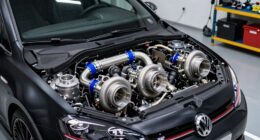
Ignition timing is about when your engine sparks the air-fuel mixture in relation to the piston’s position. Proper timing boosts power, fuel efficiency, and smooth running. Too much advance causes knocking or pre-ignition, risking damage, while too little reduces power and increases pollution. Finding the right balance is key to safe, efficient performance. If you want to understand how to fine-tune this critical aspect, there’s more to explore below.
Key Takeaways
- Proper ignition timing maximizes engine power and efficiency by igniting the air-fuel mixture at the optimal moment before TDC.
- Advancing spark timing increases power but risks knocking, while retarding it reduces power and increases emissions.
- Knock occurs when combustion happens prematurely due to excessive spark advance, potentially damaging the engine.
- Fine-tuning ignition timing balances maximum power output with engine safety and longevity.
- Modern engine control systems automatically adjust spark advance to optimize performance and prevent knocking.
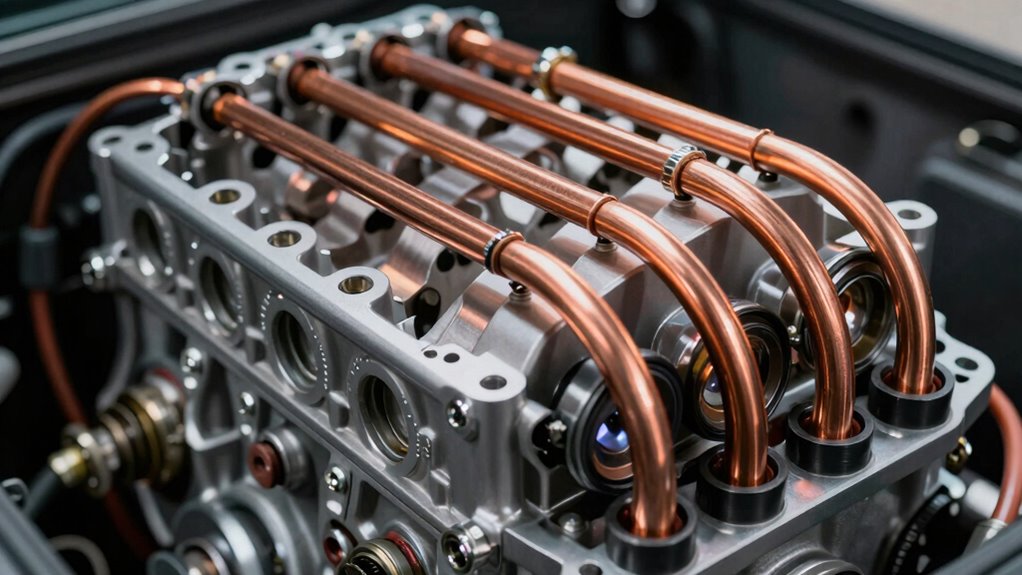
Have you ever wondered how your engine fires exactly at the right moment? It all comes down to ignition timing, a vital factor that influences your vehicle’s power, efficiency, and overall health. One of the key aspects of ignition timing is spark advance, which refers to how far before the piston reaches top dead center (TDC) the spark ignites the air-fuel mixture. When spark advance is correctly set, it allows the combustion process to occur at the ideal point, maximizing combustion efficiency. This means your engine can generate more power with less fuel, providing smoother acceleration and better fuel economy. However, if the spark is too advanced, it can cause knocking—a knocking or pinging sound that indicates knocking or pre-ignition—and potentially damage your engine. Conversely, if the spark is too retarded, power drops, and emissions increase because the combustion process is less complete.
Understanding spark advance is vital because it directly affects how efficiently your engine runs. When ignition timing is properly calibrated, the combustion process occurs at just the right moment, allowing the expanding gases to push the piston down with maximum force. This precise timing ensures that each cylinder produces the most power possible, which improves acceleration, throttle response, and fuel efficiency. If you’re manually adjusting your ignition timing or using a vehicle with an electronic ignition system, setting the spark advance correctly is essential. Too much advance can cause knocking and engine damage, while too little reduces power and increases fuel consumption. Many modern engines automatically adjust spark advance based on sensor inputs to maximize performance under varying conditions, but understanding the basics helps you appreciate the fine line engineers walk to balance power and safety.
The relationship between spark advance and combustion efficiency is fundamental. When ignition occurs too late, the piston is already near the bottom of the cylinder, meaning the energy from combustion isn’t used as effectively, leading to wasted fuel and lower power output. When timed correctly, combustion happens at just the right moment, ensuring maximum transfer of energy from the expanding gases to the piston. This precision not only boosts power but also minimizes harmful emissions and engine wear. As you drive, your vehicle’s engine management system constantly tweaks spark advance to adapt to different loads, temperatures, and fuel qualities, maintaining that delicate balance. In essence, ignition timing isn’t just about starting your engine; it’s about optimizing the entire combustion process for power, efficiency, and longevity. Additionally, the development of high refresh rates in modern projectors demonstrates how technological advancements can improve performance, similar to how precise ignition timing enhances engine operation.
Frequently Asked Questions
How Does Altitude Affect Ignition Timing Adjustments?
Altitude affects ignition timing adjustments by requiring you to lean out the fuel mixture and sometimes advance the timing to compensate for lower air density. For turbocharged engines, you need to pay extra attention to altitude adjustments, as they’re more sensitive to changes in pressure. Proper ignition timing helps prevent knocking and maintains power, ensuring your engine runs smoothly at high altitudes. Always adjust your ignition timing accordingly when you change altitude.
Can Ignition Timing Influence Fuel Economy Significantly?
Sure, messing with ignition timing can surprisingly boost your fuel efficiency—who knew? When you make precise timing adjustments, you optimize the combustion process, reducing wasted fuel and maximizing power. It’s a delicate balance; too advanced or retarded timing can hurt efficiency or cause knocking. So, yes, by fine-tuning your ignition timing, you can markedly improve fuel economy, turning your engine into a more economical and smoother performer.
Is Advanced Ignition Timing Safe for All Engine Types?
Advanced ignition timing isn’t safe for all engine types because it can cause increased engine wear and higher emissions. Pushing timing too far may lead to knocking, which damages engine components over time and hampers emission control systems. You should follow your manufacturer’s specifications or consult a professional before adjusting timing, ensuring your engine runs efficiently without risking premature wear or violating emission regulations.
How Do Aftermarket Ignition Systems Impact Engine Performance?
You might worry that aftermarket ignition systems could harm your engine, but they actually boost performance when installed correctly. These systems often include upgraded ignition coils and allow precise control of spark plug gaps, improving ignition timing. This results in better spark delivery, increased power, and efficiency. Just make certain your system matches your engine’s specifications to avoid knocking or misfires, maximizing the benefits of enhanced ignition control.
What Are the Signs of Incorrect Ignition Timing in an Engine?
If your engine runs rough, stalls, or has poor acceleration, your ignition timing might be off. You may notice knocking sounds, especially under load. Check your spark plug gaps; incorrect gaps can cause misfires. Additionally, ignition coil issues can lead to weak sparks, affecting timing. These signs indicate you should adjust your ignition timing or inspect components to guarantee ideal engine performance.
Conclusion
Understanding ignition timing isn’t just about maximizing power; it’s about balancing performance and preventing engine knock. While some believe advanced timing always boosts efficiency, research shows too much advance can cause damage, undermining long-term gains. Properly tuned ignition timing optimizes power without risking engine health. Think of it as fine-tuning a musical instrument—small adjustments can make a big difference, but pushing too far can lead to discord. Mastering this balance truly release your engine’s potential.