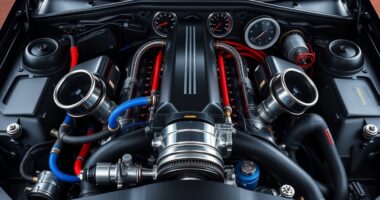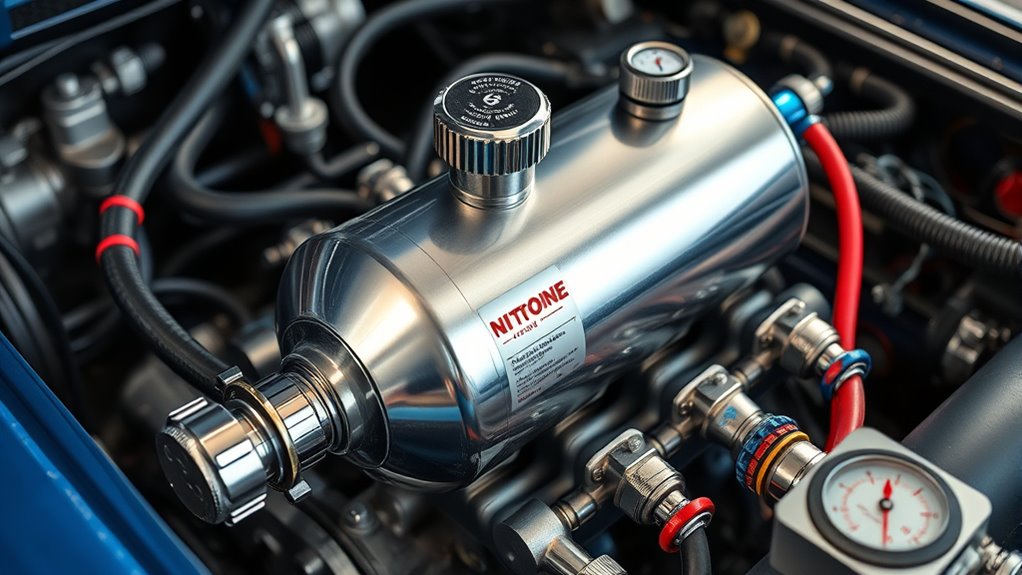

When installing and tuning nitrous oxide systems, safety and performance should be your top priorities. Make sure you mount bottles securely, follow manufacturer instructions, and use proper fuel enrichment to prevent engine damage. Regularly inspect all fittings, hoses, and wiring for leaks or corrosion. Proper setup and careful tuning help you avoid engine knocking, overheating, and safety hazards. If you want detailed tips on maximizing safety while boosting performance, keep exploring this vital topic.
Key Takeaways
- Proper installation and secure mounting of nitrous bottles prevent leaks and hazards, ensuring safety during operation.
- Correct fuel enrichment and tuning are vital to avoid running lean, which can cause engine knocking and damage.
- Regular inspections for leaks, cracks, or corrosion help maintain system safety and optimal performance.
- Using activation switches with safety features like purge systems reduces risks during system engagement.
- Understanding engine limits and cautious tuning maximize performance gains while minimizing the risk of engine failure.
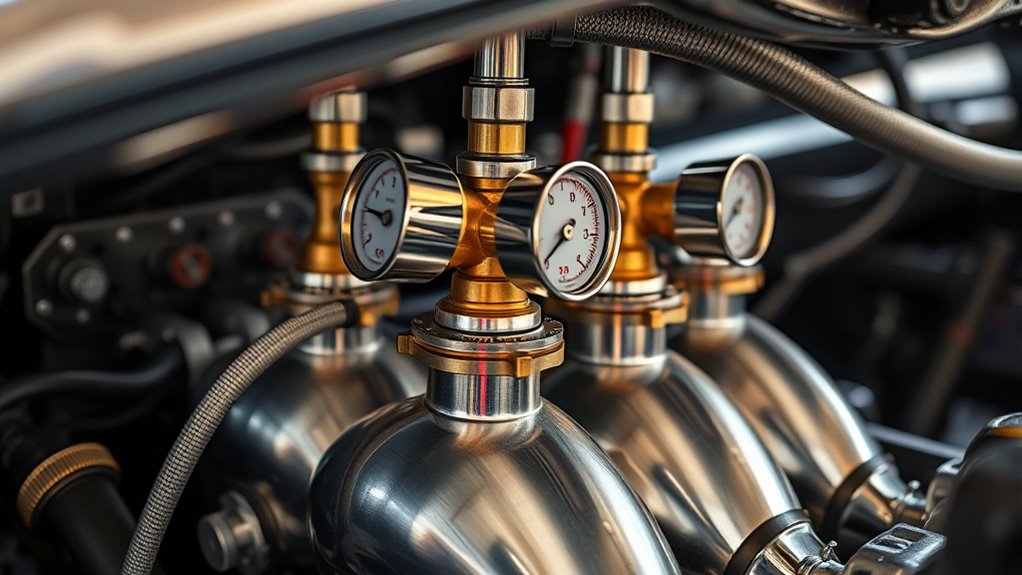
Have you ever wondered how racers boost their engine power instantly? One of the most popular methods is using nitrous oxide systems, which deliver a quick surge of extra horsepower. When installed correctly, these systems can make a significant difference in performance, but they also come with important safety considerations. To get the most out of a nitrous system, you need to understand how fuel enrichment and system installation play crucial roles. Fuel enrichment involves adjusting the fuel-to-air ratio to ensure the engine receives enough fuel during nitrous injection. Without proper enrichment, the engine can run lean, leading to knocking, overheating, or even severe engine damage. That’s why, when installing a nitrous system, you must select a kit compatible with your engine and carefully set the fuel delivery parameters. Most systems include a dedicated fuel solenoid that works in tandem with the nitrous output, ensuring a rich enough mixture during nitrous activation. Proper system installation is vital because it not only determines the safety of the setup but also its effectiveness. You should mount the nitrous bottle securely in a well-ventilated area, away from heat sources, and ensure all hoses and fittings are tight to prevent leaks. Many kits come with pre-drilled plates or brackets, but you need to follow the manufacturer’s instructions precisely. Wiring should be neat, avoiding any potential for shorts or accidental disconnections, especially considering the high-pressure environment. You’ll also want to install a dedicated switch or button for activation, ideally with a safety latch or purge system to clear out moisture or air from the lines before use. When doing the system installation, it’s crucial to tune your engine accordingly, adjusting fuel enrichment levels and testing at controlled conditions before going for a full boost. This helps prevent engine damage and ensures the nitrous delivers the performance boost you’re aiming for. Remember, safety should always be your top priority—never install or operate a nitrous system without thorough knowledge and proper precautions. Regular inspections for leaks, cracks, or corrosion are essential, especially if you’re using the system frequently. Also, be aware of your engine’s limits; overuse or improper tuning can cause catastrophic failures. Ultimately, mastering fuel enrichment and meticulous system installation allows you to enjoy the benefits of nitrous oxide safely and effectively. With the right setup, you’ll experience a dramatic increase in power, but always respect the system’s power and understand that proper installation and tuning are key to both safety and peak performance.
Frequently Asked Questions
How Does Nitrous Oxide Affect Engine Longevity Over Time?
Using nitrous oxide can increase engine wear over time if not managed properly, as it puts extra stress on components. It may also reduce fuel efficiency because your engine burns more fuel to match the increased power. If you don’t tune your system correctly and monitor engine health, the added strain could shorten your engine’s lifespan. Proper installation and regular maintenance are essential to minimize these risks.
Are There Specific Vehicle Types Best Suited for Nitrous Oxide Systems?
Think of your vehicle as a finely-tuned instrument, perfect for the right touch. Sport compact cars, muscle cars, and drag racers are best suited for nitrous oxide systems because of their engine design and build. When considering installation, guarantee your vehicle’s compatibility and that the system is properly installed to avoid damage. These vehicles respond well to nitrous, releasing impressive performance without sacrificing reliability when used correctly.
What Are the Legal Regulations Regarding Nitrous Oxide Use on the Street?
You should know that legal restrictions on nitrous oxide use vary by location, often banning it on public roads. Many areas require registration or permits if you plan to install a system legally. Always check your local laws before using nitrous oxide on the street, as failure to comply can lead to fines, vehicle confiscation, or other penalties. Staying informed helps you avoid legal issues while enjoying your vehicle modifications responsibly.
How Can I Prevent Nitrous System Leaks During Operation?
Think of your nitrous system like a finely tuned engine—any leak can cause chaos. To prevent leaks during operation, regularly perform leak detection by listening for hissing sounds or using soapy water on fittings. Keep seals well-maintained and tight, replacing worn or damaged ones promptly. Consistent inspection and proper seal maintenance guarantee your system runs smoothly, preventing leaks that could compromise safety or performance.
What Maintenance Is Required to Keep Nitrous Systems Safe and Effective?
To keep your nitrous system safe and effective, regularly perform nitrous bottle inspections to check for leaks or damage, and guarantee all connections are secure. Clean the nozzles periodically to prevent clogs that could affect performance. Always follow manufacturer guidelines for maintenance schedules, and replace worn components promptly. Consistent upkeep helps prevent leaks, maintains ideal performance, and ensures safe operation during use.
Conclusion
So, next time you’re tempted to boost your ride with nitrous oxide, remember: it’s like adding a rocket to your car—exciting yet risky. Sure, it promises instant power, but one wrong move, and you might find yourself starring in a fiery cautionary tale. Think of it as playing with fire, only with more explosions and less safety. Have fun, but play smart—because nobody wants a thrill ride that ends in a garage inferno.