
Oil coolers protect high-performance engines by transporting heat away from the oil, ensuring it stays within ideal temperatures. This prevents overheating, oil breakdown, and engine wear during intense use. Proper functionality depends on regular maintenance like cleaning fins, checking for leaks, and inspecting hoses. An efficient oil cooler system enhances engine longevity, performance, and reliability. To discover more about keeping your engine at peak condition, continue exploring the key factors that make oil coolers essential.
Key Takeaways
- Oil coolers regulate oil temperature, preventing breakdown and ensuring optimal lubrication for high-performance engines.
- Proper heat dissipation from oil reduces thermal stress, extending engine lifespan and maintaining peak performance.
- Regular maintenance, like cleaning and inspecting for leaks, ensures the oil cooler functions effectively under demanding conditions.
- Effective cooling system integration prevents overheating, minimizing engine wear and preventing costly damage.
- Using high-quality cooling components enhances heat transfer, supporting consistent oil viscosity and engine reliability.

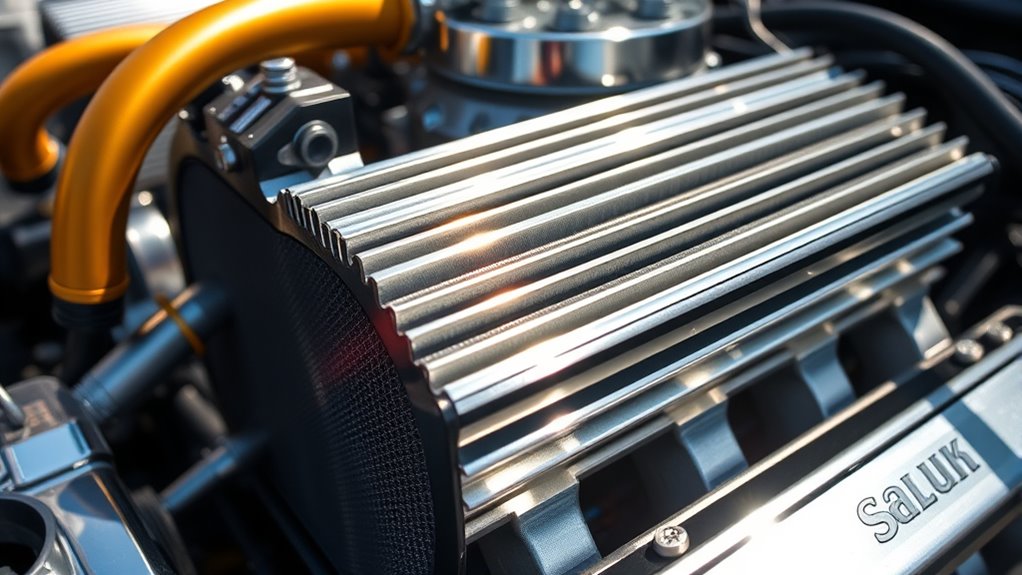
Oil coolers operate by circulating oil through a radiator-like device, where heat is transferred from the oil to the surrounding air or coolant. This process helps maintain the oil’s viscosity and prevents it from breaking down under high temperatures. When the oil stays within its ideal temperature range, your engine’s parts experience less wear, and you enjoy better performance and longevity. Proper heat dissipation isn’t just about adding an oil cooler; it’s about ensuring the entire cooling system functions efficiently. Regular maintenance tips, such as checking for leaks, inspecting hoses, and cleaning the cooler fins, can make a big difference. When you routinely verify your oil cooler is free of debris and corrosion, you support ideal heat transfer and prevent potential blockages that could impair its performance. Additionally, incorporating high-quality cooling components can further enhance heat dissipation efficiency.
Another key aspect of maintaining an effective oil cooling system is monitoring oil temperature during operations. Many high-performance engines come equipped with temperature gauges that alert you if heat levels rise too high. If you notice your oil running hotter than usual, it’s a sign you should inspect your oil cooler and related components. Flushing your cooling system periodically and replacing worn-out hoses can also help maintain efficient heat dissipation. Remember, neglecting these maintenance tips can lead to decreased cooling capacity, which puts additional stress on your engine. Over time, this can cause increased oil degradation, leading to sludge buildup and decreased lubrication effectiveness.
Frequently Asked Questions
How Do Oil Coolers Affect Overall Engine Efficiency?
Oil coolers improve your engine’s efficiency by maintaining ideal oil temperature through effective thermal regulation. When oil stays within the right temperature range, it reduces friction and wear, helping your engine run smoothly. By preventing overheating, oil coolers guarantee consistent lubrication, which boosts performance and fuel economy. Ultimately, they help your engine operate at peak efficiency, prolonging its lifespan and reducing maintenance costs.
What Are the Signs of a Failing Oil Cooler?
If your oil cooler is failing, you’ll notice cooler leaks and temperature fluctuations in your engine. These leaks can lead to loss of oil pressure, while temperature swings suggest the cooler isn’t regulating heat properly. You might also see a drop in engine performance or hear unusual noises. Keep an eye on oil levels and engine temperatures regularly. Addressing these signs early helps prevent more serious engine damage and maintains peak performance.
Can Oil Coolers Be Used in All Engine Types?
You might think oil coolers fit all engines, but they aren’t universal. Engine compatibility varies based on design and cooling system integration. Some engines, especially older or specialized models, may not support them without modifications. Before installation, check your engine’s specifications and consult a mechanic. This guarantees the oil cooler works effectively, protects your engine, and prevents potential issues from improper fit or integration.
How Often Should Oil Coolers Be Maintained or Replaced?
You should check your oil cooler regularly, ideally every 6 to 12 months, to guarantee peak performance. Perform cooler cleaning to remove debris and check for leaks. Replace the cooler if you notice corrosion or leaks, and ensure coolant compatibility when refilling to prevent damage. Proper maintenance helps prevent overheating and prolongs your engine’s life, keeping it running smoothly and efficiently.
Are Aftermarket Oil Coolers Reliable for High-Performance Engines?
Think of aftermarket oil coolers as a sturdy shield for your engine’s heart, but not all are created equal. They can be reliable if you select quality brands, yet installation challenges and cost considerations matter. Some coolers may cause leaks or improper fit, so do your research. Investing in a reputable cooler ensures your engine stays cool under pressure, providing peace of mind during intense performance.
Conclusion
Think of oil coolers as the guardian angels of your engine, silently watching over its fiery heart. Just like a shield against the relentless sun, they keep temperatures in check, ensuring your high-performance machine runs smoothly and lasts longer. Without them, your engine’s flame could flicker out prematurely. So, embrace these unsung heroes, and let your engine’s resilience shine like a beacon, ready to conquer every road with strength and confidence.