When selecting performance tires, focus on the right combination of compound, tread design, and size to match your driving style and conditions. Softer rubber compounds offer increased grip and handling but wear faster, while tread patterns influence water dispersion and dry performance. Larger sizes can improve handling but may affect ride comfort. Balancing these factors guarantees ideal safety and performance; you’ll discover how to tailor your tire choices for the best results as you explore further.
Key Takeaways
- The tire compound influences grip, handling responsiveness, and wear rate, with softer compounds offering better traction but reduced durability.
- Tread pattern design affects water evacuation, hydroplaning resistance, and dry-road handling, balancing wet safety with dry performance.
- Tire size impacts contact patch, handling, acceleration, and fuel efficiency; selecting the right size aligns with vehicle and driving needs.
- Combining appropriate compound, tread pattern, and size optimizes overall performance, safety, and longevity for specific driving conditions.
- Understanding the interaction between tire components helps choose the best performance tires for handling, weather, and durability requirements.
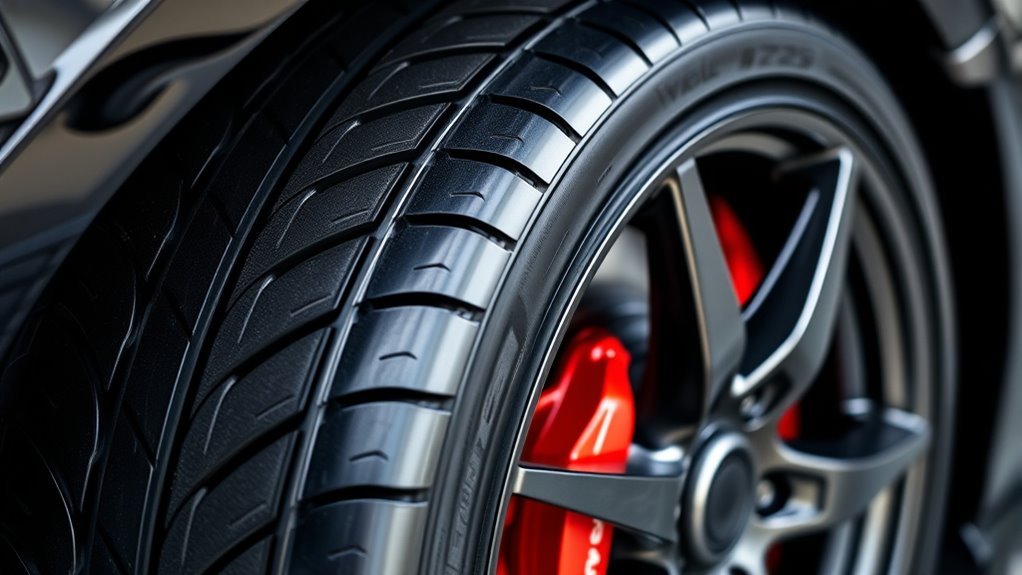
Are you looking to boost your vehicle’s handling and grip on the road? Upgrading to performance tires can make a noticeable difference in how your car responds, especially during spirited driving or on challenging surfaces. One of the key aspects to consider is the tire’s compound, which directly influences tire wear and weather performance. Performance tires typically use softer rubber compounds that provide increased grip, but this also means they tend to wear out faster than standard tires. If you’re frequently driving in wet or variable weather conditions, choosing a compound designed for enhanced traction can improve your safety and confidence in rain or light snow. However, be prepared for more frequent replacements since softer compounds don’t last as long and are more susceptible to wear from aggressive driving or prolonged use.
The tread pattern of your performance tires also plays a vital role in handling and weather performance. A well-designed tread helps channel water away from the contact patch, reducing the risk of hydroplaning and maintaining grip during wet conditions. For ideal weather performance, look for tires with asymmetric or directional tread patterns that promote efficient water evacuation and maintain traction across different surfaces. These patterns not only improve wet handling but also enhance dry grip, giving you better control during cornering and acceleration. Keep in mind that the tread depth and design affect tire wear—deeper, more aggressive treads may last longer but could compromise some of the dry-road handling finesse you want from performance tires. Finding the right balance between tread design and your driving needs is essential. Additionally, understanding how the tire’s compound interacts with the tread pattern can help you select a tire that offers the best overall performance for your driving style.
Frequently Asked Questions
How Do Tire Compounds Affect Fuel Efficiency?
Your tire compound directly impacts fuel efficiency because softer compounds tend to increase rolling resistance, which can decrease your fuel economy. Conversely, choosing a harder compound reduces resistance, helping you save fuel. When selecting tires, consider the compound’s properties to optimize fuel efficiency. By making informed compound choices, you can improve your vehicle’s performance and save money on fuel in the long run.
What Is the Impact of Tread Pattern on Wet Traction?
A well-designed tread pattern can make all the difference. It directly impacts wet traction by channeling water away from the tire’s surface, preventing hydroplaning. Deep grooves and sipes improve grip on wet roads, giving you better control and safety. When choosing tires, pay close attention to the tread pattern, as it’s essential for maintaining traction and confidence in rainy conditions. Remember, a good tread pattern is your first line of defense.
How Do Tire Sizes Influence Vehicle Handling?
Tire sizes directly affect your vehicle’s handling by influencing contact patch and stability. Larger tires can improve grip and cornering, but they require proper tire pressure to maintain ideal performance. On different road surfaces, maintaining correct tire pressure ensures better traction and control. Smaller tires may offer quicker steering response, while larger ones enhance stability, especially on rough or uneven surfaces. Always check tire pressure to maximize handling for each road condition.
Are Performance Tires Suitable for Winter Conditions?
Performance tires aren’t ideal for winter conditions. They lack the winter traction needed for icy, snowy roads and don’t perform well in snow performance. You’ll find that they struggle to grip, brake, and handle in cold, wintry weather. Instead, opt for tires specifically designed for winter, which provide better traction, improved safety, and confidence on snow and ice. Don’t compromise your safety by using performance tires in harsh winter conditions.
How Often Should I Replace Performance Tires?
You should replace performance tires roughly every 25,000 to 50,000 miles, but it depends on your driving habits. Regularly rotate your tires and keep them properly inflated to extend their lifespan. Check for uneven wear, cracks, or bulges, and replace them if you notice any. Prioritize safety by replacing tires when tread depth is low or if they show signs of damage, ensuring ideal performance and grip.
Conclusion
Now that you know how compound, tread, and size impact your performance tires, aren’t you excited to choose the perfect ones for your driving style? Remember, the right tires can transform your vehicle’s handling and safety on the road. So, next time you’re shopping, ask yourself: are you prioritizing grip, durability, or speed? With the right knowledge, you’ll enjoy every drive more than ever before. Ready to hit the road with confidence?