Stainless brake lines feel different behind the pedal because they transmit hydraulic pressure more directly and consistently than rubber hoses. They resist expansion under pressure, giving you a firmer, more responsive pedal feel. Unlike rubber hoses, which can swell and cause a spongy sensation, stainless lines provide better control, especially during aggressive stops. They also handle heat better and don’t swell over time, ensuring reliable performance. If you want to understand how this improves your braking experience, keep exploring the details.
Key Takeaways
- Stainless brake lines transmit hydraulic pressure more directly, resulting in a firmer, more responsive pedal feel.
- They resist expansion under pressure, reducing pedal sponginess during braking.
- Unlike rubber hoses, they maintain consistent pressure even under high heat, improving pedal firmness.
- Their durability prevents swelling and deterioration, ensuring predictable pedal response over time.
- Overall, stainless lines provide a more immediate, confident braking feel compared to rubber hoses.
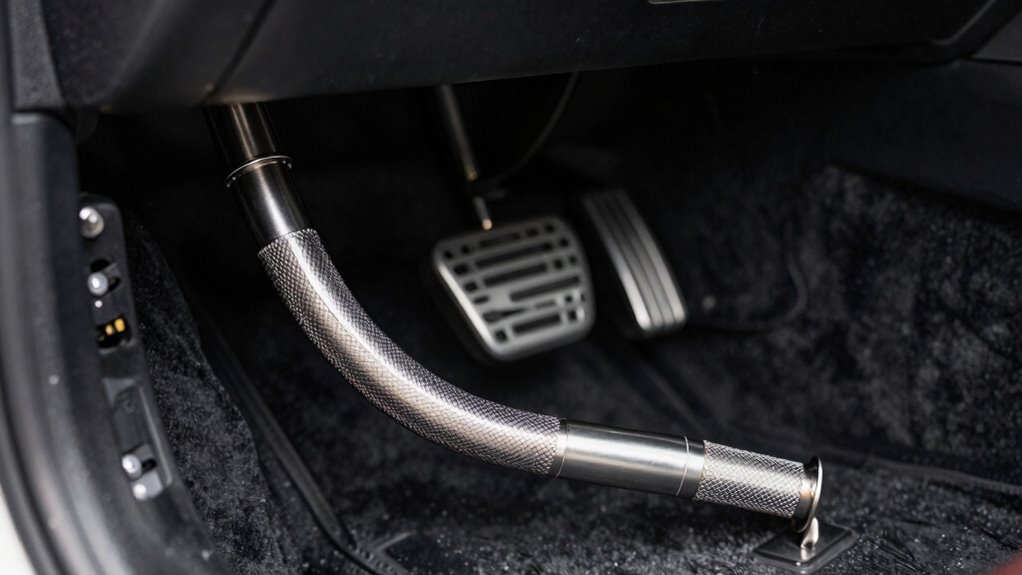
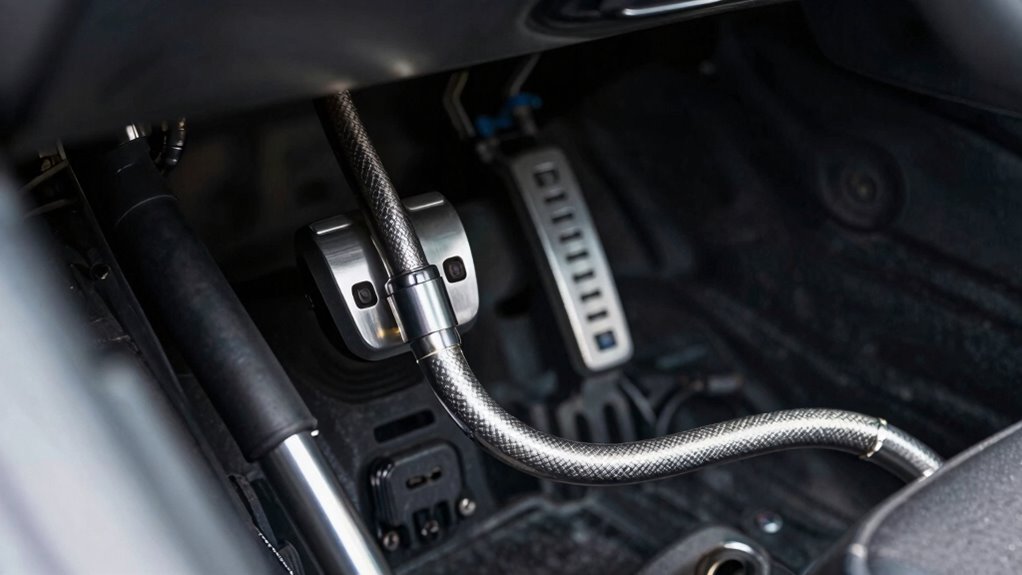
If you’ve ever wondered what’s behind the pedal that controls your brake feel, stainless brake lines are a key component often overlooked. These lines replace the traditional rubber hoses with a more durable, rigid metal design, and their impact on your braking experience is significant. When you press down on the brake pedal, hydraulic pressure builds up within the brake lines to force the brake pads against the rotors. Stainless lines transmit this pressure more consistently and with less expansion than rubber hoses, which tend to expand under pressure. This means that every time you brake, you get a more immediate, predictable response.
Because stainless brake lines resist expansion, your pedal feels firmer and more responsive. Rubber hoses can swell slightly under high hydraulic pressure, causing a spongy or soft pedal feel. This expansion reduces the amount of hydraulic pressure transmitted directly to the brake calipers, which can compromise braking performance. Stainless lines eliminate this issue by maintaining a consistent internal diameter, ensuring the pressure you generate is fully transferred to the brakes. As a result, you notice a more direct, confident pedal feel, especially during aggressive driving or emergency stops.
Stainless brake lines provide a firmer, more responsive pedal by preventing expansion and ensuring full pressure transfer.
Another reason stainless brake lines feel different is their effect on brake fade. Brake fade occurs when the braking system overheats, leading to a loss of stopping power. When brake lines expand or degrade, it can increase the likelihood of fade because the system can’t maintain consistent hydraulic pressure. Stainless lines are less susceptible to heat-related expansion and deterioration. They help sustain consistent hydraulic pressure even under demanding conditions, reducing the chances of brake fade. This stability means you can push your brakes harder without feeling the pedal go soft or unresponsive over time.
Additionally, the construction of stainless brake lines contributes to their feel. They’re less prone to swelling, cracking, or developing air bubbles, which can cause inconsistent braking. This durability ensures that your brake pedal remains predictable and firm, giving you better control during intense driving situations. The improved feedback from stainless lines also helps you modulate braking force more precisely, giving you confidence that your inputs translate directly into stopping power. Furthermore, stainless brake lines often feature excellent corrosion resistance, which helps maintain their integrity over time and prevents performance degradation caused by exposure to the elements. They are also less affected by temperature fluctuations, ensuring consistent performance regardless of ambient conditions.
In fact, stainless brake lines are often praised for their heat resistance and ability to withstand the high temperatures generated during aggressive braking, further enhancing their reliability and performance. This improved resistance to thermal expansion means your brake system remains stable and predictable even during extended periods of hard braking. Moreover, their resistance to corrosion reduces maintenance needs and prolongs the lifespan of your braking components. The improved feedback from stainless lines also helps you modulate braking force more precisely, giving you confidence that your inputs translate directly into stopping power.
In essence, stainless brake lines change the way your brake pedal feels because they provide a more stable, consistent hydraulic connection. They minimize expansion under pressure, improve pedal firmness, and help prevent brake fade by resisting heat-related issues. This makes your braking system more reliable, responsive, and safer — especially when you’re pushing your vehicle to its limits.

4LifetimeLines – 3/16" x 25' Stainless Steel Brake Line Kit | 316L Marine-Grade Tubing with 16 SAE Fittings | Corrosion & Rust Resistant | 15,310 PSI | Universal Fit for Cars & Trucks
- Complete Brake Line Kit: Includes tubing and 16 fittings
- Marine-Grade Stainless Steel: Resists corrosion and rust in harsh environments
- High-Pressure Capacity: Withstands 15,310 PSI burst pressure
As an affiliate, we earn on qualifying purchases.
As an affiliate, we earn on qualifying purchases.
Frequently Asked Questions
Do Stainless Brake Lines Require Special Maintenance?
Stainless brake lines don’t require special maintenance, thanks to their corrosion resistance, which helps prevent rust and degradation. You should regularly inspect them for any signs of wear or damage, and keep them clean to maintain their aesthetic enhancement. Unlike rubber lines, they don’t need frequent replacement, but ensuring they stay secure and free from debris helps extend their lifespan and preserves their performance.
How Long Do Stainless Brake Lines Typically Last?
Stainless brake lines typically last between 10 to 15 years, thanks to their corrosion resistance. To guarantee they reach this lifespan, follow proper installation tips—like tightening fittings correctly and checking for leaks regularly. Their durability minimizes the need for frequent replacements, but keep an eye on any signs of wear or damage, especially if you live in harsh environments. Proper maintenance helps maximize their longevity and performance.
Are Stainless Brake Lines Compatible With All Brake Fluids?
Yes, stainless brake lines are compatible with most brake fluids, but you should always check the brake fluid compatibility. Line material selection is vital to guarantee it won’t react with your brake fluid, typically DOT 3, DOT 4, or DOT 5.1. Always consult the manufacturer’s recommendations before installation to avoid any corrosion or damage, making sure your brake system remains safe and effective.
Can Stainless Brake Lines Improve Overall Braking Performance?
Yes, stainless brake lines can improve your overall braking performance. Their corrosion resistance guarantees they stay in top shape longer, reducing the risk of brake fluid leaks or line failure. Plus, their sleek look adds to your vehicle’s aesthetic appeal. You might notice a more consistent pedal feel and quicker braking response, making your driving safer and more enjoyable. Upgrading to stainless lines is a smart move for better, reliable braking.
Do Stainless Brake Lines Increase Brake Pedal Stiffness?
Yes, stainless brake lines increase brake pedal stiffness. Their material durability prevents expansion under pressure, resulting in a firmer pedal feel. Plus, they offer aesthetic enhancement with a sleek, polished look that upgrades your vehicle’s appearance. You’ll notice quicker, more consistent braking response because these lines resist corrosion and wear better than rubber ones. Overall, stainless lines deliver a more responsive, durable, and visually appealing brake system.
Conclusion
So, next time you press the brake pedal and notice a different feel, remember it’s not just a coincidence. Your stainless brake lines are likely playing a subtle role in that sensation, thanks to their unique properties. It’s fascinating how small upgrades can unexpectedly change your driving experience. Keep an eye on those lines—they might just be the quiet heroes behind that smoother, more responsive pedal feel you’re experiencing. Sometimes, the tiniest details make the biggest difference.