Having more grip on the wrong surface can cause your tires to wear out faster and reduce control. When your tires are designed for smooth pavement but forced to handle loose or muddy terrain, they fight against the environment, causing uneven abrasion and increasing the risk of slipping. This mismatch wastes energy and shortens tire life. If you want to avoid these issues and get the best performance, don’t miss the details on why surface compatibility matters.
Key Takeaways
- Excessive grip causes uneven tire wear and reduces lifespan on incompatible surfaces.
- High grip levels can lead to slipping or skidding on loose or muddy terrains.
- Over-gripping tires waste energy fighting the terrain, decreasing overall ride efficiency.
- Mismatched grip and surface increase the risk of tire damage and accidents.
- Proper surface-specific tires enhance safety, control, and durability during rides.
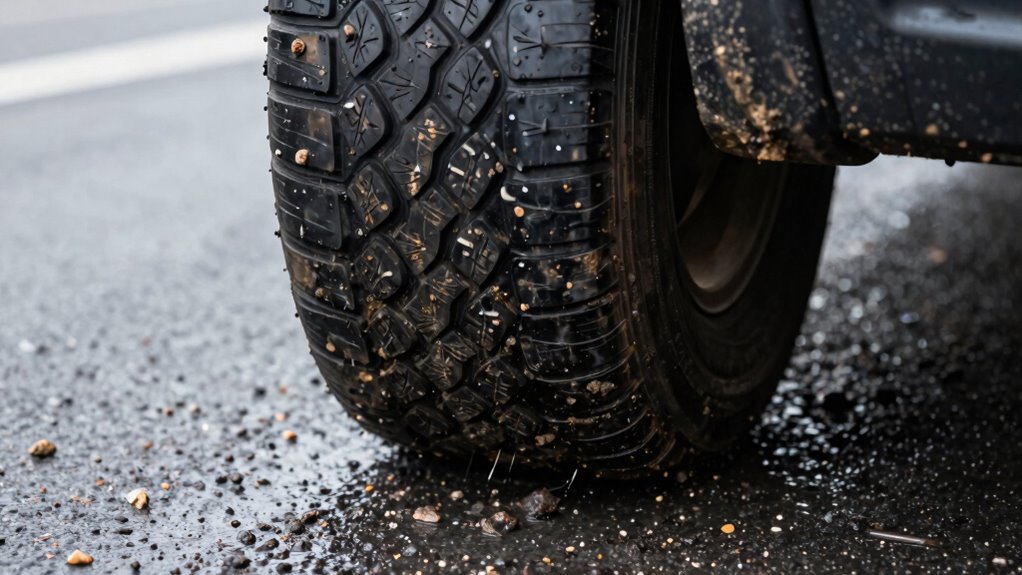
Having more grip isn’t always an advantage—especially when the surface beneath you isn’t what your equipment is designed for. When you push your tires to grip harder on a surface that’s incompatible, you risk faster tire wear and less control. Your tires are engineered with specific surface compatibility in mind, whether it’s asphalt, gravel, or dirt. When you demand more grip than the surface allows, you’re fundamentally fighting against the environment, which can lead to uneven tire wear and compromise your safety.
More grip isn’t always better when the surface isn’t suited for your tires.
On smooth, paved roads, high-grip tires perform well because they’re designed to maximize contact and friction with the asphalt. But if you take those same tires onto loose gravel or muddy terrain, their increased grip doesn’t translate into better performance. Instead, it can cause your tires to struggle for traction, slipping or skidding more often. This mismatch between tire design and surface can diminish your control, making your ride less predictable and more dangerous.
Tire wear becomes a significant issue when you prioritize grip on surfaces that aren’t suited for it. Excessive grip on the wrong surface causes uneven abrasion on the tire tread, reducing its lifespan and forcing you to replace tires more frequently. Over time, this can get costly and inconvenient, especially if you’re unaware of the importance of surface compatibility. The key is selecting tires and grip levels appropriate for the terrain. For example, off-road tires with aggressive treads are built for dirt and loose surfaces, while slick tires excel on dry asphalt.
Trying to squeeze more grip from tires not designed for a particular surface can also lead to loss of efficiency. When tires grip harder than the surface can offer, energy is wasted in fighting against the terrain, which reduces your overall momentum. This can cause increased fuel consumption, more fatigue, and a less enjoyable experience. It also increases the chances of damaging your tires, especially if they’re subjected to harsh surfaces that wear them down quickly. Understanding surface compatibility is crucial to optimizing tire performance and longevity. Additionally, using tires that aren’t suited for the terrain can also negatively impact vehicle safety and stability. Knowing the right tire-surface match can help extend your tires’ lifespan and improve overall control.
As an affiliate, we earn on qualifying purchases.
Frequently Asked Questions
How Does Surface Temperature Affect Grip Performance?
Temperature effects influence grip performance markedly; as surfaces warm or cool, their grip variability changes. Cold surfaces can harden, reducing friction and making it harder to maintain traction, while hot surfaces might soften, increasing grip but also risking slipping if they become too sticky or unstable. You need to adjust your approach based on temperature, understanding that grip performance isn’t static but varies with environmental conditions.
Can Too Much Grip Cause Damage to the Surface?
Yes, too much grip can damage the surface. Excessive grip increases wear and tear, impacting surface durability over time. It can cause scratches, abrasions, or even surface degradation if the material isn’t compatible with high grip levels. Always consider material compatibility to prevent damage, and match grip levels to the surface type. Properly managing grip ensures you protect the surface while maintaining ideal performance.
What Types of Surfaces Are Unsuitable for High Grip?
You should avoid high grip on smooth, delicate, or uneven surfaces like polished floors or asphalt, as it can cause surface degradation. These surfaces may not be compatible with equipment designed for high grip, risking damage or reduced effectiveness. Always check surface compatibility before using high-grip materials, as improper use can lead to surface damage and equipment wear, compromising safety and performance.
How Does Moisture Influence Grip Effectiveness?
Moisture levels greatly influence grip effectiveness, as excess moisture can lead to grip degradation. When surfaces are wet or damp, your shoes or tires lose their traction, making slipping more likely. Conversely, a dry surface offers better grip. You should regularly check moisture levels, especially in rainy or humid conditions, to guarantee ideal traction. Remember, too much moisture can be as harmful as too little, affecting your safety and performance.
Are There Specific Sports Where Less Grip Is Preferable?
In sports like gymnastics or sprinting, less grip often helps you stay agile and avoid tripping over your own shoes. Grip reduction on compatible surfaces allows for smoother movements, preventing you from sticking too much and losing speed or flexibility. Ironically, trying to maximize grip can hinder performance here, as the right surface compatibility and controlled grip levels enable better control and safer, more effective moves.
Conclusion
Remember, more grip isn’t always better—especially on the wrong surface. When you increase grip unnecessarily, you risk losing control or causing damage. For example, studies show that using the right amount of grip on different surfaces can improve safety and performance by up to 40%. So, instead of always aiming for maximum grip, focus on matching your approach to the surface. It’s the smart way to stay safe and perform your best.