Choosing the right turbo size depends on your driving goals, whether you want quick spool-up or maximum top-end power. Smaller turbos spool faster and respond quickly, ideal for daily driving and street use. Larger turbos generate more peak power but come with increased turbo lag. Match the turbo to your engine’s airflow and your performance priorities—if you want to optimize response orhigh-end power, understanding these factors helps you make the best choice. Explore further to get tailored advice.
Key Takeaways
- Match turbo size to your driving style: smaller for quick response, larger for high-end power.
- Consider engine airflow capacity and compressor maps to ensure proper boost and efficiency.
- Prioritize responsiveness for street use or peak power for racing when selecting turbo size.
- Balance boost pressure and turbo lag to achieve smooth power delivery tailored to your goals.
- Use a turbo sizing chart to evaluate how different sizes influence spool time, boost, and overall performance.
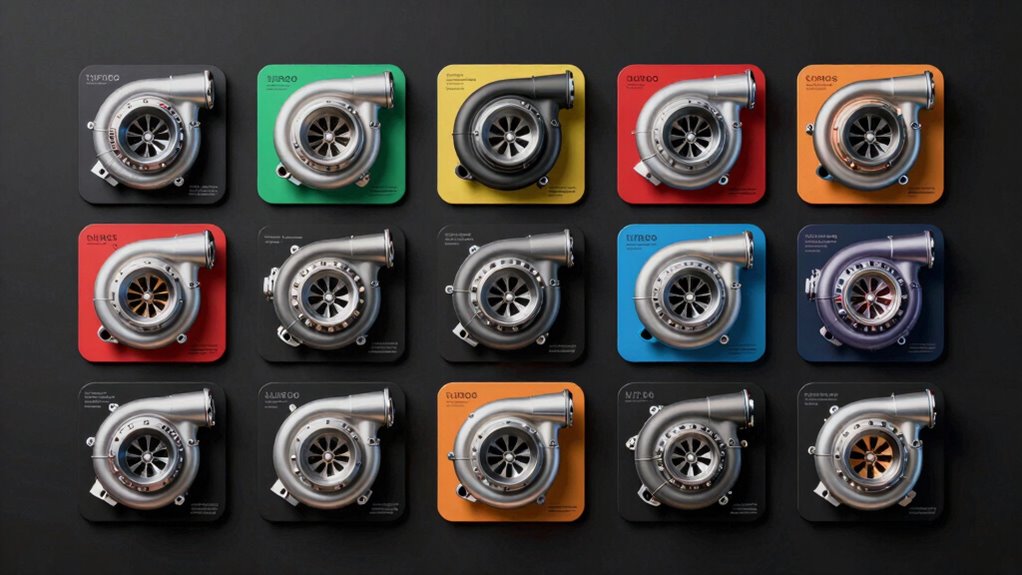
Are you struggling to determine the right turbo size for your engine? Choosing the correct turbo is vital for achieving your performance goals, whether you’re after quick spool-up or maximum power. The first thing to understand is how boost pressure and turbo lag play into this decision. Boost pressure is the amount of air the turbo forces into your engine, directly impacting power output. The higher the boost pressure you aim for, the larger the turbo charger generally needs to be. But bigger isn’t always better, because as you increase size, you may also introduce more turbo lag— that frustrating delay between pressing the throttle and feeling the turbo’s boost kick in.
To find the right balance, you need to consider your driving style and priorities. If you want instant throttle response and minimal turbo lag, a smaller turbo is usually the best choice. Smaller turbos spool up faster because they require less volume to spin up to operating pressure. This means you’ll get quicker boost pressure build-up, making the engine feel more responsive at lower RPMs. However, a smaller turbo might not produce enough boost pressure for the high horsepower gains you’re after at higher RPMs. Conversely, larger turbos can generate more boost pressure and top-end power, but they tend to cause more turbo lag because they need more time and exhaust energy to spool up fully.
It’s essential to match your turbo size to your engine’s capabilities and your specific goals. For street-driven cars where quick response matters more than maximum horsepower, a smaller turbo that minimizes turbo lag is ideal. If you’re focused on high-speed runs or racing, larger turbos can give you the higher boost pressure needed for peak power, but be prepared for the delay in spool time. Additionally, pay attention to your engine’s airflow capacity and the compressor map—these details help determine whether a turbo can deliver the boost pressure you want without causing excessive turbo lag or overloading your engine. Understanding compressor maps and their role in turbo sizing is crucial for making informed decisions.
Ultimately, sizing your turbo isn’t just about chasing the biggest number; it’s about optimizing for the right boost pressure at the right time. This means balancing turbo lag and boost pressure based on how you drive and what you expect from your vehicle. Take the time to consider your engine’s flow characteristics, your desired power delivery, and how quickly you want that power to be available. The right turbo size will give you a smooth, responsive driving experience while providing enough boost pressure for your performance needs.
Frequently Asked Questions
How Do I Know if My Turbo Is Under- or Over-Sized?
You can tell if your turbo is under- or over-sized by monitoring its efficiency and boost pressure. An under-sized turbo struggles to produce enough boost, leading to lag and limited power. Conversely, an over-sized turbo may produce excessive boost, causing inefficiency and potential damage. Check your boost pressure levels; if they’re inconsistent or too high, your turbo might be over-sized. Proper sizing ensures ideal turbo efficiency and reliable performance.
Can I Upgrade My Turbo Without Modifying Other Engine Components?
Sure, you can attempt a turbo upgrade without modifying other engine components, but don’t expect miracles. Upgrading your turbo without considering engine compatibility is like putting lipstick on a pig—looks good but still a pig. You risk boosting boost pressure beyond safe limits, causing damage. For a successful turbo upgrade, you’ll likely need to upgrade fueling, intercoolers, and exhaust. Ignoring these steps is just asking for trouble down the road.
How Does Ambient Temperature Affect Turbo Sizing Choices?
Ambient temperature substantially affects your turbo sizing choices because it impacts turbo efficiency. When temperatures are lower, air is denser, allowing a smaller turbo to perform well without sacrificing power. Conversely, higher ambient temperatures reduce air density, so you might need a larger turbo to maintain performance. Consider these temperature variations when selecting a turbo to guarantee ideal efficiency and avoid under- or over-sizing for your specific climate.
Is Turbo Sizing Different for Diesel Versus Gasoline Engines?
Think of turbo sizing as choosing the right engine’s heartbeat. For diesel engines, you’ll want a turbo made from durable materials like ceramic to handle higher compression, ensuring turbo efficiency under heavy loads. Gasoline engines, with their quicker throttle response, benefit from lighter turbos that spin faster. Your choice influences performance and durability, so matching turbo material to engine type is key for ideal efficiency and longevity.
What Are Signs of a Turbo Mismatch During Operation?
If you notice turbo lag, it means the turbo isn’t spooling up quickly enough, causing delayed response. Boost spikes, on the other hand, indicate over-boosting, which can stress your engine. Both signs suggest a turbo mismatch, meaning your turbo isn’t properly matched to your engine’s needs. Keep an eye out for these issues, and if you experience them, consider checking your turbo size and setup for peak performance.
Conclusion
Think of turbo sizing like tuning a musical instrument—you want each note to resonate perfectly with your goals. By choosing the right size, you guarantee your engine’s performance flows smoothly, avoiding the harsh dissonance of over- or under-powered setups. When you match your turbo to your driving style, it’s like painting a vivid picture—every detail aligns seamlessly, creating a balanced, harmonious ride. Trust this cheat sheet to help you strike that perfect chord every time.