Variable valve timing tuning allows you to adjust your engine’s intake valves dynamically, optimizing power and fuel efficiency based on driving conditions. By precisely controlling valve timing with advanced actuators, you can improve low-end torque, boost acceleration, and reduce fuel consumption. This real-time adjustment helps your engine perform smoothly and efficiently, whether you’re cruising or accelerating. Keep going to discover how to fine-tune your system for maximum performance and savings.
Key Takeaways
- Variable valve timing adjusts intake camshaft position in real-time to balance power output and fuel efficiency based on driving conditions.
- Tuning VVT systems can optimize intake timing for enhanced low-end torque or fuel savings, depending on driver needs.
- Proper VVT calibration improves engine responsiveness, reduces emissions, and maximizes combustion efficiency.
- Dynamic adjustment of valve timing allows engines to adapt seamlessly between performance and economy modes.
- Advanced VVT tuning techniques enable fine control over intake timing, ensuring optimal power delivery and minimal fuel consumption.
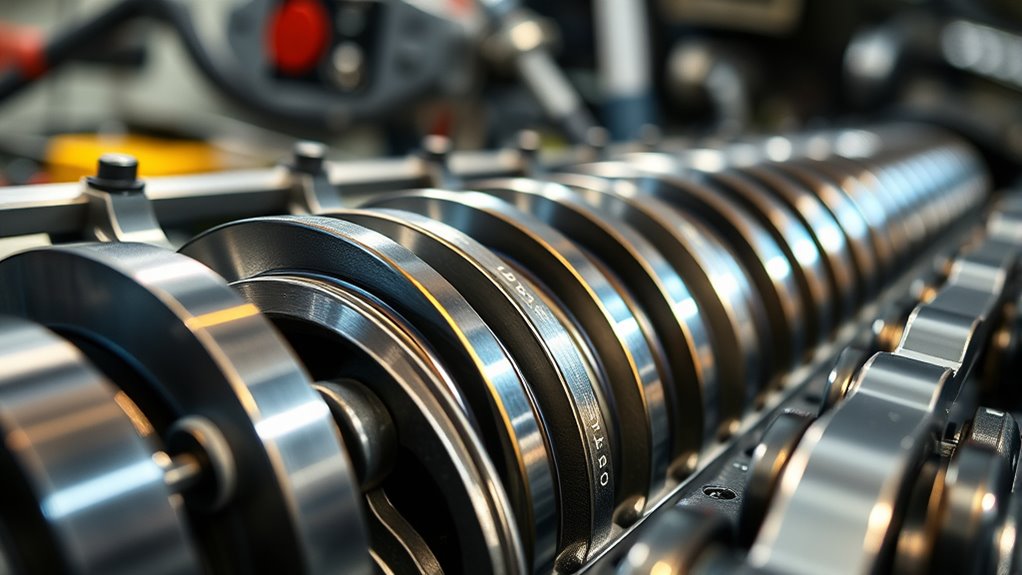
Have you ever wondered how modern engines optimize performance and efficiency? The secret lies in advanced technologies like variable valve timing, which allows your engine to adapt to different driving conditions. One key aspect of this technology is camshaft phasing, a process that adjusts the position of the camshaft relative to the crankshaft. By altering camshaft timing, especially intake timing, your engine can improve airflow, boost power, and reduce emissions. When you accelerate, the system advances or retards the camshaft to enhance how air enters the cylinders, ensuring maximum combustion efficiency. Conversely, during steady cruising, it can slow down or change timing to save fuel without sacrificing performance.
Camshaft phasing works through a sophisticated mechanism typically involving a variable valve timing actuator. This actuator shifts the camshaft position in real time, responding to engine sensors that monitor load, RPM, and throttle position. When the intake timing is advanced, the intake valves open earlier in the piston cycle, allowing more air to fill the cylinders quickly, which enhances low-end torque and responsiveness. When the timing is retarded, the intake valves open later, which can improve fuel economy and reduce knocking at higher RPMs. This dynamic adjustment ensures your engine operates at its best point for both power and efficiency, depending on your driving style.
Camshaft phasing uses a variable valve timing actuator to optimize engine performance in real time.
The ability to modify intake timing actively helps balance the trade-offs between performance and fuel economy. For instance, during city driving or light loads, the system might retime the valves to sip fuel more conservatively. On the highway or during spirited driving, it can advance the intake valves for more power and better throttle response. This continuous optimization reduces the need for traditional fixed camshaft designs, which are less adaptable and often compromise either power or efficiency. Additionally, cruise FAQs highlight how such technologies are increasingly important in modern vehicles for optimizing emissions and performance.
You benefit from this by experiencing smoother acceleration, better throttle response, and improved fuel economy, all without needing to manually change any settings. The system’s real-time adjustments mean your engine is always working at its best, whether climbing a hill or cruising on the freeway. In essence, camshaft phasing and precise control of intake timing make your vehicle smarter and more adaptable, ensuring you get the most out of every drop of fuel while still enjoying robust performance when you need it. This technological evolution not only enhances driving experience but also contributes to reduced emissions, helping you drive cleaner and greener.
Frequently Asked Questions
Can VVT Tuning Affect Engine Longevity?
Yes, VVT tuning can affect engine longevity. If you tune it improperly, it may increase engine wear because the engine operates outside its ideal parameters, leading to higher stress and potential damage. You might also find yourself needing more frequent maintenance, as parts could wear faster. To avoid these issues, guarantee your VVT tuning is done by a skilled professional who understands your engine’s limits and maintenance needs.
Is Manual or Electronic VVT Tuning More Effective?
You’ll find electronic VVT tuning more effective because it allows precise control through ECU remapping, optimizing VVT calibration for power and efficiency. Manual VVT tuning can be less consistent and harder to fine-tune. With ECU remapping, you can adjust the VVT system seamlessly, revealing better performance and fuel economy. Electronic tuning gives you the flexibility to optimize VVT calibration for your specific driving needs, making it the smarter choice.
How Does VVT Tuning Impact Emission Compliance?
Some might think VVT tuning risks breaching emission standards, but if you stay within tuning regulations, it can actually help meet or even exceed these standards. Proper VVT adjustments optimize combustion, reduce pollutants, and improve efficiency, making it easier to comply with emission regulations. By carefully tuning your VVT system, you ensure your vehicle remains environmentally friendly while enhancing performance, avoiding potential legal issues and future-proofing your engine.
What Tools Are Needed for Professional VVT Tuning?
To professionally tune VVT, you’ll need specialized tools like a high-quality scan tool or ECU programmer that can adjust ignition timing and fuel mapping precisely. You might also use a dyno for real-time testing and data logging software to monitor performance changes. These tools help you optimize valve timing, ensuring your engine runs efficiently, boosts power, and maintains emission compliance during the tuning process.
Can VVT Tuning Be Reversed or Adjusted Easily?
A stitch in time saves nine, and in VVT reprogramming, tuning reversibility is quite achievable. You can easily adjust or reverse VVT tuning with the right tools and software, making modifications flexible. If you want to revert to stock settings or try a different tune, it’s straightforward, especially with professional-grade equipment. Just remember, proper documentation and careful steps guarantee you don’t get caught in a bind.
Conclusion
Don’t think tuning your variable valve timing is too complicated or risky — with proper adjustments, you can release both more power and better efficiency without sacrificing reliability. Sure, it sounds technical, but you don’t have to be a mechanic to benefit from understanding these tweaks. Just approach it carefully, and you’ll enjoy a smoother, more powerful ride. After all, optimizing your engine’s timing is one of the smartest ways to get more out of your vehicle.