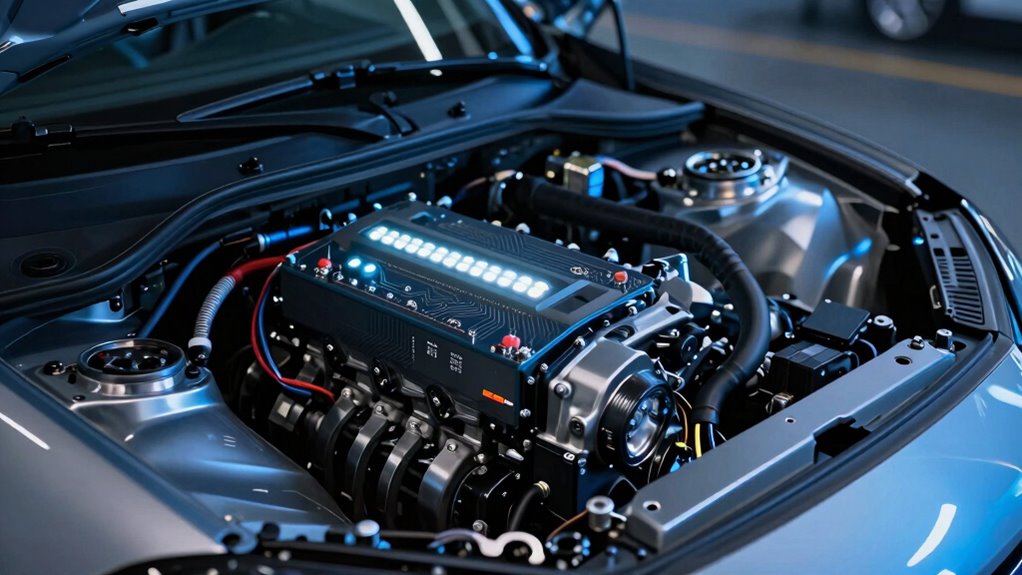

An ECU tune adjusts how your engine’s computer manages fuel delivery, air intake, and ignition timing, enabling better performance, throttle response, and sometimes improved fuel efficiency. It’s important to know that tuning can’t fix mechanical issues, improve handling, or increase parts lifespan. Different vehicles respond uniquely, and overly aggressive tunes could stress engine components. If you want to understand precisely what changes can benefit your ride and where limits lie, keep exploring to get the full picture.

Get business pricing on garage and car supplies
- Business-only prices and quantity discounts
- Tax-exempt purchasing
- Multiple users, one account, clear invoices
Key Takeaways
- ECU tuning adjusts parameters like fuel maps, ignition timing, and throttle response to improve performance and efficiency.
- It cannot fix mechanical issues or worn engine parts; physical repairs are still necessary.
- Tuning modifies engine behavior but does not enhance handling, braking, or suspension systems.
- Some tunes may increase emissions, making vehicles less environmentally friendly or potentially illegal.
- Proper tuning relies on experienced professionals to balance gains with reliability and compliance.

Changing your ECU tune can markedly enhance your vehicle’s performance, fuel efficiency, and overall driving experience. When you modify the ECU, you’re essentially rewriting the engine’s computer code to optimize how your car runs. This can lead to notable performance gains, such as increased horsepower, better throttle response, and improved torque delivery. However, it’s important to understand what these changes actually involve and what limitations they have.
One of the main benefits of an ECU tune is the potential for performance gains. By adjusting parameters like fuel mixture, ignition timing, and boost pressure (in turbocharged engines), your vehicle can produce more power without physically altering the components. You might notice quicker acceleration and a more responsive engine, especially during high-demand driving situations. But with these gains come considerations about emissions impact. Some tunes increase power by leaning out the fuel mixture or advancing timing, which can result in higher emissions. This isn’t always problematic, but it can make your vehicle less environmentally friendly and, in some cases, illegal if it exceeds local emissions standards. That’s why many tuners offer options to balance performance and emissions, ensuring your vehicle remains compliant while still gaining some benefits.
ECU tuning boosts performance but may increase emissions and affect legality; balance is key for optimal results.
It’s *vital* to recognize what an ECU tune can’t do. While it can optimize engine performance within the existing hardware limits, it won’t fix fundamental mechanical issues or compensate for worn-out parts. If your engine’s components are degraded or damaged, a tune won’t solve those problems and might even exacerbate them if pushed too hard. Additionally, a tune doesn’t automatically improve your car’s handling, braking, or suspension. Those aspects require physical modifications or upgrades. The ECU tune primarily influences engine behavior, so expecting *all-encompassing* improvements beyond power, efficiency, and emissions isn’t realistic. Moreover, the complexity of modern engine management systems can influence how effective a tune will be on different vehicles.
Furthermore, not all vehicles respond equally to ECU tuning. Some models have more sophisticated engine management systems, making tuning more complex and sometimes less effective. It’s also worth noting that aggressive tuning can increase stress on engine components, potentially reducing longevity if not done carefully. That’s why it’s essential to work with reputable tuners who understand your specific vehicle and its limits. They can help tailor a tune that balances enhanced performance with reliability and compliance.
In the end, changing your ECU tune offers a way to *access* hidden potential in your vehicle’s engine. You gain noticeable performance gains and can influence emissions impact, but it’s important to recognize the boundaries of what a tune can achieve. It’s a tool for optimization, not a magic fix for mechanical issues or a comprehensive upgrade to every aspect of your car’s performance. Proper tuning can also be supported by European cloud servers that ensure secure and sustainable data management for automotive diagnostics and performance adjustments.
As an affiliate, we earn on qualifying purchases.
Frequently Asked Questions
Can an ECU Tune Improve Fuel Economy?
Yes, an ECU tune can improve your fuel efficiency by optimizing your engine’s parameters for better combustion and lower fuel consumption. You might also notice some performance gains, making your vehicle more responsive. However, keep in mind that these improvements depend on your car’s condition and driving habits. Proper tuning balances performance and efficiency, giving you better fuel economy without sacrificing power.
Will a Tune Harm My Engine’s Longevity?
A tune won’t necessarily harm your engine’s longevity if done correctly, but it can increase engine wear over time. Studies show that improperly tuned engines experience up to 30% faster wear. Keep in mind, a performance tune may void your warranty, so you should weigh the risks. Always choose a reputable tuner to minimize potential damage and guarantee your engine remains reliable for the long haul.
Is an ECU Tune Legal for Street Use?
An ECU tune’s legality for street use depends on local emissions regulations. In some areas, tuning can violate these rules, making it illegal on public roads. Additionally, it may affect your warranty, especially if the tune causes issues. Always verify your region’s laws and manufacturer warranty terms before tuning your vehicle. Staying compliant ensures you avoid fines or voided warranties while enjoying the benefits of an ECU tune.
How Long Does an ECU Tuning Process Take?
The ECU tuning process usually takes about 2 to 4 hours, depending on your vehicle and tuning complexity. During the tuning appointment, the technician connects to your car’s ECU, makes adjustments, and tests the changes. You should plan for this duration to guarantee proper calibration. Keep in mind, some advanced tunes or custom setups might extend the tuning appointment length, but most are completed within this timeframe for a standard ECU tune.
Can I Revert to the Original ECU Settings?
Yes, you can revert to the original ECU settings through a software rollback or factory reset. If you decide to undo a tune, you’ll need to connect your vehicle to a compatible device or software that performs these resets. Keep in mind, a factory reset restores the ECU to its original factory state, removing any custom tune or modifications, so you can return to the stock settings easily and safely.
Conclusion
In brief, an ECU tune can boost your car’s performance, fuel efficiency, and responsiveness, but it has its limits. Remember, only about 30% of vehicles see significant gains without risking engine health. While it’s tempting to chase higher horsepower, always consider the long-term effects and consult a professional. A well-done tune can transform your driving experience—just don’t expect it to fix underlying mechanical issues or turn your car into a racecar overnight.
Fall Picks
fall essentials
As an affiliate, we earn on qualifying purchases.