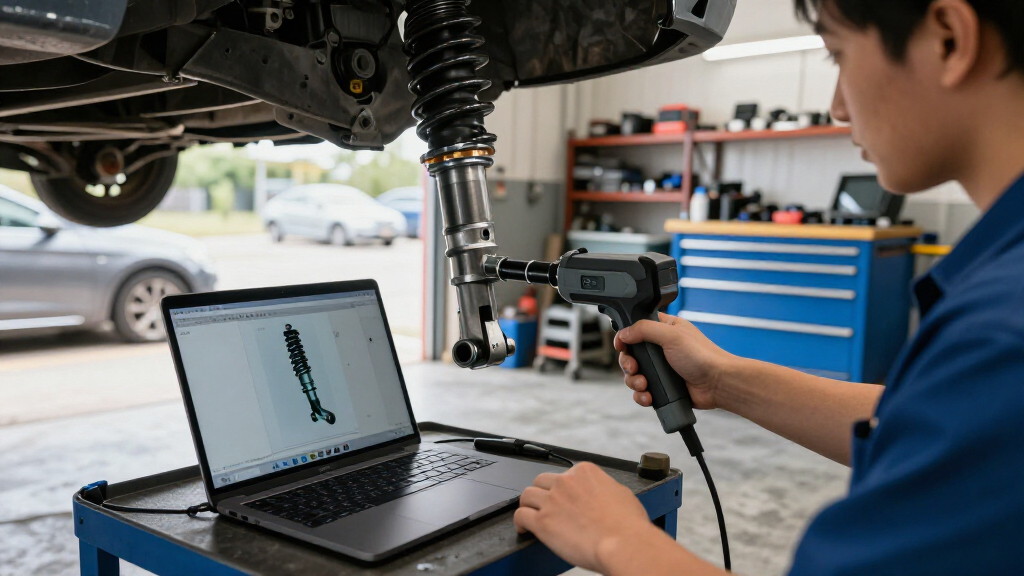
For most automotive repair, reverse-engineering, and custom-fit projects, I’d start with the Creality CR-Scan Raptor Pro for its handheld workflow and ability to handle varied part sizes. The Creality CR-Scan Otter is a versatile alternative for buyers scanning a mix of small components and larger pieces, while the Revopoint RANGE makes more sense when larger parts are the priority. The main tradeoff is between capturing fine geometry on compact parts and covering broad surfaces with less effort. Surface finish, tracking, software, and your tolerance for scan cleanup also shape the result. Read on for how the nine options compare and which one fits your parts and workflow.

Get business pricing on garage and car supplies
- Business-only prices and quantity discounts
- Tax-exempt purchasing
- Multiple users, one account, clear invoices
Complete the kit


Key Takeaways
- The Raptor Pro earns the lead for versatility: its handheld approach suits varied automotive parts better than a scanner built around a narrower size range.
- The Otter family emphasizes flexibility: the Otter and Otter Lite models are worth comparing when one workflow needs to cover different part sizes, but buyers should distinguish the wireless model from the Basic version.
- Large-part scanning changes the shortlist: the Revopoint RANGE is the targeted choice when broad coverage matters more than capturing the smallest features.
- Fox models and Matter and Form THREE represent different workflows: buyers should weigh format and handling against how much scanning setup their parts require.
- Two Raptor Pro listings appear in this roundup: they refer to the same named scanner, so I treat them as one buying option rather than separate choices.
| 3DMakerpro Fox 3D Scanner |  | Best for Markerless Detail | Accuracy: Up to 0.07 mm | Scanning technology: Near-infrared (NIR) | Object size range: 40–1,200 mm | VIEW LATEST PRICE | See Our Full Breakdown |
| Matter and Form THREE 3D Scanner |  | Best for Cross-Platform Workflows | Accuracy: 0.033 mm | Cameras: Dual 13 MP autofocus cameras | Tracking dots: Not required | VIEW LATEST PRICE | See Our Full Breakdown |
| Creality Otter Lite Wireless Handheld 3D Scanner |  | Best for Mobile Scanning | Connection: Wi-Fi 6, Pogo Pin | Scanning speed: 30 FPS | Weight: 330 g (0.73 lbs) | VIEW LATEST PRICE | See Our Full Breakdown |
| Creality CR-Scan Otter Lite Basic Handheld 3D Scanner |  | Best for Versatile Part Sizes | Accuracy: Up to 0.05 mm | Scanning speed: Up to 30 fps | Object size range: 20–2,000 mm | VIEW LATEST PRICE | See Our Full Breakdown |
| Creality CR-Scan Raptor Pro Handheld 3D Scanner |  | Best for Challenging Surfaces | Measurement accuracy: Up to 0.02 mm | Volume accuracy: 0.02 mm + 0.08 mm/m | Scanning speed: Up to 660,000 points/sec | VIEW LATEST PRICE | See Our Full Breakdown |
| 3DMakerpro Fox Medium-Format 3D Scanner |  | Best for Beginner-Friendly Detail | Scanner type: Medium-format 3D scanner | Accuracy: 0.07 mm | Resolution: 0.10 mm | VIEW LATEST PRICE | See Our Full Breakdown |
| Creality CR-Scan Otter 3D Scanner |  | Best for Versatile Shop Scanning | Scanning size range: 10 × 10 × 10 mm to 2,000 × 2,000 × 2,000 mm | Scanning distance: 110–1,200 mm | Scanning precision: Up to 0.02 mm | VIEW LATEST PRICE | See Our Full Breakdown |
| Revopoint RANGE Handheld 3D Scanner, Standard Edition |  | Best for Large Parts and Full-Color Capture | Single-frame precision: Up to 0.1 mm | Single capture range: 360 × 650 mm at 600 mm | Scanning distance: 300–800 mm | VIEW LATEST PRICE | See Our Full Breakdown |
| Creality CR-Scan Raptor Pro 3D Scanner |  | Best for Precision Engineering Work | Scanning technologies: 22 crossed blue laser lines, 7 parallel blue laser lines, and infrared structured light | Accuracy: Up to 0.02 mm | Scan size: 5 × 5 × 5 mm³ to 4,000 × 4,000 × 4,000 mm³ | VIEW LATEST PRICE | See Our Full Breakdown |
| 3D scanners for car part | Scanning speed | Accuracy |
|---|---|---|
| 3DMakerpro Fox 3D Scanner | — | Up to 0.07 mm |
| Matter and Form THREE 3D Scann | — | 0.033 mm |
| Creality Otter Lite Wireless H | 30 FPS | — |
| Creality CR-Scan Otter Lite Ba | Up to 30 fps | Up to 0.05 mm |
| Creality CR-Scan Raptor Pro Ha | Up to 660,000 points/sec | — |
| 3DMakerpro Fox Medium-Format 3 | — | 0.07 mm |
| Creality CR-Scan Otter 3D Scan | Up to 20 fps | — |
| Revopoint RANGE Handheld 3D Sc | Up to 18 fps | — |
| Creality CR-Scan Raptor Pro 3D | Up to 660,000 dots per second | Up to 0.02 mm |
More Details on Our Top Picks
3DMakerpro Fox 3D Scanner
The 3DMakerpro Fox suits car-part makers who want detailed scans without placing tracking dots on every piece. Its stated accuracy reaches 0.07 mm, and its 40–1,200 mm object range covers items such as brackets, trim pieces, and small housings. Compared with the Creality Otter Lite Basic, the Fox emphasizes markerless tracking and a smaller maximum object size; the Otter Lite Basic claims finer accuracy and handles parts up to 2,000 mm. The Fox’s NIR system also supports face and body scanning, which is less central to automotive work. Plan for a learning curve: useful printable meshes may need cleanup, and JMStudio works best with a capable PC and dedicated GPU. This makes the Fox a flexible choice for patient users, rather than a quick point-and-scan tool.
Pros:- Markerless tracking reduces the setup work of placing reference dots.
- Stated accuracy up to 0.07 mm supports detailed small and medium parts.
- 40–1,200 mm object range suits many interior and under-hood components.
- Exports OBJ, STL, PLY, and ASC for common modeling and print workflows.
Cons:- JMStudio and mesh refinement have a learning curve.
- A capable computer, preferably with a dedicated GPU, is recommended.
- Its 1,200 mm upper object size is limiting for larger body components.
Best for: DIY fabricators and small workshops scanning detailed brackets, trim, and housings who want markerless tracking and already have a capable PC.
Not ideal for: Users who need to scan very large body panels or want a simple, fast workflow with minimal mesh cleanup.
- Accuracy:Up to 0.07 mm
- Scanning technology:Near-infrared (NIR)
- Object size range:40–1,200 mm
- Optimal working distance:150–400 mm
- Tracking:Markerless with anti-shake technology
- Software:JMStudio
- Export formats:OBJ, STL, PLY, ASC
- Recommended computer:Capable PC; dedicated GPU strongly recommended
Our verdict“Choose the Fox for markerless, detailed scans of small and medium car parts if you have the computer and patience for mesh cleanup.”
Matter and Form THREE 3D Scanner
The Matter and Form THREE is the lineup’s cross-platform pick for garages or shops where people use different computers and mobile devices. Its dual 13 MP autofocus cameras and feature-based alignment avoid tracking dots, while the stated 0.033 mm accuracy is the finest figure among these five products. That makes it attractive for documenting small fittings or matching a replacement part to a scan. Against the 3DMakerpro Fox, it claims finer accuracy and supports a broader range of operating systems, including Chromebooks and mobile platforms. The supplied information does not give independent performance evidence or details tailored to scanning reflective automotive surfaces, so I would not treat its accuracy figure as a guarantee of finished-part fit. Its 9.46-pound weight also makes it a less appealing choice for frequent handheld work around a vehicle.
Pros:- Stated 0.033 mm accuracy is the finest figure in this batch.
- Feature-based alignment avoids the need for tracking dots.
- Dual 13 MP autofocus cameras capture detailed scans across a 20–100 cm distance.
- Compatible with Windows, macOS, Linux, iOS, Android, and Chromebooks.
Cons:- At 9.46 pounds, it is relatively cumbersome for extended handheld scanning.
- The supplied product data does not establish independent real-world performance.
- The description does not specify how it handles reflective automotive surfaces.
Best for: Automotive restoration teams and makers who need a scanner that can fit into a mixed Windows, Mac, Linux, and mobile device workflow.
Not ideal for: People who need a lightweight handheld scanner for moving around a vehicle or need documented performance on dark, glossy, or metallic parts.
- Accuracy:0.033 mm
- Cameras:Dual 13 MP autofocus cameras
- Tracking dots:Not required
- Capture distance:20–100 cm
- Color capture:True-life color
- Compatible operating systems:Windows, macOS, Linux, iOS, Android, Chromebooks
- Item weight:9.46 pounds
- Software:Built-in
Our verdict“Pick the THREE if fine stated accuracy and broad device compatibility matter more than portability or documented surface-handling performance.”
Creality Otter Lite Wireless Handheld 3D Scanner
For scanning around a car without staying tethered to a desk, the Creality Otter Lite Wireless puts portability first. Its 330 g body, Wi-Fi 6 connectivity, and battery rated for up to three hours make it easier to move between interior trim, engine-bay parts, and a bench. The quad-lens system is designed to cover both fine details and larger objects, while 30 FPS capture and anti-shake tracking support motion as you work. Compared with the Otter Lite Basic, this model’s strongest stated advantage is its wireless workflow and lightweight build; the Basic provides a specific 0.05 mm accuracy figure, while this listing gives no accuracy measurement. That missing figure makes it harder to judge whether the Wireless version suits close-fitting replacement parts. Its battery also puts a practical limit on long scanning sessions.
Pros:- 330 g weight makes it easy to handle around a vehicle.
- Wi-Fi 6 and Pogo Pin connectivity support wireless scanning workflows.
- Quad-lens system is designed for both fine details and larger objects.
- CrealityScan software includes scanning, editing, and processing.
Cons:- The supplied specifications give no scan accuracy measurement.
- Battery life is rated for up to three hours of continuous scanning.
- The product data does not state its object size range.
Best for: Mobile mechanics and DIY restorers who scan parts at the vehicle and want a light, cordless workflow for shorter sessions.
Not ideal for: Users who need a stated accuracy target for close-tolerance parts or who routinely scan for more than three hours away from power.
- Connection:Wi-Fi 6, Pogo Pin
- Scanning speed:30 FPS
- Weight:330 g (0.73 lbs)
- Battery capacity:3400 mAh
- Battery life:Up to 3 hours
- Charging:40 W HyperCharge; 0% to 80% in 60 minutes
- Lenses:Quad-lens system with dual long- and short-focus lenses
- Software:CrealityScan, lifetime use
Our verdict“Choose the Otter Lite Wireless for cordless, mobile scanning of car parts when portability matters more than a published accuracy figure.”
Creality CR-Scan Otter Lite Basic Handheld 3D Scanner
The Creality CR-Scan Otter Lite Basic is the practical middle ground for workshops scanning parts that vary widely in size. Its 20–2,000 mm range stretches from small fittings to larger assemblies, and its stated 0.05 mm accuracy gives buyers a measurable reference that the wireless Otter Lite listing lacks. It also captures 24-bit color and is specified for black or metallic objects without scanning spray, useful when a part’s surface would otherwise complicate setup. Compared with the CR-Scan Raptor Pro, the Otter Lite Basic has a less ambitious 0.05 mm accuracy claim and a smaller maximum object size, but it covers a broad range without the Raptor Pro’s listed high computer requirements. Outdoor scanning is supported under 30,000 lux, so bright sun can still constrain where a scan is practical.
Pros:- 20–2,000 mm object range handles both small parts and larger assemblies.
- Stated accuracy up to 0.05 mm provides a clear specification for comparison.
- 24-bit full-color capture records surface appearance alongside geometry.
- Designed to scan black and metallic objects without spray.
Cons:- Outdoor scanning is specified only below 30,000 lux.
- Its 2,000 mm maximum size is below the Raptor Pro’s 4,000 mm range.
- The listing does not provide computer requirements or a battery specification.
Best for: Restoration shops and home fabricators who scan a mix of small components and larger assemblies, including dark or metallic parts.
Not ideal for: Users pursuing the finest stated accuracy, scanning very large components, or working outdoors in intense sunlight above the specified light limit.
- Accuracy:Up to 0.05 mm
- Scanning speed:Up to 30 fps
- Object size range:20–2,000 mm
- Color scanning:24-bit full color
- Outdoor light tolerance:Under 30,000 lux
- Scanning stabilization:Anti-shake tracking
- Product dimensions:13.7 × 6.45 × 12.28 inches
- Weight:4.4 pounds
Our verdict“Pick the Otter Lite Basic for a broad mix of car-part sizes and challenging surfaces when its 0.05 mm stated accuracy is sufficient.”
Creality CR-Scan Raptor Pro Handheld 3D Scanner
The Creality CR-Scan Raptor Pro is the specialist pick for parts that challenge simpler scanning setups: dark, glossy, or metallic surfaces, plus components up to 4,000 mm. Its blue laser and NIR modes are designed to capture those surfaces without scanning spray, and the listed speed reaches 660,000 points per second. Against the Otter Lite Basic, the Raptor Pro claims finer 0.02 mm measurement accuracy, a larger object range, and greater outdoor light tolerance. Those capabilities come with a more demanding setup: the listed recommended Windows configuration includes an i7 processor, 8 GB of graphics memory, and 32 GB of RAM. The volume accuracy spec also includes 0.08 mm per meter, so buyers scanning larger parts should account for scale-related error rather than relying on the measurement figure alone.
Pros:- Blue laser and NIR modes are designed for dark, glossy, and metallic surfaces without spray.
- 0.02 mm stated measurement accuracy and speeds up to 660,000 points per second.
- 5–4,000 mm object range spans tiny details through large components.
- Higher outdoor light tolerance than the Otter Lite Basic.
Cons:- Recommended Windows specifications call for a powerful computer and dedicated graphics memory.
- Volume accuracy includes an additional 0.08 mm per meter, relevant to larger parts.
- The supplied description does not specify wireless connectivity details.
Best for: Automotive reverse-engineering specialists and well-equipped shops scanning reflective, dark, or large components that are difficult to capture with general-purpose handheld scanners.
Not ideal for: Casual users with modest computers or buyers scanning only small parts who do not need the Raptor Pro’s surface handling and extended range.
- Measurement accuracy:Up to 0.02 mm
- Volume accuracy:0.02 mm + 0.08 mm/m
- Scanning speed:Up to 660,000 points/sec
- Scanning range:5–4,000 mm objects
- Light sources:22 crossed blue lasers, 7 parallel blue lasers, and NIR infrared structured light
- Outdoor light tolerance:50,000 lux for parallel lasers; 100,000 lux for crossed lasers
- Recommended Windows computer:Intel Core i7 10th Gen, Nvidia graphics with 8 GB VRAM, 32 GB RAM, Windows 10/11 64-bit
- Recommended Mac computer:M3, M4, or M5 processor and 16 GB RAM
Our verdict“Choose the Raptor Pro for difficult surfaces and large components if your computer can handle its scanning workflow.”
3DMakerpro Fox Medium-Format 3D Scanner
The 3DMakerpro Fox is the approachable pick for hobbyists who want to capture brackets, trim pieces, and other manageable car parts with stated 0.07 mm accuracy and 0.10 mm resolution. Its markerless AI tracking can relock after the scanner moves, which may make a first scanning workflow less dependent on placing markers. JMStudio also brings scanning, editing, and model optimization into one software package. Compared with the Creality CR-Scan Otter, though, the Fox has no stated object-size range or scan speed, so its fit for large body panels or time-sensitive work is harder to judge. Tracking may also need the scanner to return to an already scanned area. I’d choose it for smaller-part modeling and learning, but look to the Otter for documented scale and capture speed.
Pros:- Stated 0.07 mm accuracy suits detailed part capture
- 0.10 mm resolution supports fine model detail
- Markerless AI tracking can relock after movement
- JMStudio includes scanning, editing, and optimization tools
Cons:- No scan speed or supported object-size range is provided
- Markerless tracking may require revisiting an area already scanned
Best for: Hobbyists learning to scan small and medium car parts for modeling or 3D printing
Not ideal for: Shops scanning large panels or needing a documented object-size range and scan speed
- Scanner type:Medium-format 3D scanner
- Accuracy:0.07 mm
- Resolution:0.10 mm
- Tracking:Markerless AI feature recognition
- Software:JMStudio
- Software functions:Scanning, editing, and model optimization
Our verdict“Choose the Fox to learn detailed scanning on manageable car parts with markerless tracking and an integrated software workflow.”
Creality CR-Scan Otter 3D Scanner
The Creality CR-Scan Otter earns its place for a car-parts workflow that may range from a small clip to a much larger component: its stated capture range runs from 10 mm to 2,000 mm. Up to 0.02 mm precision, four stereo depth cameras, and infrared and white LEDs give it a broader stated capability set than the beginner-focused 3DMakerpro Fox, whose supported object-size range is not specified. Creality also says the Otter can handle dark or metallic objects without spray and scan in sunlight below 30,000 lux, useful when parts are awkward to coat or work moves outdoors. Its speed reaches 20 fps. The tradeoff is that mobile wireless scanning requires accessories, and the supplied information does not identify them. I’d favor it for varied parts and environments, while checking the workflow and required accessories before choosing mobile capture.
Pros:- Stated object range covers items from 10 mm to 2,000 mm
- Up to 0.02 mm precision supports fine geometry capture
- Designed to scan dark and metallic objects without spray
- Sunlight tolerance is specified below 30,000 lux
Cons:- Wireless scanning on iOS and Android requires accessories
- The provided details do not specify which accessories are needed
Best for: Automotive hobbyists or small shops scanning a mix of small, dark, metallic, and larger car parts
Not ideal for: Buyers who need phone-based wireless scanning out of the box or want a clearly documented mobile setup
- Scanning size range:10 × 10 × 10 mm to 2,000 × 2,000 × 2,000 mm
- Scanning distance:110–1,200 mm
- Scanning precision:Up to 0.02 mm
- Scanning speed:Up to 20 fps
- Cameras:4 stereo depth cameras and 1 RGB camera
- Lighting:8 infrared LEDs and 2 white LEDs
- Compatibility:Windows and macOS; iOS and Android wireless scanning with accessories
- Sunlight tolerance:Below 30,000 lux
Our verdict“Pick the Otter for a wide range of automotive parts and surfaces, provided its accessory-dependent mobile workflow suits your setup.”
Revopoint RANGE Handheld 3D Scanner, Standard Edition
The Revopoint RANGE is aimed at larger subjects, making it a plausible fit for broad automotive components when handheld scanning and full-color capture matter more than the finest stated precision. Its single-frame precision is up to 0.1 mm, and its stated capture range at 600 mm is 360 × 650 mm. That gives buyers a useful working reference for positioning larger parts. Compared with the Creality CR-Scan Otter, the RANGE has lower stated precision and a narrower documented maximum capture size, but it supports Windows, macOS, iOS, and Android and connects by USB or Wi-Fi. The 210 g body may also be easier to handle over a long pass. One wrinkle: the listed minimum system requirements specify Windows 10/11 even though other platforms are listed as compatible. I’d select it for color-rich scanning of larger parts and verify software compatibility first.
Pros:- Designed for large objects such as cars and furniture
- Captures full-color scans
- Supports Windows, macOS, iOS, and Android
- Lightweight 210 g body supports handheld scanning
Cons:- Up to 0.1 mm single-frame precision is lower than the Otter’s stated 0.02 mm
- Minimum system requirements list Windows 10/11 despite broader compatibility claims
Best for: Automotive modelers capturing larger components in color who want a lightweight handheld scanner and multi-platform options
Not ideal for: Users who need the highest stated precision for small, intricate parts or require unambiguous non-Windows system requirements
- Single-frame precision:Up to 0.1 mm
- Single capture range:360 × 650 mm at 600 mm
- Scanning distance:300–800 mm
- Scanning speed:Up to 18 fps
- Connectivity:USB and Wi-Fi
- Color capture:Full-color scans
- Weight:210 g
- Compatibility:Windows, macOS, iOS, and Android; minimum requirements specify Windows 10/11 (64-bit)
Our verdict“Choose the RANGE for handheld, full-color capture of larger car parts when its stated precision and software requirements fit your workflow.”
Creality CR-Scan Raptor Pro 3D Scanner
The Creality CR-Scan Raptor Pro is the engineering-focused pick here: its blue laser and infrared modes pair up to 0.02 mm accuracy with a stated size range from 5 mm to 4,000 mm. That combination is more compelling for detailed fittings and larger components than the Revopoint RANGE, whose stated single-frame precision is 0.1 mm. The Raptor Pro also captures 24-bit color textures and lists compatibility with software such as SolidWorks, Rhino, and Geomagic, which may help move scans toward design work. Its speed reaches 660,000 dots per second in laser scanning, with frame rates up to 60 fps for laser and 30 fps for infrared. The tradeoff is a computer-dependent workflow on Windows or Mac, with no system requirements or accessory details supplied. I’d choose it for precision-oriented modeling, after checking that your computer and software setup are supported.
Pros:- Up to 0.02 mm accuracy is suited to detailed geometry capture
- Stated scan size spans 5 mm to 4,000 mm
- Blue laser and infrared modes support different scanning tasks
- 24-bit color textures and compatibility with major 3D design software
Cons:- Requires a compatible Windows or Mac computer
- System requirements and included accessory details are not provided
Best for: Automotive fabricators and CAD users who need fine geometry capture across small fittings and larger components
Not ideal for: Buyers seeking a phone-only workflow or who need confirmed computer requirements and included accessories before purchase
- Scanning technologies:22 crossed blue laser lines, 7 parallel blue laser lines, and infrared structured light
- Accuracy:Up to 0.02 mm
- Scan size:5 × 5 × 5 mm³ to 4,000 × 4,000 × 4,000 mm³
- Scanning speed:Up to 660,000 dots per second
- Frame rate:Up to 60 fps laser; 30 fps infrared
- Color capture:24-bit full-color texture
- Supported operating systems:Windows and Mac
- Compatible software:Geomagic, Rhino, ZBrush, Maya, and SolidWorks
Our verdict“Choose the Raptor Pro for precision-oriented car-part modeling across a broad size range if you have a compatible computer and design workflow.”
How We Picked
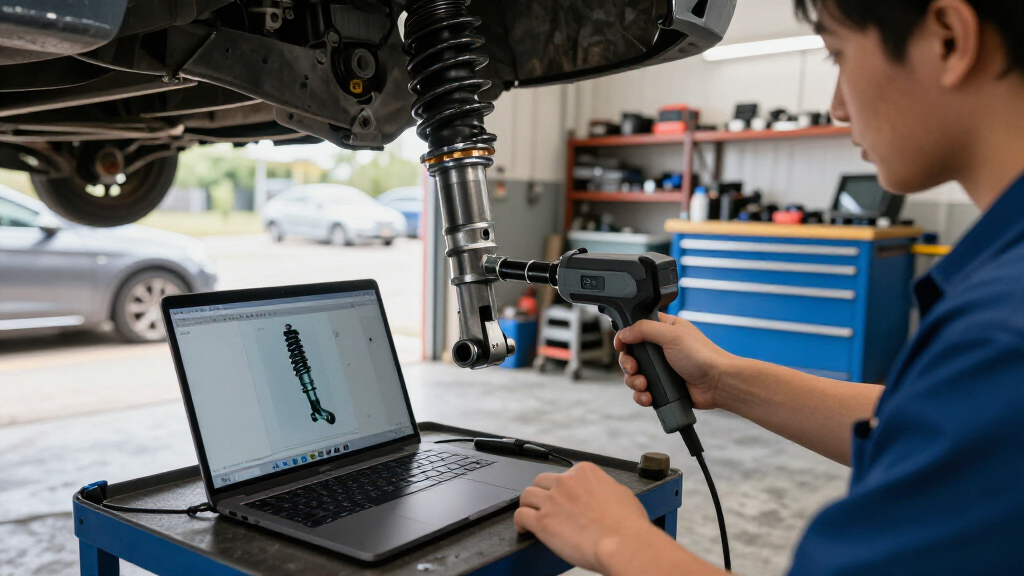
I ranked these scanners around the work implied by car parts: capturing useful geometry on components that vary in size, shape, surface, and access. I weighed scan coverage, detail potential, handheld usability, setup demands, and how well each option could fit a practical automotive workflow. A scanner’s headline capability matters less if a buyer’s parts are difficult to position, track, or clean up in software.
The Raptor Pro leads because versatility across part sizes is more useful to most automotive buyers than specialization. The Otter models follow as flexible alternatives, while RANGE stands out for larger targets. Fox and THREE offer different format choices, but their ranking depends more heavily on the size and handling needs of the buyer’s parts. The list includes two Raptor Pro product names; I count them as the same scanner, leaving eight distinct models among the nine listings.
Factors to Consider When Choosing Best 3D Scanners For Car Parts
Before choosing a scanner, I’d define the parts and the result I need: a visual reference, a repair fit check, or geometry intended for CAD work. Those goals demand different levels of detail and cleanup, and a scanner alone cannot fix poor surface conditions or awkward access.
Match Scan Range to Your Parts
List the smallest and largest parts you expect to scan, then include awkward shapes such as brackets, housings, and trim pieces. A scanner optimized for broad coverage may make a bumper-sized surface easier to capture, yet small holes or clips can be harder to represent cleanly. A compact component calls for steadier attention to edges and features than a large panel does. Buyers who work across both extremes should favor a model with a flexible workflow, even if they occasionally need multiple passes. A common mistake is choosing from the largest part alone and discovering that everyday small components are tedious. I’d make a shortlist using the parts you scan most often, then check whether occasional oversized jobs can be handled with a slower process.
Decide How Much Detail the Job Needs
A replacement cover that only needs to sit flush has different requirements from a gear, connector, or mounting feature that must line up precisely. More captured detail can help preserve edges and small forms, but it does not automatically produce a CAD-ready model. Scan alignment, surface preparation, and later modeling affect the usable result. Before paying for capability you may not need, define the tolerance your project can accept and how you will check it. If a part’s fit is safety-critical, a consumer scanning workflow should not be treated as a substitute for appropriate measurement and validation. For ordinary fabrication planning, prioritize repeatable capture of the features that locate or mate with other parts.
Plan for Reflective, Dark, or Featureless Surfaces
Automotive parts often combine glossy paint, dark plastic, polished metal, and smooth curves, all of which can complicate tracking or capture. The scanner’s listed capabilities are only part of the workflow; you may need to change lighting, reposition the part, or use an approved removable scanning aid. That adds preparation time and can be unsuitable for delicate finishes or parts that cannot be altered. Buyers often underestimate this because product demonstrations tend to show cooperative surfaces. Check the manufacturer’s guidance for your materials and test a noncritical part before planning a full restoration scan. If surface treatment is off limits, prioritize a workflow that can accommodate careful repositioning and multiple views.
Account for Access and Part Handling
A part’s geometry matters as much as its overall size. Deep recesses, narrow channels, hidden faces, and undercuts may require additional scan angles or may remain inaccessible while the object is assembled. Handheld scanning can help when a part is irregular, but the operator still needs room to move around it and maintain tracking. Fixed-format workflows can suit parts that are easy to position, yet mounting and repositioning become part of the job. Before choosing, consider whether you can remove the component from the vehicle and rotate it safely. I’d also plan how to support flexible trim or thin pieces without bending them during capture.
Compare the Whole Workflow, Not Just the Scanner
A useful scan depends on the computer, software, export formats, and cleanup steps as well as the capture device. Check whether the software runs on your operating system and whether its exports fit the CAD or mesh tools you already use. Wireless operation may reduce cable constraints, but it does not remove the need to move around the part or review scan quality. New buyers should account for time spent learning alignment, hole filling, and mesh cleanup. A cheaper or simpler capture route can become frustrating if every scan requires extensive manual repair. I’d choose the workflow that produces a file I can actually use for my next step, whether that is comparison, visualization, or reverse engineering.
Know When to Pay for Versatility
Paying for broader capability makes sense when your work regularly shifts between small components and large body or interior parts. If you scan only one type of part, a more specialized scanner may be easier to learn and better matched to the task. A premium model cannot compensate for a workflow that lacks calibration, repeatable part positioning, or a clear plan for converting scans into designs. Think about who will operate the scanner and how often; occasional hobby use has different needs from a shop that shares equipment across jobs. For a first purchase, ease of setup and predictable exports may matter more than an advanced feature you rarely use. I’d spend extra when it removes a recurring bottleneck in the parts you actually handle.
Frequently Asked Questions
Can one scanner handle both small clips and large body panels?
One scanner can cover a broad range of parts, but the effort and usable detail may vary between extremes. Large panels need coverage and stable tracking, while small clips call for careful capture of edges and fine features. The Otter and Raptor Pro options stand out in this lineup for buyers seeking flexibility across varied part sizes. Expect to use different scan paths and more passes for difficult geometry. If both sizes are routine work, compare the whole workflow on representative parts before deciding.
Will a 3D scan give me a part I can send straight to a 3D printer?
Usually, a scan produces a mesh that may need cleanup before printing. Holes, thin walls, hidden surfaces, and reflective areas can leave gaps or distortions that require repair in mesh or CAD software. A scan is most useful as a starting shape or reference when the original geometry is hard to measure. You may need to remodel mating features so the replacement fits reliably. Plan for both capture and post-processing when estimating the work involved.
Do I need a different scanner for shiny or black automotive parts?
Those surfaces can make scanning harder, but the answer depends on the material, finish, lighting, and scanner workflow. Some jobs may benefit from an approved removable scanning spray, while sensitive finishes may rule that out. Multiple angles and careful part positioning can help with difficult regions, though they add time. Check the scanner maker’s surface guidance before buying and try a noncritical sample if possible. For valuable or delicate components, consider whether preparation is acceptable before making scanning capability the deciding factor.
Should I choose the wireless Otter Lite or the Basic handheld version?
Start by checking the exact bundle and connection method in the listing, since the names distinguish versions that may differ in how they connect and what is included. Wireless operation can make movement around a large or awkward part more convenient, but it does not guarantee better scan detail. A wired setup may be a better fit if your work happens at a fixed bench and you prefer a simpler device workflow. Compare supported computers, accessories, software, and export options alongside the connection type. For shop use, consider whether the scanner will be shared and how easily each setup can be repeated.
Is the Revopoint RANGE a good choice for small replacement parts?
It is the most targeted option here when larger objects and broad surface capture define the job. Small parts can still be scanned, but buyers should check whether its capture approach preserves the details their replacement requires. A mounting hole or clip may matter more than the overall outline, so a broad scan alone may not answer the fit question. If small components are the main workload, compare the Otter or Raptor Pro options before choosing RANGE. For a mixed workload dominated by larger pieces, RANGE may be the more natural fit.
Conclusion
For a single scanner aimed at varied automotive work, I recommend the Creality CR-Scan Raptor Pro as best overall. The Creality CR-Scan Otter Lite is my value pick for buyers who want a flexible handheld option, while the Creality CR-Scan Otter suits shoppers seeking a broad-use alternative. For beginners, I’d favor the model whose software, computer support, and setup steps feel easiest to repeat with a real sample part; the listing names alone do not establish a clear beginner winner. Choose the Revopoint RANGE for a workflow centered on larger parts, and compare the Fox or Matter and Form THREE formats when your part size and handling needs point toward those approaches. The two Raptor Pro listings describe the same named model, so I would verify the exact seller bundle before ordering.
Fall Picks
fall essentials
As an affiliate, we earn on qualifying purchases.