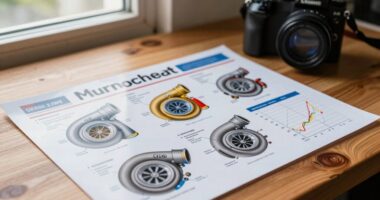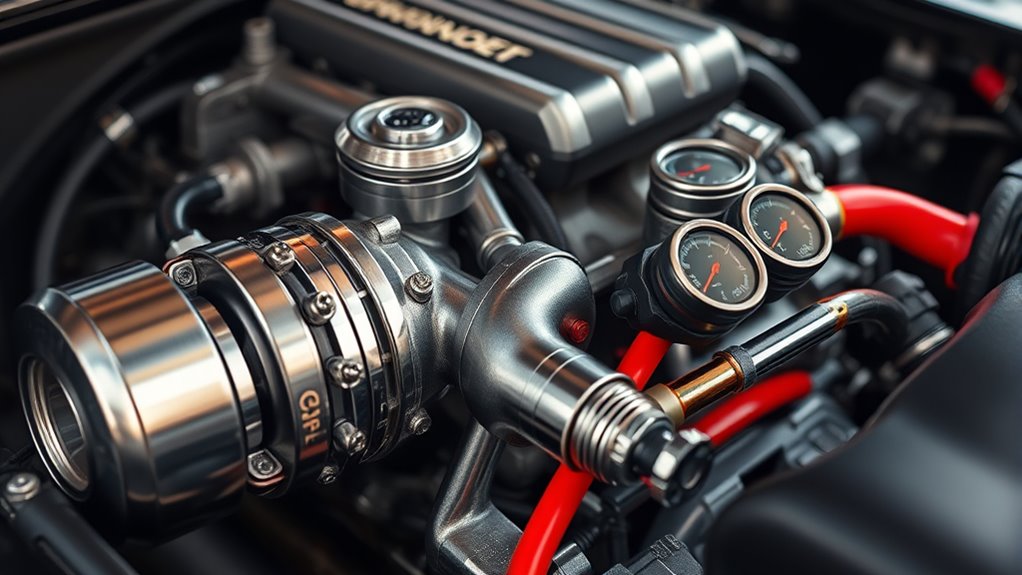

Boost control strategies involve choosing the right wastegate and boost controller to manage your turbo pressure effectively. You can opt for internal wastegates for simple setups or external ones for more precise control at higher boost levels. Electronic boost controllers help adjust pressure dynamically, reducing turbo lag and protecting your engine. By selecting the proper components and tuning them correctly, you can optimize performance and safety. Keep exploring to discover how these tools can transform your turbocharged experience.
Key Takeaways
- Wastegates regulate exhaust flow to control turbo boost pressure, with internal and external types offering different precision levels.
- External wastegates provide more accurate boost control at higher pressures compared to internal variants.
- Boost controllers, especially electronic ones, dynamically adjust wastegate operation for optimal performance.
- Electronic boost controllers improve response, reduce turbo lag, and protect engines from over-boosting.
- Proper selection and tuning of wastegates and boost controllers enhance engine safety, responsiveness, and overall power delivery.
Have you ever wondered how performance cars manage to maximize boost pressure without sacrificing engine reliability? The secret lies in sophisticated boost control strategies, especially the way they handle wastegates and boost controllers. When you step on the gas pedal, the turbocharger spools up, forcing more air into the engine for increased power. But if the boost gets too high too quickly, it can cause turbo lag—an annoying delay between pressing the accelerator and feeling the boost. This delay results from the time it takes for the turbo to spool up, and it can hinder your driving experience. To minimize turbo lag and keep boost levels safe, manufacturers employ different wastegate types, each with its advantages.
A wastegate is a valve that regulates the exhaust gases flowing through the turbo turbine wheel, controlling the boost pressure. There are primarily two wastegate types: internal and external. Internal wastegates are integrated into the turbo housing and are simpler to install. They work well for many applications but can be less precise at very high boost levels. External wastegates, on the other hand, are separate units mounted on the exhaust manifold. They offer more accurate boost control, especially at higher pressures, and make it easier to tune the system for performance and reliability. Choosing the right wastegate type is essential because it directly influences how quickly and steadily the turbo can spool up, affecting both turbo lag and overall engine safety. Additionally, the material and build quality of wastegates can impact their durability over time.
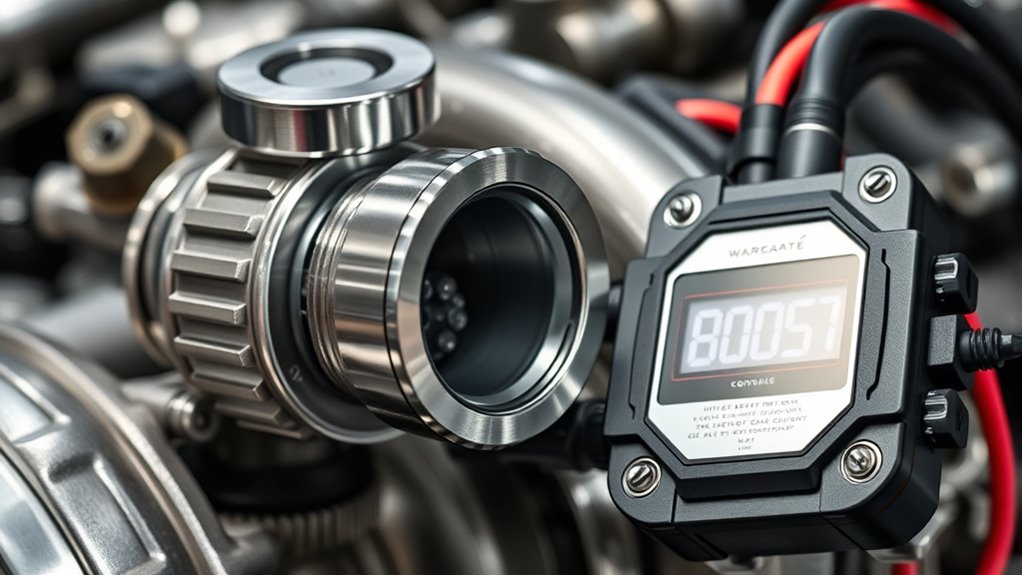
Boost controllers come into play to further refine this process. They manage the wastegate’s operation, either manually or electronically, to optimize boost levels based on driving conditions. Manual boost controllers are straightforward, allowing you to set a fixed boost pressure, but they lack the ability to adapt during different driving scenarios. Electronic boost controllers, however, provide sophisticated control, adjusting boost levels on the fly to prevent over-boosting and protect your engine. These controllers communicate with the wastegate actuator, modulating its position to maintain the desired boost pressure, reducing turbo lag and ensuring a smoother power delivery.
Electronic boost controllers optimize boost levels dynamically, reducing turbo lag and protecting your engine.
In essence, mastering boost control involves a careful balance. Properly selecting wastegate types and installing an appropriate boost controller can dramatically improve your car’s response, minimize turbo lag, and safeguard the engine from excessive pressure. When done right, these strategies allow you to enjoy the thrill of increased power without the worry of damaging your engine over time. So, whether you’re tuning a street car or competing on the track, understanding the intricacies of wastegates and boost controllers is key to unlocking peak performance reliably. Recognizing the importance of engine reliability can help ensure long-term performance and safety.

SNYFT 3 Port Boost Control Solenoid Valve, Replacement for MAC Valve
- Direct Replacement for MAC Valve: Engineered for seamless installation and performance
- Fast 5ms Response Time: Ensures zero turbo lag and quick spool-up
- High Flow Electronic Control: Provides precise boost management for turbocharged engines
As an affiliate, we earn on qualifying purchases.
As an affiliate, we earn on qualifying purchases.
Frequently Asked Questions
How Do Different Boost Control Strategies Affect Engine Longevity?
Different boost control strategies impact your engine’s longevity by influencing turbo lag and boost stability. Precise control reduces excessive pressure spikes, preventing stress on engine components, which extends lifespan. If you use a well-tuned system, you’ll experience smoother boost delivery, minimizing wear and tear. Conversely, poor control can cause boost fluctuations, increasing engine strain and decreasing longevity. Proper strategies ensure your engine runs reliably, with ideal performance and durability.
Can Aftermarket Wastegates Improve Boost Response Significantly?
Absolutely, aftermarket wastegates can dramatically boost your boost response—it’s like opening lightning-fast performance! By choosing the right wastegate types, you eliminate lag and get precise control over your turbo’s boost levels. Upgrading to a high-quality wastegate means your engine reacts instantly to throttle inputs, delivering power when you need it most. This upgrade transforms your driving experience, making it sharper, more responsive, and undeniably exhilarating.
What Are Common Signs of Boost Control System Failure?
If your boost control system fails, you’ll notice boost pressure fluctuations, which cause erratic power delivery. You might also hear hissing sounds indicating wastegate leaks. Additionally, your engine may go into limp mode or show decreased performance, and your boost gauge could read inconsistent or abnormally high pressures. These signs suggest your boost control system isn’t functioning properly, so it’s essential to inspect for leaks and faulty components promptly.
How Does Altitude Impact Wastegate Performance?
Altitude effects can subtly influence your wastegate performance, making calibration tricky as air pressure drops. When you climb higher, the reduced atmospheric pressure causes the wastegate to open differently, potentially leading to over-boost or under-boost conditions. To keep things running smoothly, you may need to adjust wastegate calibration settings. This way, your turbo system stays responsive and reliable, regardless of elevation changes.
Are Electronic Boost Controllers Compatible With All Turbocharged Engines?
Electronic boost controllers aren’t compatible with all turbo engines. You need to check electronic compatibility before installation because some turbo engines may require specific control modules or wiring setups. If your engine’s electronic systems align with the controller’s requirements, you’ll enjoy precise boost management. However, if it’s incompatible, you might face issues like faulty readings or system errors. Always verify your turbo engine’s specifications to guarantee smooth operation.
Conclusion
Think of your turbocharged engine as a delicate garden, where wastegates and boost controllers are your skilled gardeners. They carefully prune and shape the flow of air, ensuring your engine blooms with power without overgrowth. When you master these strategies, you’re tending a thriving landscape of performance, balancing control and boost like a seasoned gardener. With the right tools and attention, your engine’s potential will flourish, delivering smooth, reliable power every time you hit the gas.