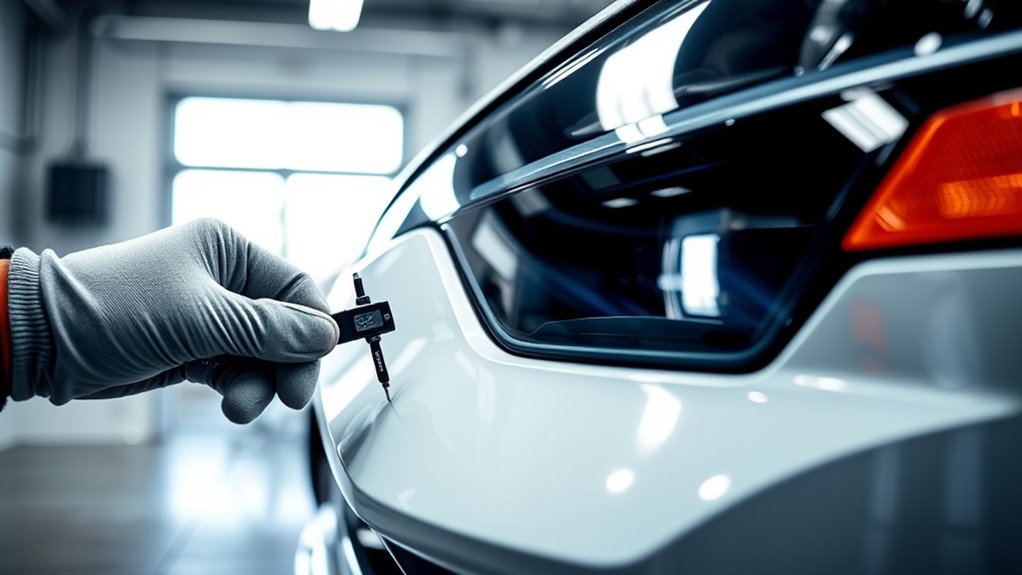
After body work, you need to guarantee your ADAS sensors are properly calibrated for safety. Start by inspecting the sensors’ physical alignment and adjusting them according to your vehicle’s specifications. Use advanced diagnostic tools to verify sensor signals and perform digital recalibration to update calibration data. Confirm everything functions correctly with post-calibration tests. If you want to make sure your safety features operate flawlessly, continue exploring the detailed steps involved.
Key Takeaways
- Perform a visual inspection and physically realign sensors according to manufacturer specifications.
- Connect diagnostic tools to verify sensor signals and identify error codes.
- Use specialized calibration targets or mounts to ensure accurate sensor positioning.
- Update calibration data and perform digital recalibration through manufacturer software.
- Conduct post-calibration tests to confirm sensors operate correctly and safety features are functional.
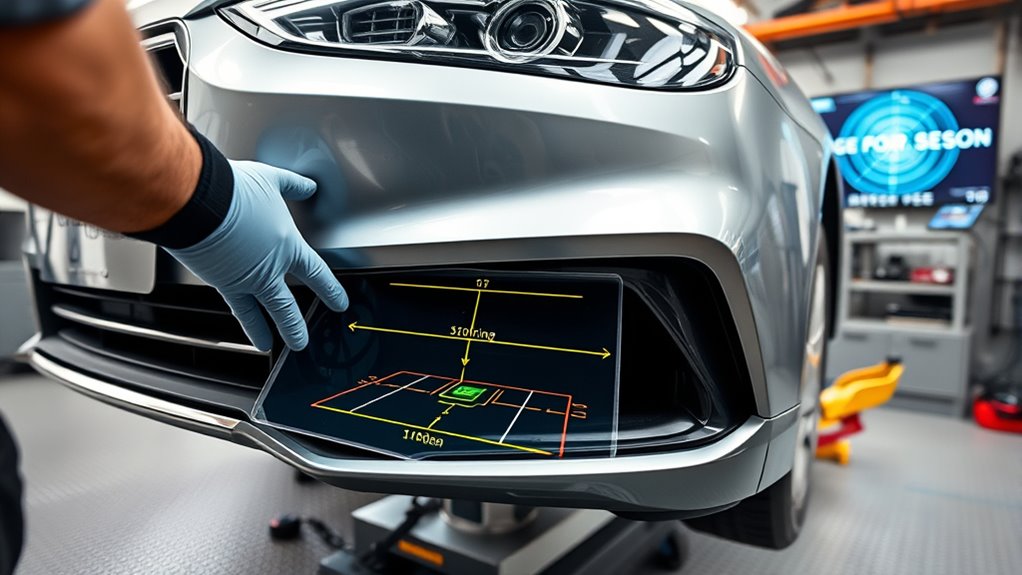
After body work, calibrating your vehicle’s Advanced Driver Assistance Systems (ADAS) sensors is essential to make certain they function correctly and keep you safe on the road. When your vehicle undergoes repairs or collision repairs that involve the front, rear, or sides, the sensors responsible for functions like adaptive cruise control, lane departure warning, or automatic emergency braking may become misaligned. This misalignment can compromise safety features and lead to false alerts or system failures. To prevent this, proper sensor calibration is necessary, starting with precise sensor alignment and thorough diagnostic procedures.
Sensor alignment involves adjusting the position of the sensors so that they accurately interpret their environment. This process ensures that the sensors are correctly oriented and positioned relative to the vehicle’s body and the road. Proper alignment is critical because even a slight shift can cause the sensors to misread distances or angles, resulting in faulty system responses. You should always follow the manufacturer’s specifications for sensor placement, which often involves specific measuring points and alignment tools. Many repair shops use specialized calibration targets or mounts to verify that sensors are aligned properly after body work. This step is crucial to restore the sensors to their factory settings and ensure they work in harmony with other vehicle systems.
Diagnostic procedures come into play to verify that the sensors are functioning correctly after physical adjustments. Using advanced diagnostic tools, technicians can connect to your vehicle’s onboard computer to run system checks. These procedures will identify any faults, error codes, or miscommunications within the ADAS. The diagnostic process often involves scanning for sensor-specific issues, checking calibration status, and confirming that signals are within acceptable ranges. If discrepancies are detected, technicians can recalibrate the sensors digitally, which involves updating their calibration data to match the vehicle’s current configuration. This step guarantees that all sensors are not only physically aligned but also electronically calibrated to provide accurate data to the vehicle’s control modules. Incorporating fraud detection tools and software updates can also help identify irregularities in sensor data, ensuring comprehensive safety and reliability.

ANGSO-AUTO ADAS Calibration Tool Kit Compatible with Honda Toyota Kia Ford ADAS Radar Aiming Calibration Tool,Post with 0-30 Centimeter Scale,Corner Reflector Target with Billet Aluminum Stand
- Universal Vehicle Compatibility: Fits Honda, Toyota, Kia, Ford
- ADAS Calibration Enhancement: Improves safety and system performance
- Durable Aluminum Reflector: Maintains shape and calibration accuracy
As an affiliate, we earn on qualifying purchases.
As an affiliate, we earn on qualifying purchases.
Frequently Asked Questions
How Long Should I Wait Before Calibrating Sensors After Repairs?
You should wait at least 24 hours before calibrating sensors after repairs to guarantee proper sensor alignment. This waiting period allows any residual moisture or settling from body work to stabilize. During calibration procedures, make sure the vehicle is on a level surface and follow the manufacturer’s instructions carefully. Rushing the process can lead to inaccurate sensor readings, so patience is key for maximum ADAS performance.
Can I Calibrate ADAS Sensors Myself Without Professional Tools?
Did you know that improper calibration can reduce ADAS effectiveness by up to 20%? You might think about DIY calibration, but it’s risky without professional tools. Sensor alignment techniques require precise measurements and specialized equipment to guarantee safety. While some basic checks are possible, fully calibrating ADAS sensors after body work is best left to trained technicians to avoid misalignment and ensure your system functions correctly.
What Are the Signs That Sensors Need Recalibration?
You’ll notice sensor misalignment if your vehicle’s advanced driver-assistance systems (ADAS) behave erratically, such as sudden warnings or system failures. Visual signs include uneven sensor positioning or cracks. If calibration procedures weren’t properly followed after body work, sensors might need recalibration. Always check for warning lights or error messages, and have a professional verify sensor alignment to guarantee your safety and the proper functioning of your ADAS.
Does Calibration Affect the Vehicle’s Warranty?
Yes, calibration can impact your vehicle’s warranty, especially if manufacturer policies specify recalibration after body work. Ignoring calibration might void warranty coverage for ADAS-related issues, leaving you to face costly repairs. So, if you think calibration is optional, remember that your warranty implications aren’t. Always follow manufacturer guidelines and guarantee proper recalibration to protect your warranty and keep your vehicle’s safety features functioning properly—because who doesn’t love a warranty that actually covers things?
Are There Specific Calibration Requirements for Different Vehicle Brands?
Yes, there are specific calibration requirements for different vehicle brands. You need to follow brand-specific calibration procedures and manufacturer protocols to guarantee proper sensor functioning. Each brand may have unique calibration methods, tools, and settings, so it’s crucial to adhere to these guidelines. Using the correct calibration process helps maintain safety features and can prevent potential issues, ensuring your vehicle’s ADAS system performs reliably after body work.
Conclusion
After body work, calibrating your ADAS sensors is just like tuning a musical instrument—it ensures everything works in harmony. By following proper procedures, you help keep your vehicle’s safety features accurate and reliable. Don’t skip this step; it’s essential for your safety and peace of mind. Think of sensor calibration as the finishing touch on a masterpiece—making sure all the parts work together perfectly, so you can drive confidently, knowing your system is spot-on.