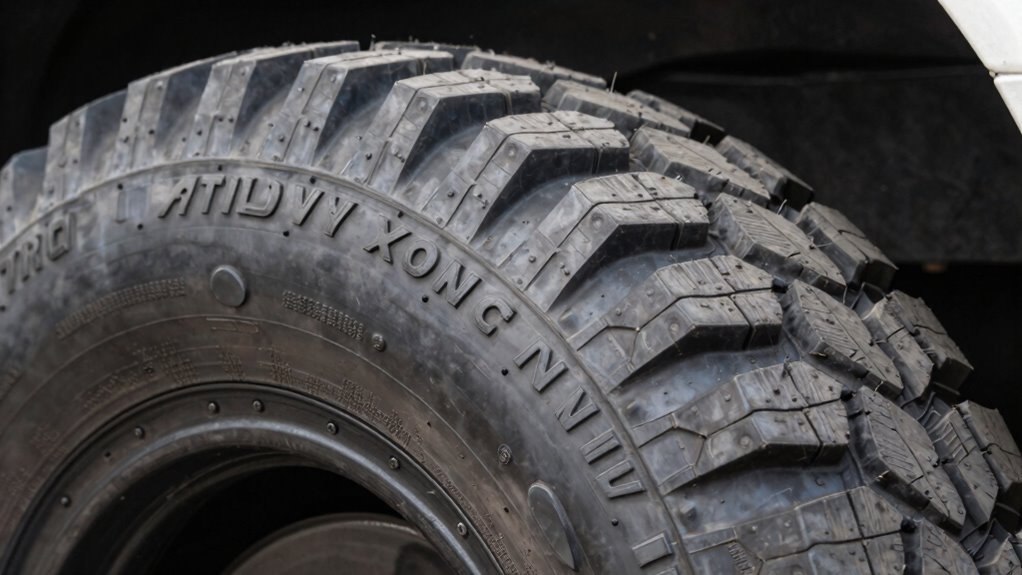

When choosing off-road tires, prioritizing sidewall strength is vital because it directly protects against cuts, punctures, and damage on rugged terrain. While a more aggressive tread pattern provides extra grip, it doesn’t offer the same level of protection as a durable sidewall. Strong sidewalls help absorb impacts and resist abrasions from rocks and uneven surfaces, ensuring your tire lasts longer and performs better. Keep exploring to find out how proper maintenance can maximize your off-road adventures.
Key Takeaways
- Strong sidewalls resist cuts, punctures, and abrasions, offering better protection on rugged terrain than tread pattern alone.
- Sidewall durability prevents damage from rocks, mud, and obstacles, ensuring tire longevity during off-road adventures.
- Proper tire pressure and wheel alignment work with strong sidewalls to enhance off-road performance and reduce damage risk.
- Tread pattern influences grip but cannot compensate for weak sidewalls in challenging terrains.
- Balancing sidewall strength with tread design provides optimal off-road durability and obstacle navigation.
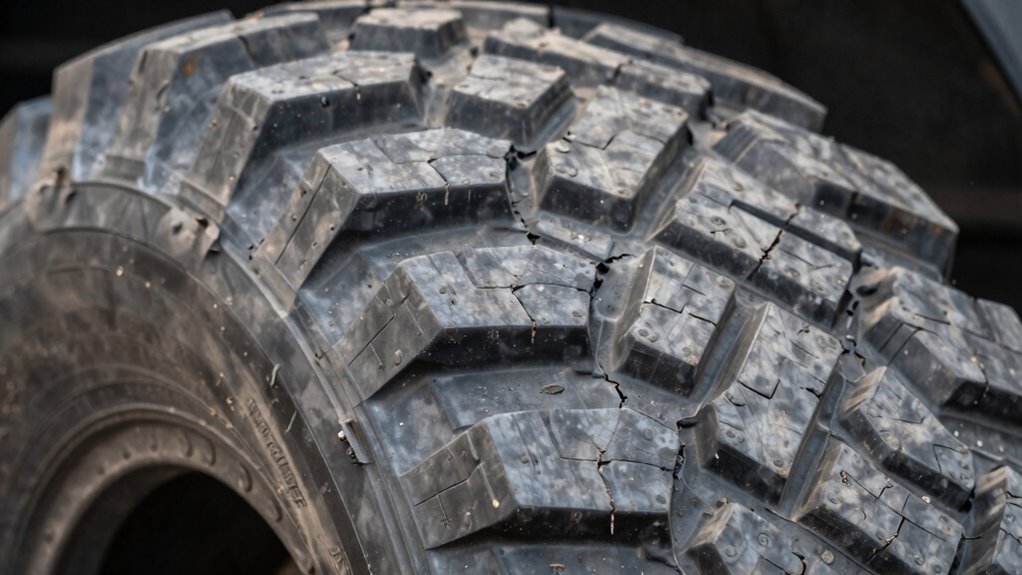
Off-road tires are essential for tackling rugged terrains that standard tires can’t handle. When you’re venturing off the beaten path, the key to maintaining control and safety often comes down to understanding what makes a tire suitable for tough conditions. Many drivers focus solely on tread pattern, believing that deeper or more aggressive treads are the answer. While tread is important for grip, the sidewall strength of your tires plays a more crucial role in handling rough terrains. A sturdy sidewall provides the resilience needed to resist cuts, punctures, and abrasions that are common when navigating rocks, mud, or uneven surfaces. It’s the sidewall that absorbs much of the impact from bumps and obstacles, preventing damage that could leave you stranded.
Strong sidewalls protect against cuts, punctures, and damage on rugged off-road terrains.
However, having strong sidewalls isn’t enough on its own. Proper tire pressure is vital to maximize the durability and performance of your off-road tires. When you’re off-road, lower tire pressure increases the contact patch, improving traction on loose surfaces like sand or mud. But you need to be cautious; too low, and you risk sidewall damage or rim exposure, especially if you hit a sharp rock. Maintaining the right tire pressure is a balancing act, and it’s essential to adjust it according to terrain and load. Regularly checking and adjusting tire pressure before heading out ensures your tires perform optimally and prevents unnecessary strain on the sidewalls.
Equally important is wheel alignment. When off-roading, misaligned wheels can cause uneven tire wear, reduce traction, and compromise handling. Proper wheel alignment ensures that your tires are positioned correctly in relation to your vehicle’s suspension and steering components. This not only prolongs the life of your tires but also helps maintain consistent contact with the ground, which is crucial on uneven terrain. Misalignment can lead to increased stress on the sidewalls, making them more susceptible to damage when subjected to rough conditions. Keeping your wheel alignment in check means your tires can do their job more effectively, providing stability and protection where it counts.
In essence, choosing off-road tires with robust sidewalls isn’t just about the tire’s tread pattern; it’s about understanding how tire pressure and wheel alignment influence overall performance. A tire with strong sidewalls, properly inflated and correctly aligned, gives you the confidence to tackle challenging terrains without fear of damage or loss of control. It’s this combination that truly makes a difference when you’re venturing into the wild, ensuring you’re prepared for whatever obstacles come your way. Properly considering sidewall strength alongside other factors ensures your off-road adventures remain safe and successful.

4 x Arisun Aresta A/T ZG06 215/70R16 100S SL 16 inch Tires
- Tire Type: Tires Only
- Season: All Season
- Performance: All Terrain
As an affiliate, we earn on qualifying purchases.
As an affiliate, we earn on qualifying purchases.
Frequently Asked Questions
How Do Sidewall Designs Affect Tire Durability?
Your tire’s sidewall designs directly impact durability by enhancing sidewall materials and reinforcement. When you choose tires with strong sidewall materials, they resist cuts, punctures, and abrasions better. Reinforced sidewalls provide extra support, preventing damage from rough terrain. These features help your tires last longer and perform reliably off-road. So, investing in tires with robust sidewall reinforcement guarantees better durability, even when facing tough conditions.
Are Softer Sidewalls Better for Off-Road Traction?
Softer sidewalls may seem appealing for off-road traction, but they compromise durability and ride stability. If you’re concerned about sidewall aesthetics and color, softer options can be customized to match your vehicle’s look. However, for serious off-road adventures, stiffer sidewalls provide better support and protection against rough terrain. So, while softer sidewalls might enhance grip briefly, they aren’t the best choice for long-lasting off-road performance.
Can Sidewall Strength Impact Ride Comfort?
Yes, sidewall strength can influence ride comfort. When your tires have good sidewall cushioning, they absorb bumps better, leading to a smoother ride. Softer sidewalls offer more flexibility, enhancing ride smoothness, but may feel less stable on rough terrain. Conversely, stiffer sidewalls provide stability but can transmit more road vibrations. Finding the right balance guarantees you enjoy a comfortable, controlled off-road experience without sacrificing durability.
Do Different Tire Brands Prioritize Sidewall or Tread Quality?
Tire brands often play a game of smoke and mirrors, emphasizing certain features through marketing claims. Some prioritize sidewall strength, knowing it’s key for durability and off-road resilience, while others focus on tread quality for traction. You’ll find that many brands balance both, but their marketing claims can sway your perception. Ultimately, it’s essential to look beyond branding and assess real-world reviews to choose tires that meet your specific needs.
How Does Sidewall Flexibility Influence Tire Performance?
Sidewall flexibility directly impacts your tire’s performance by providing better shock absorption and improved traction on rugged terrain. When the sidewall materials are durable yet flexible, they allow your tire to bend without damage, enhancing off-road capabilities. Pay attention to sidewall markings, which indicate strength and flexibility levels. A flexible sidewall adapts to obstacles, reducing stress on the tire and increasing its lifespan, ensuring a smoother, more reliable ride.
Conclusion
Remember, when choosing off-road tires, sidewall strength often matters more than tread pattern. For example, if you’re tackling rocky trails, a tire with reinforced sidewalls can prevent punctures and improve durability, even if the tread isn’t the deepest. Think of it like armor for your vehicle—protecting you from unexpected hazards. So, prioritize sidewall strength to guarantee your off-road adventures are safer and more reliable, no matter where the trail takes you.