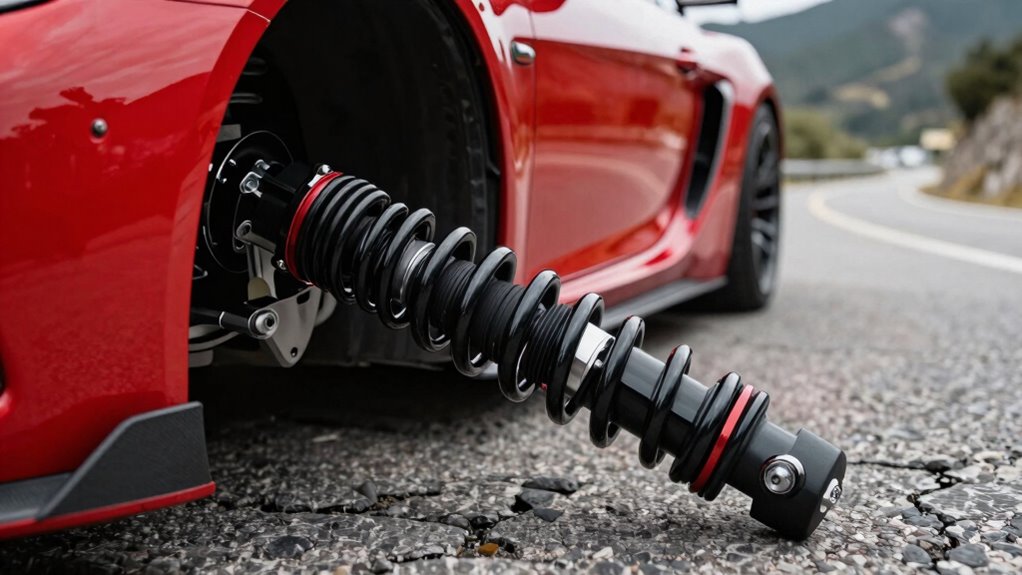

The most common mistake that makes new coilovers feel terrible is choosing an inappropriate spring rate for your vehicle and driving style. If the springs are too stiff, your ride will be harsh, bumpy, and unstable, while too soft springs can cause sagging and poor handling. This imbalance disrupts suspension geometry, making the car feel unresponsive. Getting the spring rate right guarantees smooth, stable handling and better ride quality. Keep going to discover how to get it just right.
Key Takeaways
- Using spring rates that are too stiff or too soft for your vehicle’s weight and driving style causes poor ride quality.
- Incorrect spring stiffness disrupts suspension geometry, leading to unpredictable handling and tire contact issues.
- Choosing spring rates without considering ride height adjustments can cause uneven stance and compromised stability.
- Overly stiff springs in lowered setups can result in harsh rides and suspension component stress.
- Failing to match spring rates with overall suspension setup reduces responsiveness and driving confidence.

When upgrading or adjusting coilovers, one common mistake drivers make is choosing the wrong spring rate. The spring rate directly impacts how your car handles, and selecting an inappropriate one can make your ride feel harsh, unstable, or unresponsive. Many overlook how critical this choice is, leading to a frustrating experience that feels far from the improvement they expected. It’s tempting to pick a stiffer spring for better handling, but if it’s too stiff or too soft for your setup, your car’s suspension geometry can be thrown off, causing uneven tire contact and unpredictable behavior. Your suspension needs to work harmoniously, and the spring rate is a key factor in maintaining proper suspension geometry.
Choosing the right spring rate is crucial for balanced handling and maintaining proper suspension geometry.
The wrong spring rate doesn’t just affect handling; it also messes with your ride height adjustment. Many drivers think they can simply set their coilovers to a certain ride height without considering the spring’s stiffness. But if your springs are too stiff, lowering your car might result in a harsh ride or even risk damaging components because the suspension can’t absorb bumps properly. Conversely, springs that are too soft might cause your car to sit unevenly or sag under load, interfering with proper suspension geometry and ride height. This imbalance can lead to uneven tire wear and poor steering response, making your driving experience less predictable and less enjoyable. Additionally, choosing the correct spring rate supports optimal suspension geometry, which is essential for consistent handling.
Proper spring stiffness also plays a crucial role in how your vehicle responds to road imperfections and cornering forces, helping to maintain stability under various driving conditions. When you choose the right spring rate, you give yourself a better chance to maintain ideal suspension geometry. Proper suspension geometry ensures your tires stay in contact with the road at all times, providing maximum grip and stability. Adjusting ride height becomes more predictable because the springs support your chassis correctly, preventing unwanted sag or harshness. It’s also important to consider your vehicle’s weight distribution to select a spring rate that complements your overall setup. Understanding your vehicle’s specific needs can help you make more informed decisions about spring stiffness and overall suspension tuning. If you’re into spirited driving or track days, a stiffer spring might be necessary, but only if it’s balanced with your other suspension components. Additionally, considering driving style and conditions can help you choose a spring rate that enhances your overall driving experience.
Ultimately, selecting the right spring rate isn’t just about ride comfort or handling on paper; it’s about creating a balanced, predictable setup that preserves your suspension geometry and allows for precise ride height adjustments. Avoid rushing into a choice based solely on stiffness ratings or popular trends. Take the time to understand your vehicle’s needs, and consider how your spring rate affects every aspect of your suspension performance. That way, your coilovers will enhance your driving experience, not hinder it.

2.0 Inch Triple Rate Coilover Spring Kit, Spring Divider with 5" x 20lb Tender Coil (2.5")
- Compatibility: Fits 2.0-inch coilover shocks
- Kit Contents: Includes spring divider and tender coil
- Dimensions: 12 x 3 x 3 inches, lightweight
As an affiliate, we earn on qualifying purchases.
As an affiliate, we earn on qualifying purchases.
Frequently Asked Questions
How Do I Determine the Correct Spring Rate for My Vehicle?
To determine the correct spring rate for your vehicle, start with your vehicle weight and intended use. Spring rate selection depends on balancing comfort and handling; heavier vehicles need stiffer springs. Check manufacturer recommendations or consult a suspension specialist. You can also consider your driving style—aggressive driving requires a higher spring rate. Testing different rates on your setup helps find the best fit, ensuring a smooth, controlled ride.
Can Changing Spring Rates Improve My Coilover Performance?
Yes, changing spring rates can improve your coilover performance by better matching your driving style and vehicle setup. Don’t fall for spring rate myths that suggest one size fits all—coilover customization is key. Adjusting spring rates allows you to fine-tune handling, comfort, and stability. Just make sure you select the right rates based on your needs, and you’ll experience noticeable improvements in your vehicle’s responsiveness and overall ride quality.
What Are Signs of an Incorrect Spring Rate Setup?
You’ll notice if your spring rate setup is off through poor handling, excessive body roll, or a rough ride. Don’t fall for spring rate myths that suggest higher rates are always better; incorrect tuning can make your coilovers feel harsh or unresponsive. During coilover tuning, confirm the spring rate matches your driving style and conditions. If you experience these signs, it’s time to revisit your spring rate choice for peak performance.
Does Spring Rate Affect Ride Comfort or Handling More?
You might notice that spring rate affects handling more than ride comfort, though it’s a coincidence how they intertwine. A stiffer spring improves suspension geometry and tire grip, sharpening your car’s response. But it can also make the ride harsher, reducing comfort. So, balancing spring rate is key—too stiff, and handling dominates; too soft, and comfort wins. It’s about finding that sweet spot for your driving style.
How Often Should I Reevaluate My Coilover Spring Rates?
You should reevaluate your coilover spring rates whenever you notice changes in handling, comfort, or if you modify your vehicle’s weight distribution. Regularly checking spring compatibility helps guarantee peak performance, especially if you add or remove heavy accessories. Generally, it’s good to review spring rates every 10,000 to 20,000 miles or after significant driving adjustments. This keeps your suspension balanced and responsive for your specific driving needs.
Conclusion
Choosing the right spring rate can make or break your coilover experience. If you pick too stiff or too soft, your ride feels harsh or wallowy. Did you know that 68% of drivers report improved handling and comfort after properly matching their spring rates? Don’t overlook this detail—getting it right means you’ll enjoy a smoother, more confident drive every time. Make the right choice, and your coilovers will truly shine.