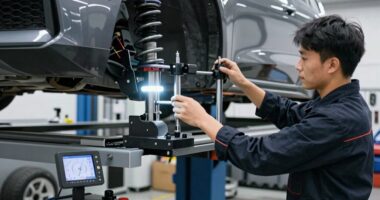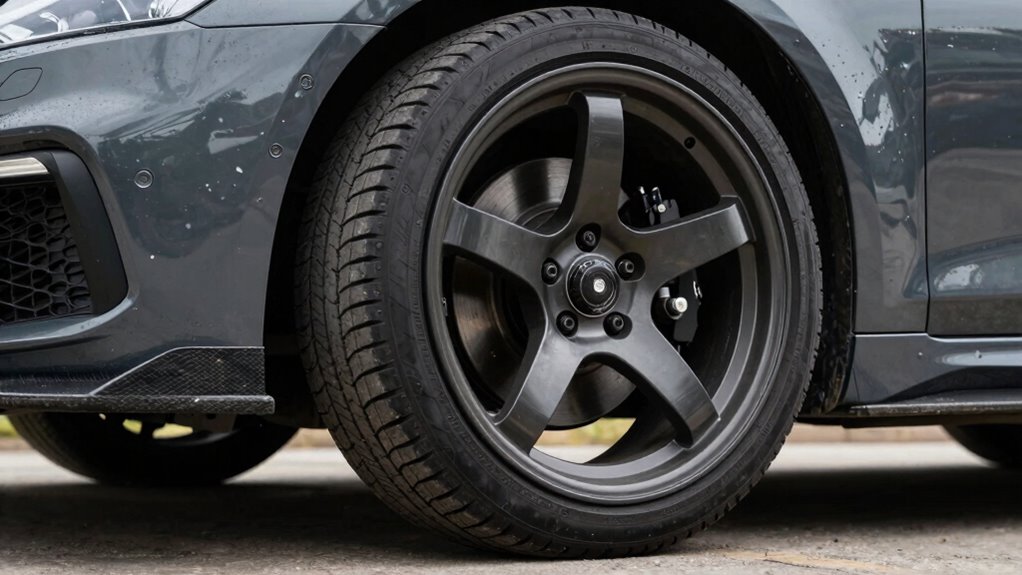

When you lower your vehicle, it shifts your suspension geometry, affecting camber, caster, and toe angles. You might see increased negative camber, which improves cornering grip but wears tires faster. Changes in caster affect steering feel and stability, while altered toe angles can cause tire scrubbing and uneven wear. These adjustments improve handling but can also stress suspension components. Keep exploring to discover how proper alignment guarantees your lowered vehicle performs safely and smoothly.
Key Takeaways
- Lowering alters camber, caster, and toe angles, impacting tire wear and handling.
- It reduces suspension travel, affecting ride quality and response during aggressive driving.
- Changes in suspension geometry can cause uneven tire contact and decreased stability.
- Proper alignment is essential to correct geometry shifts and maintain optimal performance.
- Incorrect adjustments may increase suspension stress and reduce tire lifespan.
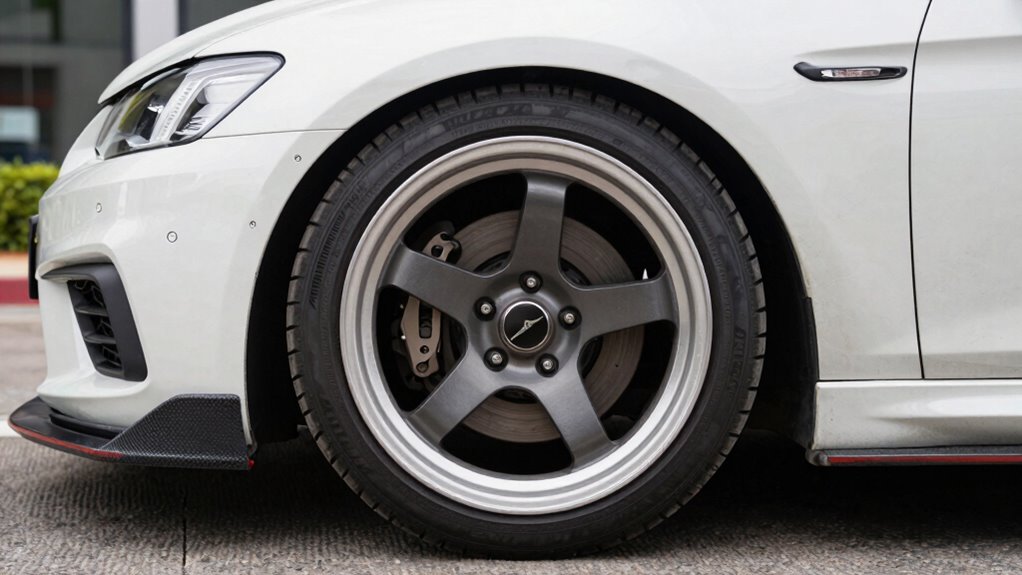
When you lower your car, the camber, caster, and toe angles shift from factory specifications. Negative camber may increase, which can improve cornering grip but also accelerate inner tire wear. If the camber becomes too aggressive without correction, you risk uneven tire wear and reduce overall tire life. Similarly, caster angle changes can influence steering feel and stability, especially at higher speeds. Incorrect toe alignment can cause your tires to scrub against the pavement, leading to rapid tire wear and affecting your vehicle’s straight-line stability. Regular wheel alignment checks are indispensable to counteract these issues and keep your tires wearing evenly. Additionally, suspension geometry plays a crucial role in maintaining proper tire contact and handling performance after lowering. Lowering your vehicle impacts your suspension’s ability to absorb bumps and maintain proper tire contact with the road. When your vehicle is lowered, the suspension’s travel range gets restricted, which can result in harsher rides and compromised handling. You might notice that your car feels more sensitive to road imperfections or that it responds differently during aggressive driving. This change can make your vehicle less forgiving on uneven surfaces, possibly leading to increased stress on suspension components and tires. Properly adjusting the suspension geometry after lowering helps restore maximum handling and ensures your tires stay in proper contact with the road, which is essential for safety and tire longevity. It’s also important to consider that improper adjustments can lead to alignment issues, further impacting vehicle performance. To prevent these issues, many enthusiasts opt for performance alignment services tailored for lowered vehicles. Additionally, understanding the specific vehicle setup can help in achieving optimal suspension adjustments for your car model. Ensuring you have the right alignment specifications is vital for maintaining your vehicle’s handling characteristics after modifications. Ultimately, lowering your vehicle requires more than just dropping it closer to the ground. You need to address the resulting suspension geometry changes through precise wheel alignment. This adjustment not only improves handling and stability but also prevents uneven tire wear and extends the life of your tires. Without these corrections, you risk sacrificing ride quality and safety. So, if you’re considering lowering your car, plan for a professional wheel alignment afterward. Doing so guarantees your suspension works harmoniously, keeping your vehicle safe, stable, and efficient on every drive.
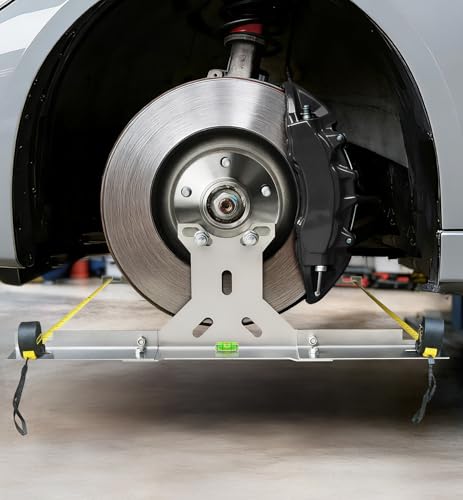
Toplamper Wheel Toe Alignment Tool Kit for at Home DIY Garage Use, Stainless Steel Toe Plates with Dual Tape Measures, Quick Front-End Toe Check for Automotive Cars Trucks SUVs (Patent Design)
- DIY Front-End Toe Adjustment: Ideal for home garage use
- Toe Reference and Adjustment Tool: Supports basic toe corrections
- Heavy-Duty Stainless Steel Plates: Resistant to bending and corrosion
As an affiliate, we earn on qualifying purchases.
As an affiliate, we earn on qualifying purchases.
Frequently Asked Questions
How Does Lowering Affect Tire Wear and Longevity?
Lowering your vehicle can impact tire wear and longevity by altering tire contact and creating uneven wear patterns. You might notice increased wear on certain edges or spots due to misaligned suspension angles. This uneven contact puts stress on specific parts of the tire, reducing its lifespan. To minimize these effects, verify proper alignment after lowering and regularly check your tires for signs of uneven wear, extending their longevity.
Can Suspension Geometry Changes Impact Vehicle Handling Safety?
Yes, suspension geometry changes can dramatically impact your vehicle’s handling safety. When you lower your car, handling stability might become a rollercoaster ride, and suspension durability could plummet like a falling star. These changes can cause unpredictable steering, increased body roll, and uneven tire wear, making your drive less safe. You might feel like you’re riding a wild stallion instead of a controlled machine, risking safety at every turn.
Are There Specific Tools Required to Measure These Geometry Changes?
Yes, you need specific tools to measure these geometry changes accurately. Alignment tools, like camber gauges, toe plates, and caster gauges, are essential for precise adjustments. Measurement techniques involve using these tools on a flat surface, ensuring all values are within manufacturer specifications. Properly measuring suspension geometry changes helps maintain *ideal* handling and safety, especially after modifications like lowering your vehicle.
How Long Does It Typically Take to Realign After Lowering?
It usually takes about one to two hours to realign your vehicle after lowering. This process guarantees ideal ride comfort and maintains fuel efficiency by correcting alignment angles. If you’ve recently lowered your suspension, you’ll want to get a professional realignment soon after to prevent uneven tire wear and handling issues. Proper alignment helps your car perform smoothly, saving you money and ensuring a comfortable ride every time.
Will Lowering Cause Any Issues With the Vehicle’s Factory Warranty?
Lowering your vehicle might seem like a small tweak, but it can actually complicate your warranty coverage. Yes, it can void parts of your factory coverage if the manufacturer deems the modification caused the issue. The warranty implications mean that if something goes wrong after lowering, you might not get factory support. So, enjoy the look, but remember, it could cost you factory coverage down the road.
Conclusion
So, after lowering your car, expect your suspension geometry to shift—affecting handling, tire wear, and ride quality. Did you know that even a 1-inch drop can change your camber by about 0.5 degrees? That small adjustment might sound minor, but it can considerably impact your driving experience. Stay mindful of these changes to keep your ride safe and optimized. Regular alignments after lowering are a smart move to maintain perfect handling and tire longevity.