
Damper tuning is more important than most drivers realize because it directly affects how your vehicle responds to different driving conditions. Properly tuned dampers improve handling, stability, and ride comfort by ensuring tires stay in contact with the road and absorbing bumps effectively. Incorrect calibration can lead to body roll, noise, and reduced safety. If you want better control and a smoother ride, understanding the true impact of damper tuning is essential—keep going to discover why it matters so much.

Get garage and car supplies delivered free — and shop member deals
- Fast, free delivery on millions of items
- Access to Prime Big Deal Days deals on October 6–7
- Prime Video, Amazon Music and more included
Key Takeaways
- Proper damper tuning ensures optimal handling, stability, and safety during various driving conditions.
- It significantly improves ride comfort by reducing vibrations and road noise.
- Well-calibrated dampers enhance tire-road contact, boosting grip and cornering performance.
- Incorrect settings can cause body roll, instability, and increased wear on suspension components.
- Small adjustments in damper tuning can lead to noticeable improvements in vehicle response and driver confidence.
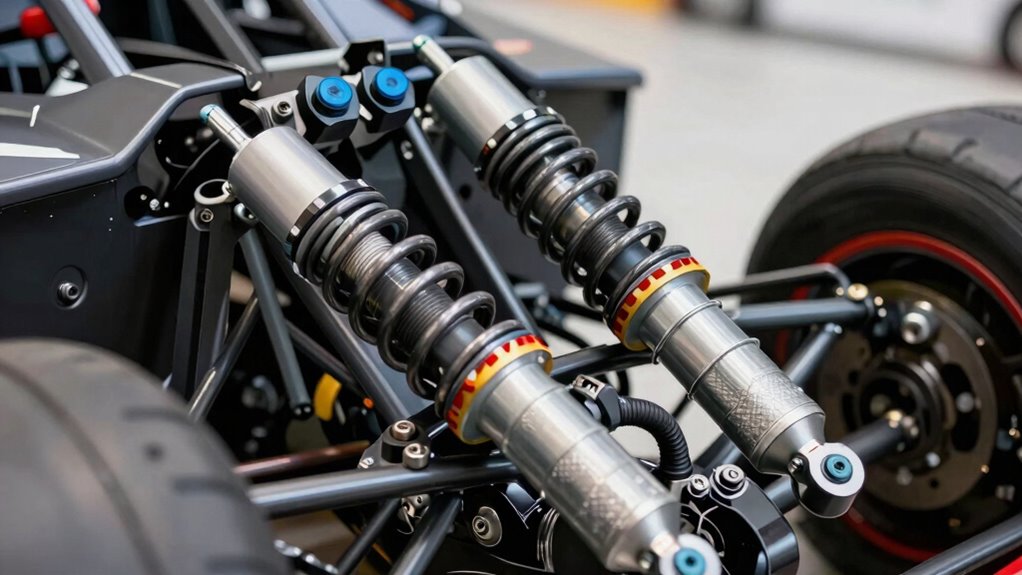
Have you ever wondered why some vehicles handle corners smoothly while others feel jittery and unstable? The secret often lies in damper tuning, a crucial aspect of suspension calibration that many drivers overlook. Damper tuning is about adjusting the shock absorbers to optimize how your vehicle responds to different driving conditions. When properly tuned, your suspension can absorb bumps more effectively, providing a smoother ride and better control. If it’s off, you’ll notice increased body roll, unpredictable handling, and discomfort. It’s not just about comfort; it significantly impacts safety and driving confidence.
Suspension calibration involves fine-tuning the dampers’ stiffness and rebound characteristics. When done correctly, it allows your vehicle to grip the road better while minimizing unwanted movements. Proper damper settings help your tires stay in contact with the road surface, providing more precise steering and braking responses. This calibration directly influences how well your vehicle handles corners, accelerates, or brakes, making your driving experience more predictable and enjoyable. Effective damper tuning plays a vital role in ensuring your vehicle maintains optimal contact with the road surface. Additionally, understanding the damping characteristics can help drivers make more informed adjustments tailored to their specific driving style and conditions. Recognizing the importance of suspension calibration can lead to better performance and comfort in various driving scenarios.
Proper damper tuning enhances grip, stability, and precise handling for a smoother, more confident drive.
Furthermore, well-tuned dampers can also improve the vehicle’s ride quality, especially on diverse terrains, helping you adapt more seamlessly to changing road conditions. Road noise reduction is another essential benefit of proper damper tuning. When dampers are correctly calibrated, they absorb vibrations and oscillations caused by uneven road surfaces, reducing the amount of noise and harshness transmitted to the cabin. This makes for a quieter, more comfortable ride, especially on rough roads. Without proper suspension calibration, you might feel every bump, and noise levels can become intrusive, leading to fatigue over long drives. Well-tuned dampers act as a buffer, smoothing out the ride and creating a more relaxed driving environment.
Many drivers underestimate how much damper tuning affects overall vehicle performance. It’s not just about making your car feel better; it’s about optimizing handling, safety, and comfort. Whether you’re maneuvering tight corners or cruising on a highway, your suspension’s ability to adapt depends heavily on how well your dampers are tuned. When you invest time in proper suspension calibration, you’ll notice improved stability, reduced road noise, and a more confident driving experience. It’s a small adjustment that yields big results, ensuring your vehicle responds exactly how you want it to, regardless of road conditions.
shock absorber damper tuning kit
As an affiliate, we earn on qualifying purchases.
As an affiliate, we earn on qualifying purchases.
Frequently Asked Questions
Can Damper Tuning Affect Fuel Efficiency?
Yes, damper tuning can affect your fuel efficiency. When your suspension balance is optimized, your vehicle maintains better contact with the road, reducing unnecessary energy loss. A well-tuned damper provides a smoother ride, lowering drag and improving aerodynamics, which saves fuel. By enhancing ride comfort and suspension performance, proper damper tuning helps you use less fuel and enjoy a more efficient driving experience.
How Often Should Damper Settings Be Adjusted?
You should adjust damper settings when suspension calibration feels off, ride comfort diminishes, or road conditions change. Regularly tuning dampers guarantees ideal handling, comfort, and safety. Typically, consider adjustments seasonally, after modifications to your vehicle, or when experiencing uneven wear or unusual vibrations. By staying proactive with damper tuning, you maintain consistent ride quality, enhance driving experience, and prevent potential suspension issues, keeping your vehicle performing at its best.
Is Damper Tuning Necessary for Daily Driving?
Damper tuning isn’t necessary for daily driving unless you notice issues with suspension stiffness or ride comfort. If your ride feels rough or overly soft, adjusting your dampers can improve comfort and handling. Most drivers don’t need frequent changes, but fine-tuning can make a significant difference if you experience uneven suspension performance. Regularly monitor how your vehicle responds, and tweak the dampers if you want a smoother, more controlled daily drive.
What Tools Are Needed for Damper Tuning?
Tuning your damper tools is like fine-tuning a musical instrument. You’ll need a suspension calibration tool, a shock absorber setting wrench, and a torque wrench for precise adjustments. These tools help you modify shock absorber settings, allowing you to find the perfect balance between comfort and handling. With them, you’ll master suspension calibration, ensuring your vehicle responds smoothly and confidently on every drive.
Can Damper Tuning Improve Tire Longevity?
Yes, damper tuning can improve tire longevity by optimizing suspension stiffness and ride comfort. When dampers are properly adjusted, they reduce excessive bouncing and uneven tire wear, which helps your tires last longer. By balancing suspension responsiveness, you minimize unnecessary stress on tires during driving. This tailored approach guarantees smoother rides and extends tire life, saving you money and enhancing overall vehicle performance.
Conclusion
So, don’t ignore damper tuning — it’s the secret sauce that transforms your driving experience from a bumpy nightmare into a smooth, adrenaline-fueled thrill ride. When you get it right, your car handles like it’s glued to the road, making every turn feel like a dance move. Trust me, mastering damper tuning is like discovering the cheat code to perfect performance—once you do, you’ll wonder how you ever drove without it!
Halloween Picks
halloween
As an affiliate, we earn on qualifying purchases.