
Your driving style directly impacts how your brake pads wear and perform, making it essential to choose pads that match your habits. Aggressive drivers need high heat-resistant pads, while leisurely drivers can opt for organic options. Relying on marketing claims can lead you to pick the wrong pads, which might reduce safety and increase costs. If you want to make smarter choices that guarantee better safety and longevity, continue exploring how matching brake pads to your driving style makes all the difference.
Key Takeaways
- Matching brake pads to driving style ensures optimal performance and longevity, regardless of marketing promises.
- Aggressive driving requires high-performance materials, making tailored selection more effective than generic marketing claims.
- Marketing claims often exaggerate features; proper matching addresses real driving conditions for better safety.
- Using the wrong brake pads can lead to faster wear, reduced effectiveness, and higher long-term costs.
- Understanding your driving habits helps select brake pads that provide reliable, consistent braking performance.
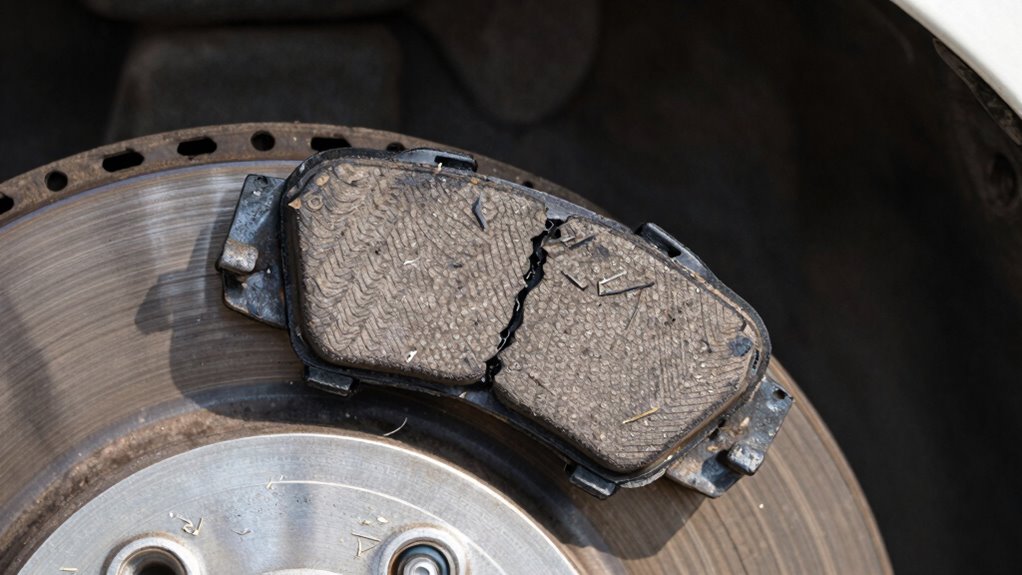
Your driving style considerably affects the lifespan and performance of your brake pads. When choosing brake pads, it’s essential to take into account your specific driving habits rather than relying solely on marketing claims or popular trends. The type of brake pad material you select plays a significant role in how well they perform and how long they last, especially when matched to your typical driving patterns. For example, if you often drive in stop-and-go traffic or make frequent abrupt stops, you’ll want brake pads designed to handle high friction and heat. Conversely, if you mostly commute on highways with steady speeds, a different material might provide better durability and quieter operation.
Your driving style impacts brake pad lifespan; choose materials suited to your habits for optimal performance and durability.
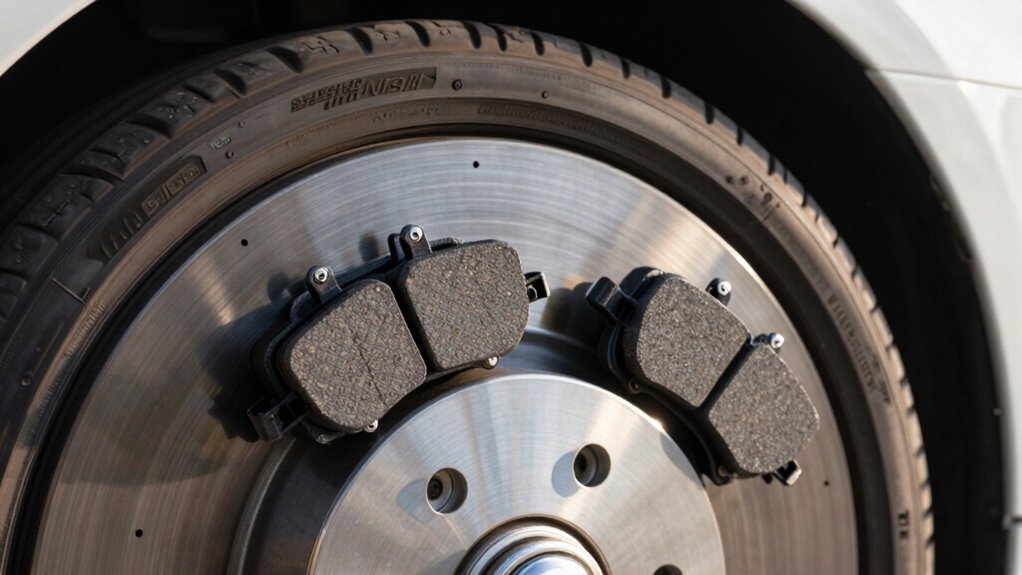
Your driving habits directly influence how quickly brake pads wear down. Aggressive drivers who frequently brake hard, accelerate rapidly, or drive in hilly terrain tend to wear out brake pads faster than those who drive smoothly and predictably. Because of this, choosing brake pads with a material optimized for high friction and heat resistance can extend their lifespan and improve safety. For example, organic brake pads might be suitable for light, everyday driving, but they tend to wear quicker under aggressive driving conditions. On the other hand, semi-metallic or ceramic brake pads are better suited for more demanding use, offering better heat dissipation and longevity when subjected to intense braking.
It’s tempting to rely on marketing claims promising long-lasting or high-performance brake pads, but these claims often overlook the importance of matching the brake pad material to your actual driving style. A brake pad that performs well in a racing environment may not be ideal for daily city driving, just as a pad designed for towing or heavy loads might be unnecessary for casual commuting. When selecting brake pads, think about your typical driving environment and habits. If you frequently brake heavily, prioritize materials that can withstand high temperatures and resist fade. If your driving is smooth and steady, lightweight and quiet brake pads may serve you better.
In addition, understanding the different brake pad materials available can help you make an informed decision tailored to your driving needs. Being aware of brake pad performance factors can further enhance your ability to select the most suitable option for your specific driving conditions. Furthermore, considering wear characteristics can help predict how your brake pads will behave over time and usage. Recognizing the impact of driving conditions on brake pad performance can assist in choosing the right type for your environment. Ultimately, being knowledgeable about these factors ensures you choose the best brake pad for your driving style, leading to improved safety, efficiency, and cost savings.
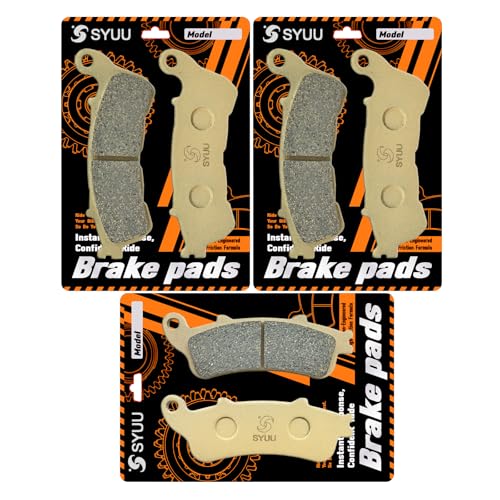
S SYUU High-Performance Reliable Motorcycle Front Rear Brake Pads Set Honda VFR 800 A 2006 2007-2013, ST 1300 A ST1300 A 2008 2009 2010 2011 2012 2013 NT700V – Low Noise, Easy Installation 388/261FR
- High-Performance Stopping Power: Exceptional braking for daily use
- Long-Lasting Durability: Reliable performance over time
- All-Weather Performance: Works reliably in any weather
As an affiliate, we earn on qualifying purchases.
As an affiliate, we earn on qualifying purchases.
Frequently Asked Questions
How Can I Determine My Driving Style Accurately?
You can determine your driving style by paying attention to your driving behavior and vehicle conditions. Observe if you tend to accelerate quickly, brake suddenly, or drive mostly in city traffic. Consider how often you drive, the load you carry, and your typical routes. Monitoring these factors helps you understand if you’re a gentle, moderate, or aggressive driver, ensuring you select brake pads that match your actual driving style.
Are There Universal Brake Pads Suitable for All Driving Styles?
Universal brake pads aren’t ideal because brake pad materials vary considerably with driving styles. While some brands claim to offer versatile options, their reputation matters most. You should choose brake pads based on your specific driving needs and the brand’s reliability, rather than looking for one-size-fits-all solutions. Properly matched brake pads improve safety, performance, and longevity, making brand reputation and suitable brake pad materials essential factors in your decision.
How Often Should Brake Pads Be Replaced Based on Driving Habits?
Imagine your brake pads as the steady heartbeat of your car’s safety. Depending on your driving habits, you’ll need to replace them every 20,000 to 70,000 miles. Harder brake pad materials last longer but cost more, while softer ones wear quickly. Keep an eye on brake pad pricing and signs of wear, like squealing or reduced stopping power, to know when it’s time for a change.
Do High-Performance Brake Pads Last Longer Than Standard Ones?
High-performance brake pads often last longer than standard ones because they use advanced Brake pad materials designed for durability and heat resistance. These materials improve noise reduction and braking efficiency, especially during aggressive driving. However, their lifespan still depends on your driving habits. Regular maintenance and choosing pads suited to your driving style ensure ideal performance and longevity, regardless of the type.
Can Mismatched Brake Pads Damage My Vehicle’s Braking System?
Mismatched brake pads can indeed damage your braking system. If the brake pad compatibility isn’t right for your vehicle or driving style, it can cause uneven wear, overheating, or reduced braking efficiency. Over time, this can lead to braking system damage, requiring costly repairs. To avoid this, always choose brake pads suited to your driving habits and vehicle specifications, ensuring maximum performance and protecting your braking system from unnecessary harm.
Conclusion
Remember, choosing brake pads isn’t just about shiny advertisements or popular brands. It’s about matching them to how you drive—whether you’re cruising smoothly or tackling sharp corners. Think of your brake pads as a trusted partner on the road, ready to respond when you need them most. When you select the right match for your driving style, you’ll feel the difference every time you press the pedal—smooth, confident, and in control.