
Outdoor EV chargers need more planning than garage setups because they must endure weather, security concerns, and variable urban infrastructure. You’ll need to guarantee proper weatherproofing, secure mounting, and reliable wiring that suits local electrical systems. Plus, you’ll have to coordinate permits and take safety extra seriously. Addressing all these factors now helps prevent future issues and saves you time and money. Keep going to discover how to handle these challenges effectively.

Get business pricing on garage and car supplies
- Business-only prices and quantity discounts
- Tax-exempt purchasing
- Multiple users, one account, clear invoices
Key Takeaways
- Outdoor chargers must integrate with variable local electrical infrastructure and obtain necessary permits.
- Weather resistance and durability require specialized design, increasing installation complexity.
- Securing and grounding outdoor units involves additional safety and vandalism prevention measures.
- Planning must account for environmental factors like rain, snow, and temperature extremes.
- Longer-term reliability depends on protective enclosures, drainage, and proper cable management.

Are you considering installing outdoor EV chargers but unsure where to start? When it comes to outdoor installations, planning becomes more complex than simply plugging into a garage wall. Unlike indoor setups, outdoor EV chargers must integrate seamlessly with urban infrastructure, which involves understanding the wiring, power supply, and accessibility in your area. Urban infrastructure varies markedly from one location to another, affecting how easily you can connect your charger to existing electrical systems. You’ll need to assess whether your neighborhood’s electrical grid can support the additional load and whether permits or approvals are necessary. This process demands careful research and coordination with local authorities or utility providers, making outdoor installations inherently more involved. Additionally, understanding local electrical regulations can help ensure compliance and streamline the installation process.
Weather resistance is another vital factor that demands thorough planning. Outdoor chargers are exposed to the elements—rain, snow, extreme heat, or cold—so you must select models designed to withstand these conditions. Not all chargers are created equal in terms of durability, and choosing a weather-resistant unit is essential to guarantee longevity and safety. Proper installation involves more than just mounting the charger; you need to consider protective enclosures, drainage, and sealing to prevent moisture intrusion that could cause malfunctions or safety hazards. Neglecting weather resistance can lead to costly repairs or replacements down the line, so investing in high-quality, weatherproof equipment is a wise decision.
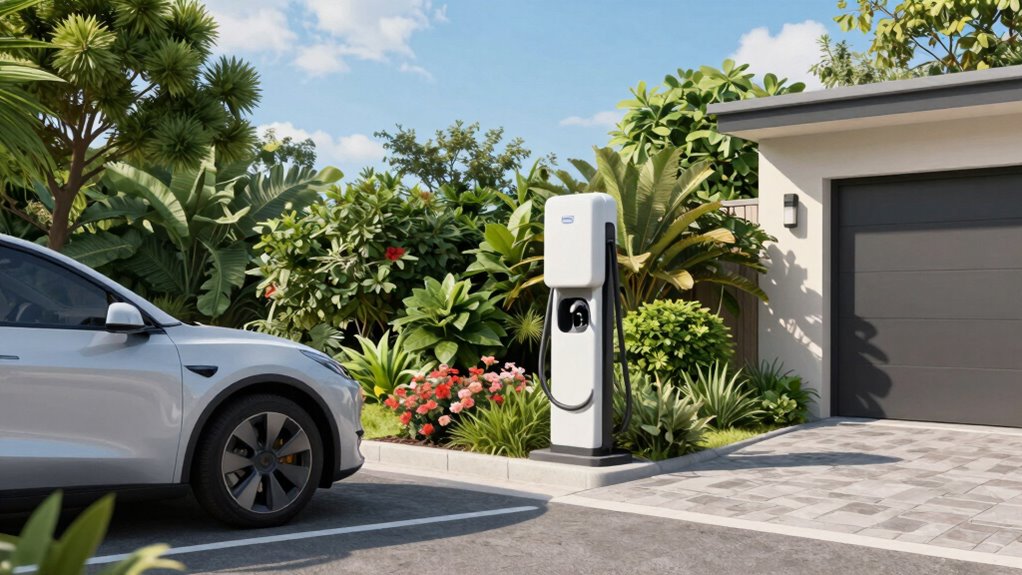
Beyond the equipment itself, you also have to plan for the physical setup. Outdoor chargers require secure mounting, proper grounding, and reliable power connections that can endure environmental stresses. You’ll want to think about cable management, ensuring cables are protected from weather and potential damage, and whether additional features like surge protectors are necessary. Placement is vital too—installing the charger in a convenient, accessible location while considering security measures to prevent theft or vandalism adds another layer to your planning process.
In essence, outdoor EV charger installations involve a more detailed approach than garage setups. You must consider the existing urban infrastructure, guarantee weather resistance, and plan for physical security and durability. This meticulous planning helps avoid future issues, saving you time and money while ensuring a safe, reliable charging experience. The extra effort upfront guarantees that your outdoor EV charging station will serve you well, rain or shine, for years to come.
outdoor EV charger weatherproof enclosure
As an affiliate, we earn on qualifying purchases.
As an affiliate, we earn on qualifying purchases.
Frequently Asked Questions
How Do Weather Conditions Affect Outdoor EV Charger Durability?
Weather conditions greatly impact your outdoor EV charger’s durability. Harsh weather, like rain or snow, can cause damage unless your charger has a weatherproof housing. Strong winds or dust can wear down components, so choose one with corrosion resistance. Regularly inspect and maintain your charger to guarantee it withstands the elements, prolonging its lifespan. Proper planning, including selecting durable materials, helps protect your investment against weather-related wear and tear.
What Security Measures Are Recommended for Outdoor EV Chargers?
You should implement security measures like access control and surveillance systems to protect outdoor EV chargers. Access control restricts who can use or access the charger, preventing unauthorized use. Surveillance systems, such as cameras, help monitor activity and deter vandalism or theft. Combining these measures guarantees your charger remains secure, especially in exposed outdoor environments where threats are more likely, giving you peace of mind and protecting your investment.
Can Outdoor Chargers Be Integrated With Home Solar Systems?
You can absolutely integrate outdoor chargers with your home solar system, creating a seamless energy flow. Imagine your solar panels soaking up sunlight, powering your EV effortlessly with solar compatibility. This setup enhances your energy management, reducing reliance on the grid and lowering costs. By planning carefully, you guarantee your outdoor EV charger works harmoniously with your solar system, making your eco-friendly lifestyle more efficient and sustainable.
How Does Landscaping Impact Outdoor EV Charger Placement?
Landscaping impacts your outdoor EV charger placement because landscaping obstacles like shrubs, trees, or uneven ground can hinder access and installation. You should consider plant growth over time, ensuring they don’t interfere with the charger or wiring. Proper planning involves selecting a location with minimal plant interference, good drainage, and easy access for maintenance. This proactive approach prevents future obstructions and protects your investment, ensuring reliable charging.
Are There Specific Permits Required for Outdoor EV Charger Installation?
Yes, you need to check permit requirements and zoning regulations before installing an outdoor EV charger. Local authorities often mandate permits to guarantee safety, proper installation, and compliance with electrical codes. Zoning regulations may also restrict the charger’s placement based on property lines or neighborhood rules. It’s essential to consult your city or county’s building department to obtain the necessary permits and avoid potential fines or future issues.
Conclusion
Planning outdoor EV chargers is like charting a course through unpredictable weather—you need to anticipate the storms of harsh elements and the sunshine of reliable power. By carefully mapping out your installation, you’re building a sturdy bridge over turbulent waters, ensuring your electric vehicle is always ready to set out on the next adventure. With thoughtful preparation, your charger becomes a steadfast lighthouse, guiding you safely home amidst the stormy outdoor landscape.
Fall Picks
fall essentials
As an affiliate, we earn on qualifying purchases.