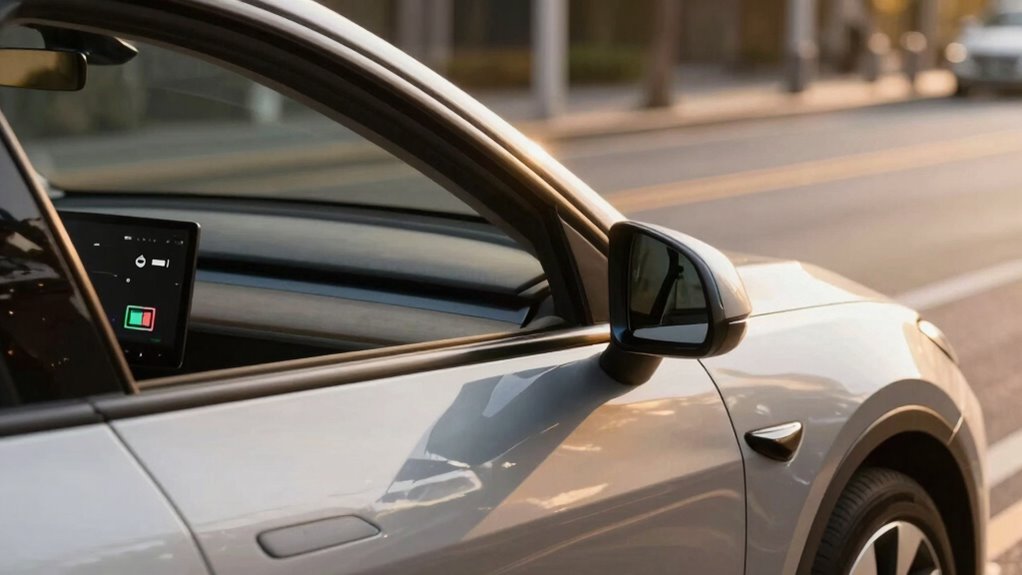

Your hybrid’s feel changes with the battery’s charge because high levels enable electric power, leading to quiet, quick acceleration and better responsiveness. When the charge drops, the system relies more on the gas engine, making the ride feel less smooth and responsive. As the battery ages or charge varies, you might notice differences in how your vehicle responds. Want to understand how to optimize your hybrid’s performance? Keep exploring for more insights.
Key Takeaways
- High battery charge enables electric-only mode, providing smoother and quieter acceleration.
- Low or aging batteries limit electric power, causing the system to rely more on the gas engine.
- Transition between electric and gas modes becomes more noticeable at different charge levels.
- Reduced charge can decrease responsiveness, making acceleration feel sluggish.
- Power management adjusts driving feel based on battery state, influencing overall vehicle responsiveness.

A well-charged battery is essential for peak hybrid vehicle performance, as it directly influences how efficiently your car operates. When your hybrid’s battery is at the right charge level, your vehicle can seamlessly switch between electric and gas power, providing smooth acceleration and consistent responsiveness. However, the state of charge isn’t static; it fluctuates based on various factors, and these changes can noticeably alter how your hybrid feels on the road.
One key reason your hybrid’s behavior varies is battery aging. Over time, the chemical components inside the battery degrade, reducing its capacity to hold and deliver charge. As the battery ages, it might not reach full charge or maintain it as effectively, which impacts power management. When the battery’s capacity diminishes, your vehicle’s control system compensates by relying more on the gasoline engine, especially during acceleration or heavier loads. This shift can make the car feel less responsive and less smooth because it’s not operating at the optimal electric capacity it was designed for.
Battery aging reduces capacity, causing your hybrid to rely more on the gas engine and feel less responsive.
Power management systems in hybrids are engineered to optimize performance and efficiency, but they also react to the battery’s charge level. When the battery is at a high state of charge, the system prefers to use electric power whenever possible, leading to quieter, more immediate acceleration. Conversely, if the charge drops or the system detects battery aging, it may limit electric usage, forcing the engine to work harder. This change often results in a different driving feel—less instantaneous power and sometimes a more noticeable transition between electric and gas power.
Your driving habits and environmental conditions also influence the battery’s charge state. Frequent short trips prevent the battery from fully recharging, while high speeds or steep inclines can drain it faster. As a result, you might notice that your hybrid feels different on certain days—more sluggish or less immediate—depending on the current charge level and how the power management system is responding. This is especially true as the battery ages, because its ability to maintain a healthy charge diminishes, making these variations more pronounced.
Understanding how the battery’s state of charge impacts your hybrid’s feel helps you better anticipate its behavior. If you notice a decline in responsiveness, it might be a sign that your battery is aging and needs attention. Regular maintenance, monitoring, and understanding how power management adapts to the charge level can ensure you get the most from your hybrid, maintaining a smooth, efficient driving experience even as the battery ages.
Being aware of battery aging and its effects can help you plan for potential replacements or upgrades, prolonging the life of your vehicle’s performance. Additionally, monitoring battery capacity and understanding how it influences performance can help you optimize your driving habits and extend the lifespan of your hybrid’s battery.
A comprehensive understanding of these battery factors allows for better management and maintenance, ultimately supporting the longevity and reliability of your hybrid vehicle.
As an affiliate, we earn on qualifying purchases.
Frequently Asked Questions
How Does Battery Temperature Affect Hybrid Driving Feel?
Battery temperature greatly impacts your hybrid’s driving feel through thermal management and battery calibration. When the battery is cold, it may feel sluggish because the thermal management system warms it up to optimize performance. Conversely, if it’s too hot, cooling helps prevent overheating, which can cause hesitation or inconsistent power delivery. Proper battery calibration ensures your hybrid responds smoothly regardless of temperature, providing a consistent, comfortable driving experience.
Can Battery Aging Influence How Hybrids Respond During Acceleration?
Battery aging can definitely influence how your hybrid responds during acceleration. As the battery’s capacity declines with age, it may deliver less power, leading to less responsive acceleration. This can cause your hybrid to feel sluggish or less stable during quick starts. The reduced power stability from aging batteries makes it harder for the system to provide consistent energy, impacting overall driving feel and performance.
Does Frequent Charging and Discharging Impact Hybrid Performance?
Think of your hybrid’s battery like a musician tuning an instrument; frequent charging cycles can cause the performance to falter. Yes, repeated charging and discharging impact hybrid performance, especially if the battery isn’t properly calibrated. Over time, extensive charging cycles can degrade battery capacity, leading to less responsive acceleration or reduced fuel efficiency. Regular calibration helps maintain best performance, ensuring your hybrid continues to run smoothly and efficiently.
Are There Specific Driving Habits That Change the Battery’s State of Charge?
Your driving style and terrain effects considerably influence your hybrid battery’s state of charge. Aggressive acceleration and frequent braking increase charge cycles, while gentle driving conserves battery life. Hilly terrains cause the battery to charge more during downhill and brake periods, affecting overall charge levels. To maintain ideal battery health, aim for steady speeds and anticipate terrain changes, minimizing rapid acceleration or deceleration that stress the battery system.
How Quickly Does the Battery State of Charge Typically Change During Daily Use?
During daily use, your hybrid’s battery state of charge can fluctuate quickly due to battery cycling and charge management systems. If you frequently accelerate or brake hard, the charge drops and rises more rapidly. Light, consistent driving helps maintain a stable charge level. Typically, the charge changes within minutes, depending on driving conditions and how the vehicle manages battery cycling, ensuring best performance and longevity.
Conclusion
So, next time you hop into your hybrid, remember that the battery’s state of charge isn’t just a number—it’s the secret sauce that transforms your ride from a whispering kitten to a roaring lion. When the battery’s full, your car glides like a feather on air; when it’s low, it’s a stubborn mule trying to drag you uphill. Keep an eye on that charge, and turn your driving into a symphony of power and smoothness!