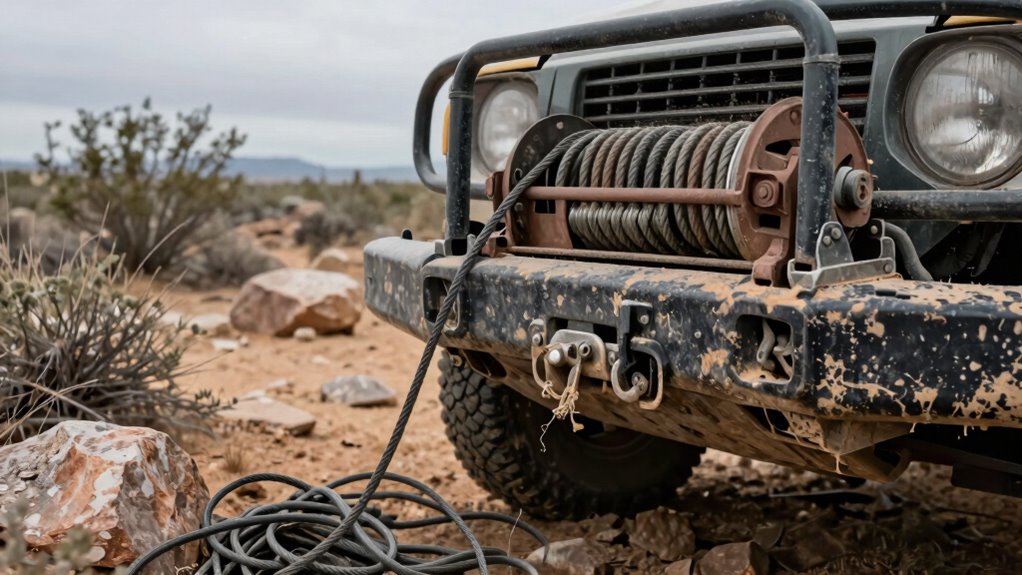

Choosing the wrong recovery winch can turn a simple trail day into a safety hazard and a frustrating ordeal. If you pick a winch that’s too weak, it won’t pull your vehicle out of mud or snow, leaving you stuck longer. Overbuying a powerful winch adds unnecessary weight and expense, complicating recovery efforts. Installing it improperly or ignoring capacity can lead to accidents and damage. Keep these mistakes in mind to avoid making recovery more stressful—there’s more to think about if you keep exploring.

Get business pricing on garage and car supplies
- Business-only prices and quantity discounts
- Tax-exempt purchasing
- Multiple users, one account, clear invoices
Key Takeaways
- Choosing a winch with insufficient capacity can leave you stranded or cause recovery failure.
- Overestimating winch size adds unnecessary weight and cost, complicating trail navigation.
- Ignoring proper installation risks equipment failure and safety hazards during recovery.
- Not matching the winch to your vehicle’s specifications can impair safe, effective recovery.
- Failing to understand safety practices increases risk of injury and trail day disruptions.
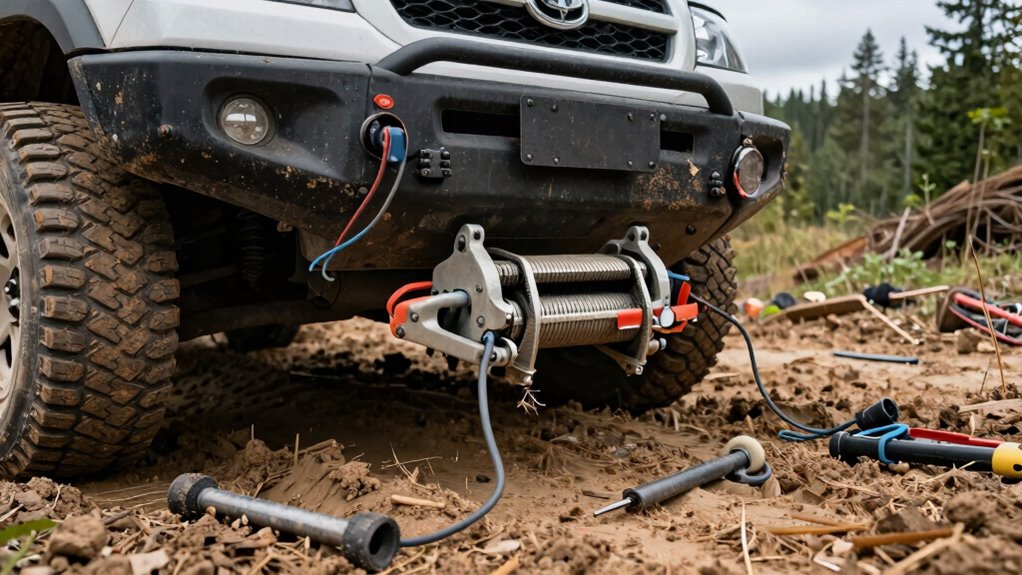
Choosing the wrong recovery winch can turn a simple recovery into a frustrating ordeal. When you’re out on the trail, relying on the wrong gear can make a challenging situation worse, especially if you’ve skipped over important details like winch installation and off-road safety. Picking a winch without considering your vehicle’s weight, the type of terrain, or your recovery needs can lead to headaches instead of solutions. It’s tempting to go for the most powerful or cheapest option, but that often results in a mismatch that hampers your ability to recover smoothly and safely. A winch that’s too weak won’t pull your vehicle out of mud or snow, and one that’s overkill can be unnecessarily heavy, expensive, and complicated to install.
Choosing the wrong winch can turn a simple recovery into a frustrating and risky ordeal.
Speaking of winch installation, it’s crucial to ensure your winch is properly mounted and integrated into your vehicle’s front bumper or frame. Improper installation not only risks damage to your vehicle but also compromises off-road safety. If the winch isn’t securely attached, it could come loose during a pull, risking injury or further vehicle damage. Many beginners overlook this step, thinking they can simply hook up a winch and go. But a secure, professional installation is essential. It involves choosing the right mounting plate, using quality hardware, and following manufacturer instructions carefully. When you do it right, the winch becomes a reliable tool, ready to perform when needed, without creating additional hazards. Additionally, understanding the importance of proper winch installation can prevent costly mistakes and ensure your recovery efforts are effective and safe. Knowing how to select appropriate winch capacity is vital to match your vehicle and recovery scenarios, avoiding unnecessary weight or insufficient pulling power. Being aware of off-road safety practices and how to implement them can significantly reduce the risk of accidents or equipment failure during recovery. Furthermore, educating yourself about winch capacity ensures you select the right power for your specific needs, avoiding unnecessary weight or insufficient pulling power.
Off-road safety isn’t just about having the right gear; it’s about knowing how to use it correctly. A common mistake is neglecting safety precautions when operating a winch. Always wear gloves, stand clear of the cable’s path, and double-check your configuration before pulling. Using proper winch accessories like dampers and snatch blocks can also prevent dangerous recoil if the cable snaps or slips. When you understand the limits of your equipment and respect the power of the winch, you reduce the risk of accidents that could ruin your day or cause injuries.
vehicle recovery winch 12,000 lbs
As an affiliate, we earn on qualifying purchases.
As an affiliate, we earn on qualifying purchases.
Frequently Asked Questions
How Do I Choose the Right Recovery Winch for My Vehicle?
To choose the right recovery winch for your vehicle, first consider the winch capacity, guaranteeing it can handle at least 1.5 times your vehicle’s weight for safety. Check your vehicle’s mounting options—make sure your bumper or frame can support the winch you select. Also, think about cable type and control features. Properly matching capacity and mounting options prevents frustration and ensures effective recovery during trail adventures.
What Safety Features Should I Look for in a Recovery Winch?
When choosing a recovery winch, look for safety features like a reliable remote control, automatic load-holding brake, and a built-in thermal protection system to prevent overheating. Make certain it’s compatible with your vehicle’s winch compatibility specifications. For emergency recovery, opt for a winch with a strong, durable cable and a weight capacity that exceeds your vehicle’s weight. These features help you stay safe and effectively handle tough recovery situations.
Can I Install a Recovery Winch Myself or Need Professional Help?
Can you install a recovery winch yourself? Absolutely, but it’s like threading a needle—careful precision is key. You’ll need to focus on winch mounting and electrical wiring, guaranteeing all connections are solid and secure. If you’re comfortable with basic tools and electrical work, you can handle it. However, if you doubt your skills or encounter complex wiring, it’s wise to seek professional help to avoid costly mistakes and ensure safety.
How Often Should I Perform Maintenance on My Recovery Winch?
You should perform maintenance on your recovery winch regularly, ideally every three to six months, depending on usage. Focus on winch lubrication to keep parts moving smoothly, and inspect the cable for frays or damage. Clean and lubricate the cable as needed, and replace it if you notice significant wear. Consistent maintenance guarantees your winch functions reliably, especially when you’re out on the trail, preventing breakdowns and ensuring safety.
What Accessories Are Essential for Safe Winching Operations?
You need essential accessories like a tree strap, gloves, and a damper for safe winching. These accessories guarantee winch compatibility and protect you during operation. While a sturdy snatch block can double your pulling power, a safety damper prevents dangerous recoil if the cable snaps. Always check accessory safety and compatibility before use, as proper gear keeps you safe and makes recovery smoother, avoiding costly mistakes on the trail.
Conclusion
Choosing the wrong recovery winch can turn your trail adventure into a sinking ship, leaving you stranded in frustration. Make sure you pick a winch that fits your needs and budget, so you’re not caught in a storm of regret. Think of it as planting a sturdy anchor before setting sail—your safety depends on it. With the right winch in hand, you’ll navigate rugged terrains with confidence, turning rough waters into smooth sailing.
Fall Picks
fall essentials
As an affiliate, we earn on qualifying purchases.