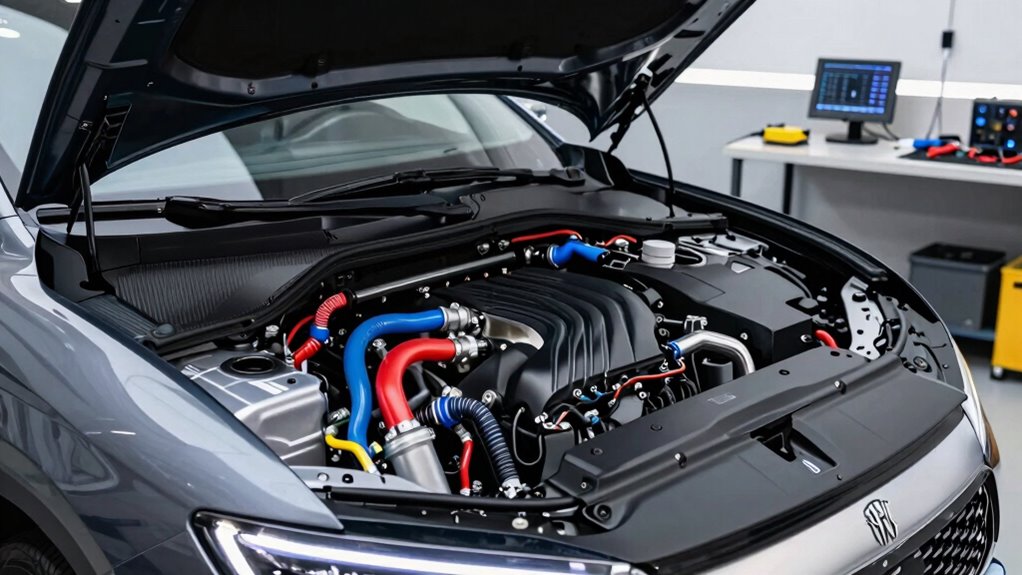

As a plug-in hybrid owner, you should ask about your cooling system’s design, maintenance schedule, and how it handles extreme weather. Find out if it uses liquid or air cooling, how often you need to check or replace fluids, and what signs indicate trouble. Understanding these details helps prevent overheating, preserves battery life, and guarantees your vehicle runs smoothly in any climate. Keep exploring to discover essential tips for keeping your cooling system in top shape.

Get business pricing on garage and car supplies
- Business-only prices and quantity discounts
- Tax-exempt purchasing
- Multiple users, one account, clear invoices
Key Takeaways
- How does the cooling system monitor and regulate battery temperature during different driving conditions?
- What maintenance procedures are required to keep the cooling system functioning effectively?
- What signs indicate potential issues with the cooling system that require attention?
- How does the cooling system adapt to extreme weather conditions to protect the battery?
- What support, warranty coverage, and diagnostic tools are available for cooling system concerns?
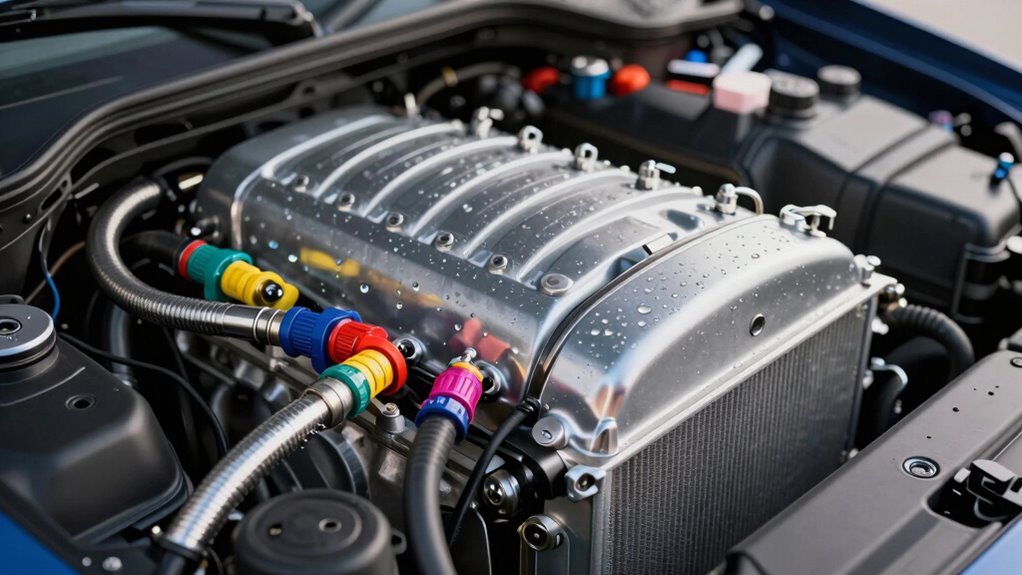
If you own a plug-in hybrid, understanding your vehicle’s cooling system is essential for maintaining peak performance and longevity. Your hybrid’s cooling system isn’t just about preventing overheating; it plays a vital role in battery maintenance and temperature regulation. By asking the right questions, you can ensure your vehicle operates efficiently and avoids costly repairs down the line.
Understanding your hybrid’s cooling system is crucial for optimal performance and long-term battery health.
Start by asking how the cooling system is designed to manage the battery’s temperature. Batteries are sensitive to temperature fluctuations, and improper cooling can lead to reduced performance, faster degradation, or even safety issues. Find out whether your hybrid uses liquid cooling or air cooling, and understand how the system monitors battery temperature in real-time. Knowing this helps you recognize when the cooling system is working effectively or if it needs maintenance.
Next, inquire about the maintenance schedule for the cooling system. Regular inspections and fluid replacements are critical to prevent corrosion or blockages that hinder heat dissipation. Ask if there are specific intervals for coolant changes or system checks. Staying proactive with maintenance keeps the cooling system functioning efficiently, prolongs battery life, and prevents overheating during high-demand situations like rapid acceleration or hot weather. Additionally, understanding the importance of coolant quality can help you choose the best products for your vehicle’s longevity.
You should also question what signs indicate cooling system issues. For example, if you notice the vehicle running hotter than usual, a decrease in battery range, or warning lights on your dashboard, these could signal cooling problems. Understanding these symptoms helps you respond quickly, avoiding potential damage to the battery or other components.
Another essential question involves the system’s capacity to handle temperature regulation during extreme conditions. If you often drive in very hot or cold climates, ask how the cooling system adapts to these environments. Some systems have additional features like cabin cooling or heating to assist in maintaining ideal battery temperatures, which is vital for consistent performance and safety.
Additionally, it’s important to understand the cooling system design and how it aligns with your driving habits and climate. Knowing how your vehicle manages heat can help you make informed decisions about driving in different conditions.
Finally, ask about the warranty and support options related to the cooling system. Knowing what’s covered can save you money if repairs are needed. Also, inquire about diagnostic tools that can help you monitor your system’s performance at home, giving you peace of mind and more control over your hybrid’s health.
plug-in hybrid cooling system coolant
As an affiliate, we earn on qualifying purchases.
As an affiliate, we earn on qualifying purchases.
Frequently Asked Questions
How Often Should I Check the Cooling Fluid Levels?
You should check your cooling fluid levels at least once every 6 months or according to your vehicle’s owner’s manual. Regular coolant maintenance helps prevent overheating and guarantees peak performance. Look for signs of low coolant, such as overheating or leaks. If the fluid is dirty or low, top it off with the recommended coolant. Remember, fluid replacement is essential to maintain efficient cooling and protect your hybrid’s components.
Are There Specific Coolant Types Recommended for Hybrid Systems?
Think of your hybrid’s cooling system as a delicate dance that requires the right partners. You should use coolant specifically recommended by your vehicle’s manufacturer to guarantee compatibility and peak performance. Always check the owner’s manual for the correct coolant type and follow guidelines for coolant replacement intervals. Using incompatible coolant can lead to corrosion or system failure, so stick to the recommended type for a smooth, worry-free ride.
What Are Signs of Cooling System Failure in a Plug-In Hybrid?
You’ll notice signs of cooling system failure in your hybrid if it overheats, the engine runs hotter than usual, or you see warning lights on your dashboard. Regular cooling system maintenance helps prevent issues with hybrid cooling components. Pay attention to coolant leaks, strange noises, or a sudden drop in performance. Addressing these signs early guarantees your hybrid’s cooling system remains effective, protecting your engine and extending its lifespan.
Can I Upgrade the Cooling System for Better Performance?
Yes, you can upgrade your cooling system for better performance. Cooling system upgrades, like installing high-performance radiators or improved coolant pumps, can boost your hybrid’s efficiency and longevity. These enhancements help maintain ideal temperatures during heavy use and enhance overall performance. Just make certain any upgrades are compatible with your vehicle model and installed by a professional to avoid potential issues. Upgrading your cooling system can be a smart move for better performance.
How Does Cold Weather Affect the Hybrid Cooling System?
Cold weather isn’t your hybrid’s best friend, and it definitely affects your cooling system. You might notice reduced battery efficiency because the system works overtime to keep things warm, not cool. Your hybrid’s performance takes a nosedive, and you’ll wish you’d invested in a space heater instead. So, brace yourself for shorter trips and increased charging times—because in winter, even your cooling system gets a cold shoulder.
Conclusion
Taking care of your plug-in hybrid’s cooling system is essential to keep it running smoothly and efficiently. Did you know that proper cooling can extend your vehicle’s battery life by up to 50%? Regularly asking the right questions about your cooling system isn’t just maintenance—it’s about maximizing performance and longevity. Stay proactive, stay informed, and guarantee your hybrid continues to deliver the eco-friendly ride you expect. Your car’s health depends on it!
Fall Picks
fall essentials
As an affiliate, we earn on qualifying purchases.