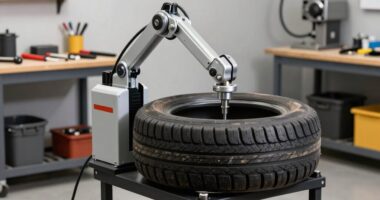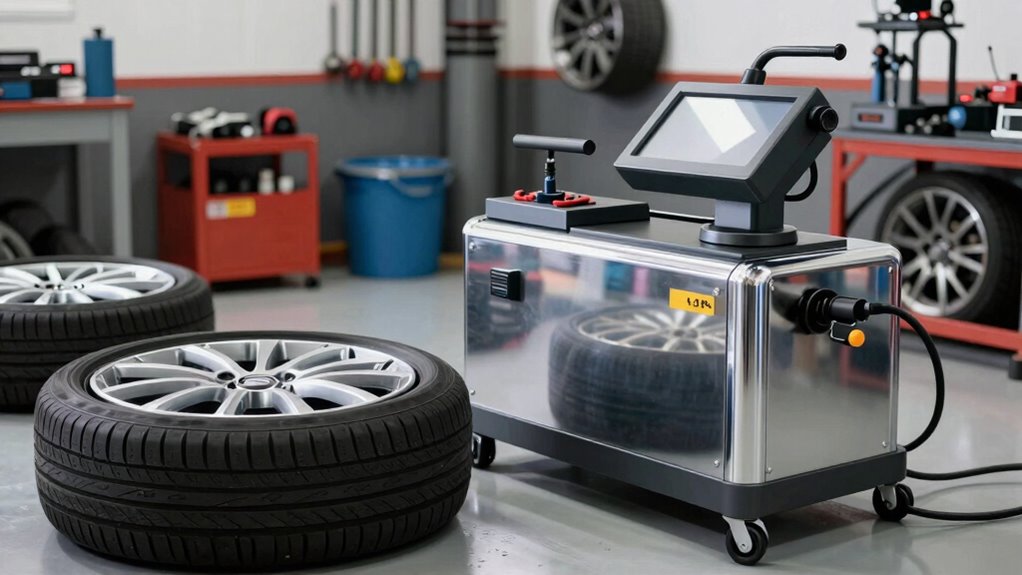
If you swap wheels often, a wheel balancer offers big benefits for your vehicle’s performance and safety. It quickly detects imbalances, prevents uneven tire wear, and keeps vibrations—and potential steering issues—at bay. Regular balancing also extends tire lifespan and improves handling. By maintaining proper wheel distribution, you’ll enjoy a smoother, safer ride and save money on repairs. Want to discover more ways this simple tool can keep your vehicle running better? Keep going to learn extra tips.
Key Takeaways
- Regular wheel swaps benefit from precise balancing, reducing vibrations and uneven tire wear during frequent tire changes.
- A quality wheel balancer ensures quick, accurate adjustments, saving time and preventing unnecessary tire replacements.
- Consistent balancing maintains optimal tire contact and handling, especially important for drivers swapping wheels seasonally or for performance.
- Proper wheel balancing supports brake system health by preventing vibrations that can affect braking performance.
- Investing in a wheel balancer enhances vehicle safety and prolongs tire lifespan, maximizing value for drivers who change wheels often.
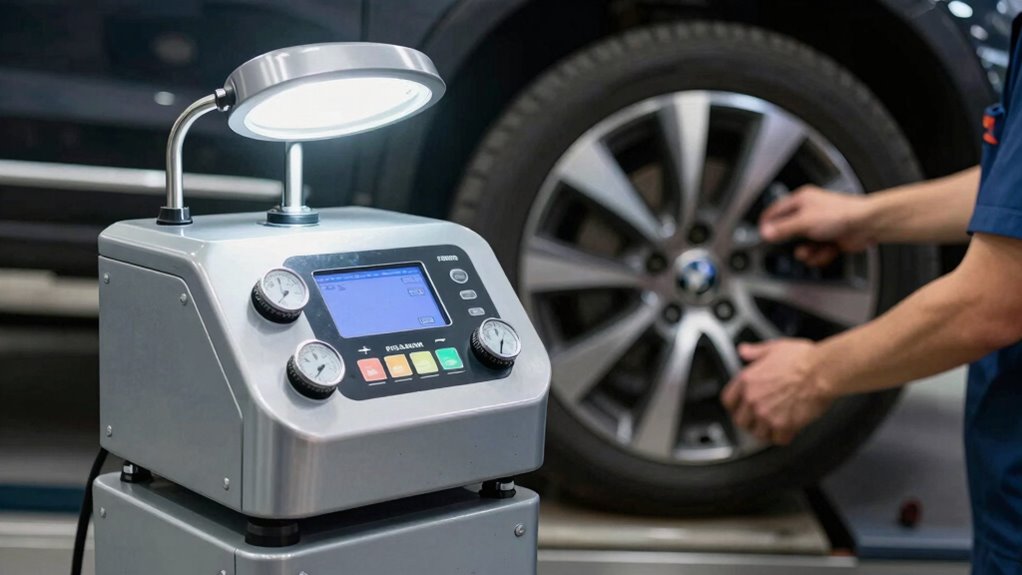
A wheel balancer can be a valuable investment if you want to improve vehicle performance and extend the lifespan of your tires. When you frequently swap wheels, balancing becomes more than just a routine task; it’s crucial for smooth driving and preventing uneven tire wear. Proper balance ensures that your vehicle rides smoothly, reduces vibrations, and minimizes stress on suspension components. This becomes especially important if you’re switching between different sets of wheels for various seasons or performance needs. Regularly balancing your wheels helps maintain ideal tire contact with the road, which can enhance handling and safety. Additionally, using a quality wheel balancer can help detect issues early, saving you money in the long run.
Beyond just balancing, you should also pay attention to tire alignment. Misaligned wheels can cause uneven tire wear, pulling, and even affect braking efficiency. While balancing addresses the distribution of weight around the wheel, tire alignment ensures the wheels are positioned correctly relative to each other and the vehicle frame. If you’re swapping wheels often, it’s wise to check the alignment whenever you install a new set. Proper alignment works hand in hand with balancing to give you a smoother ride, longer-lasting tires, and better fuel economy. Neglecting either can lead to premature tire replacement and costly repairs.
Proper wheel alignment alongside balancing ensures smoother rides, longer tire life, and better fuel efficiency.
Brake maintenance is another critical aspect that ties into your wheel and tire care routine. When you’re changing wheels frequently, you’re also more likely to notice issues with brake performance. Ensuring your brakes are in good condition is essential for safety, especially if your vehicle experiences vibrations or pulling during braking—symptoms that can sometimes be linked to imbalance or misalignment. If you notice pulsations, squeaking, or reduced stopping power, it’s time for a brake check. Paired with proper wheel balancing and alignment, good brake maintenance keeps your vehicle running safely and efficiently.
Regularly swapping wheels offers the opportunity to stay proactive about overall vehicle health. Investing in a wheel balancer makes that process more effective, helping you catch imbalance issues early and avoid uneven tire wear. When combined with careful attention to tire alignment and brake maintenance, you ensure your vehicle stays in top condition. This not only improves your driving experience but also saves you money by preventing unnecessary repairs. For drivers who swap wheels often, a wheel balancer isn’t just a convenience—it’s a smart tool that pays off in performance, safety, and longevity.
As an affiliate, we earn on qualifying purchases.
Frequently Asked Questions
How Often Should I Have My Wheel Balancer Checked?
You should have your wheel balancer checked every 6,000 to 8,000 miles or during your regular tire rotations. If you notice vibrations, uneven tire wear, or your steering feels off, it’s time for an inspection. Combine this with scheduled brake inspections to ensure safety and smooth driving. Regular checks help prevent uneven wear, improve fuel efficiency, and keep your wheels balanced, especially if you swap wheels often.
Can a Wheel Balancer Fix Uneven Tire Wear?
A stitch in time saves nine, so fixing uneven tire wear early is key. A wheel balancer alone can’t cure it completely, but it helps guarantee your wheels spin true. Regular tire rotation and brake inspection are also essential, as uneven wear often results from misalignment or brake issues. Using a wheel balancer along with these maintenance steps can improve ride quality and extend your tires’ lifespan.
Is a Wheel Balancer Necessary for Alloy Wheels?
A wheel balancer isn’t strictly necessary for alloy wheels, but it’s highly recommended for alloy wheel maintenance. Proper balancing helps prevent uneven tire wear and reduces cosmetic wheel damage caused by vibrations. If you frequently swap wheels, balancing guarantees your alloy wheels stay in good condition, look better, and last longer. Investing in regular wheel balancing can save you money on repairs and keep your ride smooth and visually appealing.
How Long Does Wheel Balancing Typically Take?
Wheel balancing usually takes about 15 to 30 minutes, depending on your vehicle and the equipment used. During the process, you’ll want to guarantee your tire pressure is correct, which helps achieve accurate results. Proper balancing reduces road vibration, making your drive smoother and safer. If you frequently swap wheels, regular balancing can prevent uneven tire wear and improve overall handling, saving you time and money in the long run.
Are There Different Types of Wheel Balancers?
You’ll find different types of wheel balancers, surprisingly enough. While some are automatic, others are manual, making you wonder if technology really simplifies things. Ironically, despite all the options, you still need to verify your tire pressure and consider road conditions, which influence balancing needs. Whether you’re using a static or dynamic balancer, understanding their differences helps guarantee smooth rides, especially when frequent wheel swaps make precise balancing essential.
Conclusion
By investing in a wheel balancer, you’re setting yourself up for smoother rides and fewer trips to the shop. It’s a small step that pays off big in comfort and safety. When you regularly swap wheels, a balancer keeps everything running like clockwork, saving you time and money. Remember, a stitch in time saves nine—taking care of your wheels now prevents bigger headaches down the road. Stay proactive, and your car will thank you.