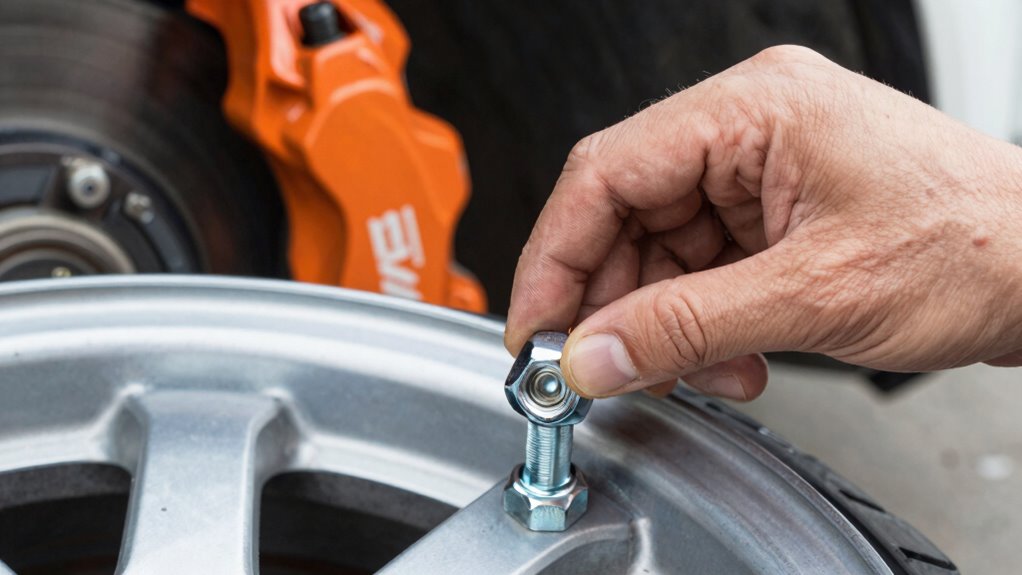

To properly match lug nuts, seats, and studs, start by checking the manufacturer’s specifications for thread pitch, size, and seat style. Make sure the lug nut’s seat matches the wheel and hub design to prevent vibrations or damage. Use a torque wrench for correct tightening and avoid forcing mismatched parts, which can strip threads. When you get these components aligned, your wheel stays secure and safe; keep going to discover more tips for perfect matching.

Get business pricing on garage and car supplies
- Business-only prices and quantity discounts
- Tax-exempt purchasing
- Multiple users, one account, clear invoices
Key Takeaways
- Verify that the thread pitch and size of the lug nuts match the studs before installation.
- Ensure the seat style of the lug nuts (conical, flat, spherical) matches the wheel and hub design.
- Use a torque wrench to tighten lug nuts to manufacturer’s specified torque for proper clamping force.
- Double-check compatibility with vehicle or wheel manufacturer recommendations to prevent mismatched parts.
- Inspect studs, nuts, and seats for damage or wear to maintain safe and secure wheel attachment.
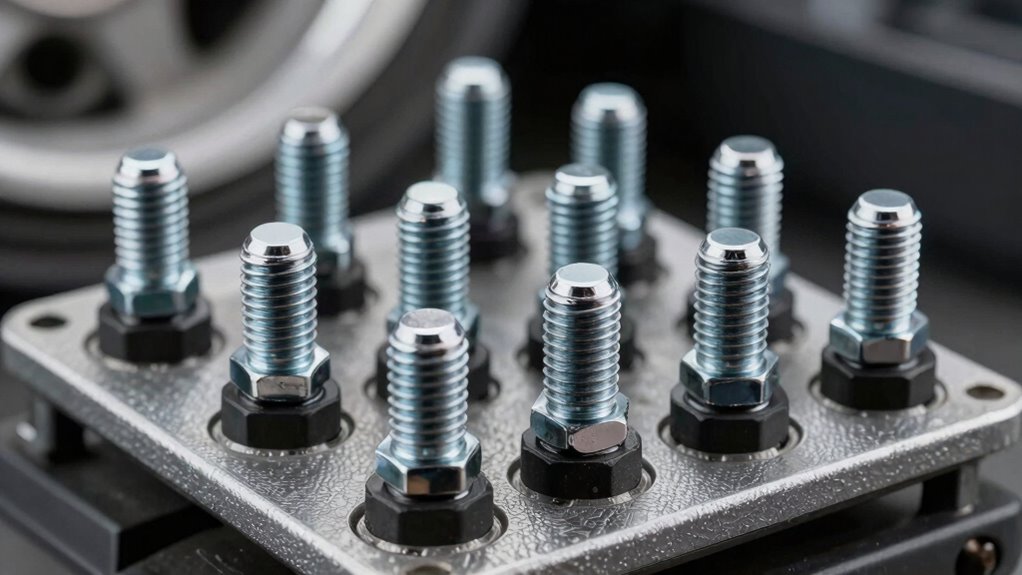
Ensuring that your lug nuts, seats, and studs match properly is essential for safe and reliable wheel installation. When you’re working on mounting new wheels or replacing worn components, paying attention to these details prevents problems like wheel wobble, uneven wear, or even accidents. The first step is understanding how wheel torque plays a crucial role. Proper torque ensures that the lug nuts are tightened to the manufacturer’s specifications, providing enough clamping force without risking damage to the studs or the wheel itself. Using a torque wrench allows you to tighten the lug nuts evenly and precisely, helping maintain the integrity of the wheel assembly over time.
Properly matching lug nuts, seats, and studs ensures safe, reliable wheel installation and prevents damage or accidents.
Another key aspect is matching the thread pitch. Thread pitch refers to the distance between threads on the studs and the matching lug nuts. If the thread pitch isn’t correct, the lug nuts won’t seat properly, which can lead to cross-threading or loosening during driving. Always double-check the thread pitch before purchasing replacement lug nuts or studs. This detail ensures that the nuts screw on smoothly and securely without risking damage to the threads or compromising safety. Avoid forcing mismatched nuts onto the studs, as this can strip the threads and weaken the connection.
Matching the lug nut seats to the wheel hubs is equally critical. The seat is the area where the lug nut contacts the wheel, and there are different styles—conical (tapered), flat, or spherical. You need to ensure that the seat style of your lug nuts matches what the wheel and hub are designed for. Using the wrong seat type can cause uneven contact, leading to vibrations, uneven wear, or damage to the wheel or studs. When replacing lug nuts, verify the seat style and confirm compatibility with your wheel assembly. Additionally, confirming that the lug nut seat style matches your specific wheel type helps prevent contact issues and potential damage.
It’s also vital to confirm that the lug nuts are the correct size and thread pitch for your studs. Using incompatible sizes or pitches not only affects the wheel’s security but can also damage the threads on your studs, potentially creating costly repairs. Always consult your vehicle manufacturer’s specifications or the wheel manufacturer’s recommendations. If you’re unsure, take your vehicle to a professional who can verify these measurements and ensure everything matches perfectly.
Frequently Asked Questions
Can Mismatched Lug Nuts Cause Wheel Damage?
Mismatched lug nuts can definitely cause wheel damage, especially if seat compatibility issues arise. When lug nuts don’t fit properly, they can loosen or cause uneven pressure, leading to wheel wobbling or damage. Additionally, lug nut corrosion from exposure can weaken the connection, increasing risks of failure. Always confirm your lug nuts match your wheels’ seats and studs to prevent damage and maintain safe driving conditions.
How Often Should I Check Lug Nut Torque?
You should check your lug nut torque at least once a month to guarantee proper torque maintenance. Also, include torque checks during safety inspections, especially after tire changes or rough driving. Regularly inspecting and tightening your lug nuts helps prevent wheel damage and accidents. Don’t overlook this essential step, as maintaining correct torque levels keeps your wheels secure and your vehicle safe on the road.
Are Alloy Seats Better Than Steel?
Imagine you’re upgrading your wheels and wonder if alloy seats are better than steel. Alloy seat advantages include lighter weight and better heat dissipation, which helps prevent seizing. Steel seat disadvantages involve heavier weight and potential corrosion over time. Generally, alloy seats offer improved performance and longevity, making them a better choice for enthusiasts seeking durability and efficiency. However, steel seats may be more affordable but less durable in harsh conditions.
What Are the Signs of Incompatible Studs?
If you notice uneven tire wear, loose lug nuts, or difficulty tightening, these are signs of incompatible studs. Poor stud compatibility can cause seat misalignment, leading to vibrations or even wheel detachment. Always check the stud size and thread pitch before installation. Proper seat alignment is vital for secure fitting. If any issues arise, it’s best to replace the studs with the correct size and make certain they match your lug nuts and seats.
Do Different Brand Lug Nuts Fit Together?
Matching mismatched lug nuts might seem tempting, but different brand lug nuts often don’t fit together due to subtle seat material differences and compatibility issues. You can’t blindly mix and match; lug nut compatibility depends on matching seat types—conical, conical seat, or ball seat—and ensuring thread sizes align perfectly. To keep your wheels secure and safe, always verify brand compatibility and double-check seat material differences before fitting different lug nuts together.
Conclusion
Just like a skilled conductor guarantees every instrument harmonizes, matching lug nuts, seats, and studs keeps your wheels singing smoothly. When you pay attention to compatibility, you’re not just tightening bolts—you’re orchestrating a safe, reliable ride. Remember, neglecting this harmony can turn your journey into a dissonant tune. So, take the time to match each part correctly; it’s the key to keeping your vehicle’s symphony running flawlessly, mile after mile.
Fall Picks
fall essentials
As an affiliate, we earn on qualifying purchases.