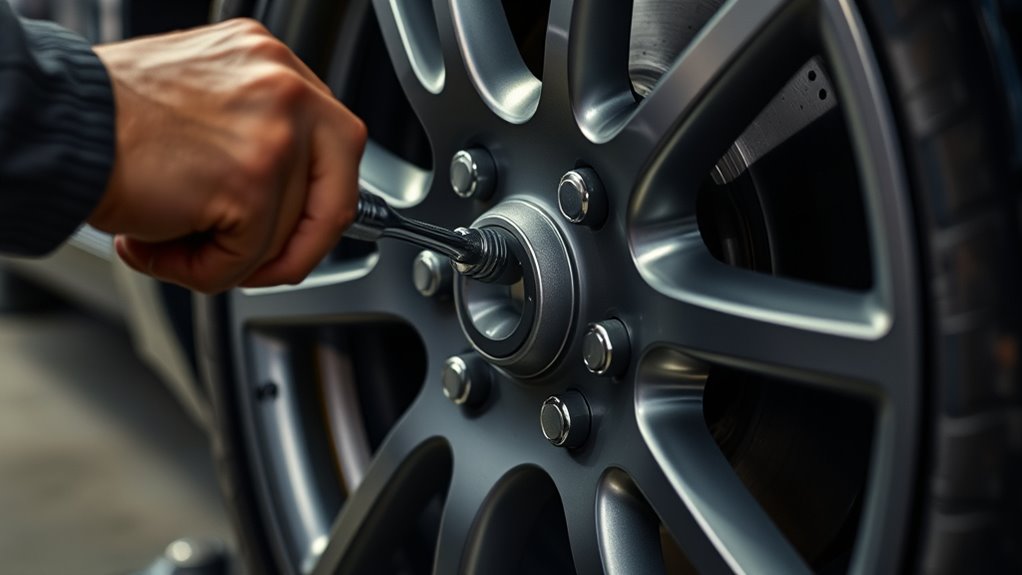

When installing lightweight wheels, you need to guarantee proper torqueing of lug nuts to maintain safety and wheel integrity. Use a torque wrench and tighten the nuts in a crisscross pattern to the manufacturer’s specifications. After driving a few miles, recheck the torque to account for heat expansion. Proper balancing and alignment are also essential for smooth handling and tire longevity. Keep going to learn more about perfect installation steps that protect your vehicle and tires.
Key Takeaways
- Use a torque wrench to tighten lug nuts to the manufacturer’s specified torque setting for safety.
- Tighten lug nuts in a crisscross pattern to ensure even pressure distribution on the wheel.
- Recheck lug nut torque after driving a few miles to account for heat expansion and settling.
- Verify proper tire mounting techniques during installation to prevent damage to the lightweight wheels.
- Perform wheel balancing and alignment after installation for optimal handling, tire longevity, and safety.
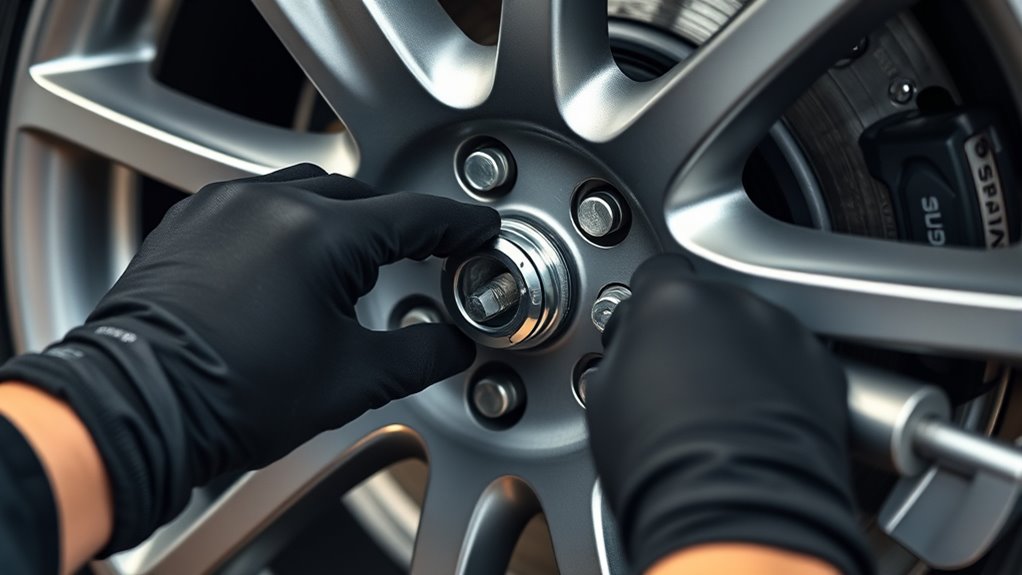
Installing lightweight wheels can improve your vehicle’s performance and handling, but it’s essential to guarantee safety and longevity. One of the critical steps in this process is ensuring your wheels are properly balanced. Tire balancing involves adjusting the weight distribution around the wheel and tire assembly to prevent uneven wear and vibrations. When you install new lightweight wheels, unbalanced tires can cause vibrations that affect steering and comfort. Proper tire balancing guarantees smooth driving, extends tire life, and reduces stress on suspension components. It’s a straightforward process: a technician places small weights on the rim to counteract any heavy spots, ensuring the wheel spins evenly. This step is vital after installing lightweight wheels because their reduced mass can make imbalance more noticeable. Ignoring tire balancing can lead to uneven tread wear, increased fuel consumption, and even premature wheel or suspension damage. Additionally, lightweight wheels often require specific tire mounting techniques to prevent damage during installation. Alongside tire balancing, you should also verify your wheel alignment. Wheel alignment refers to adjusting the angles of your wheels to the manufacturer’s specifications, ensuring they sit correctly in relation to each other and the road. Proper wheel alignment improves handling, steering response, and tire life. When installing lightweight wheels, misalignment can become more apparent because these wheels often have a different weight distribution and size compared to stock options. An improper alignment can cause your vehicle to pull to one side, reduce fuel efficiency, and lead to uneven tire wear. Ensuring your wheels are correctly aligned after installation guarantees excellent handling and safety, especially when upgrading to lighter wheels that might alter your vehicle’s dynamics slightly. When installing lightweight wheels, it’s also crucial to check the lug nuts and torque them correctly. Over-tightening can damage the wheel or studs, while under-tightening risks the wheel coming loose during driving. Always use a torque wrench to tighten lug nuts to the manufacturer’s specified torque setting. Properly torqued lug nuts secure the wheel firmly, preventing vibrations, uneven wear, or dangerous loosening. It’s recommended to tighten lug nuts in a crisscross pattern to ensure even pressure distribution. After tightening, it’s wise to recheck torque after driving a few miles, as heat can cause slight loosening. Combining correct torqueing with proper tire balancing and wheel alignment guarantees your lightweight wheels perform at their best, providing safer handling, better fuel economy, and longer-lasting tires.

EPAuto 1/2-inch Drive Click Torque Wrench, 10-150 ft/lb, 13.6-203.5 N/m
- Durable Ratchet Head: Hardened Chrome Vanadium steel alloy
- Corrosion-Resistant Finish: Satin finish for durability
- Includes Storage Case: Sturdy plastic case included
As an affiliate, we earn on qualifying purchases.
As an affiliate, we earn on qualifying purchases.
Frequently Asked Questions
Can Lightweight Wheels Improve Fuel Economy Significantly?
Yes, lightweight wheels can improve your fuel economy considerably. By reducing the curb weight of your vehicle, you decrease the overall load the engine needs to move. Additionally, lighter wheels lower aerodynamic drag, especially at higher speeds, making your car more efficient. These combined effects mean less energy is required to maintain speed, which helps you save fuel over time.
Are There Specific Tools Needed for Torqueing Lug Nuts?
Yes, you need specific tools for torqueing lug nuts. You’ll want a good quality torque wrench to guarantee proper tightness without over-tightening. Additionally, a lug nut socket that fits your lug nuts is essential for a secure fit. Using these tools correctly helps prevent damage to your wheels and ensures safety. Always double-check torque specifications for your vehicle to avoid any issues during installation.
How Often Should I Check Lug Nut Torque After Installation?
You should check your lug nut torque after the first 50 to 100 miles of driving, then every 1,000 miles or once a month as part of regular lug nut maintenance. Consistent wheel torque checks ensure your lightweight wheels stay secure and safe. Don’t forget to use a reliable torque wrench and follow the manufacturer’s recommended torque specifications during each check. Regular maintenance keeps your wheels properly secured and prevents potential issues.
Are Aftermarket Lightweight Wheels Suitable for All Vehicle Types?
Did you know that over 60% of drivers upgrade to aftermarket lightweight wheels? These wheels, often made from aluminum or carbon fiber, are generally suitable for many vehicle types. However, you need to guarantee wheel material and design match your vehicle’s specifications for ideal wheel compatibility. Always check manufacturer recommendations to avoid issues like fitment problems or uneven wear, ensuring safe and efficient performance after installation.
What Are the Risks of Under-Torquing or Over-Torquing Lug Nuts?
If you under-torque your lug nuts, you risk wheel separation, which can cause accidents. Over-torquing can damage the wheel, studs, or brake components, leading to costly repairs. For proper lug nut safety, always follow wheel installation best practices, including using a torque wrench to tighten lug nuts evenly and to the manufacturer’s specified torque. This guarantees your wheels stay secure and your vehicle remains safe on the road.
Conclusion
Remember, for reliable rides and safe stops, take your time to install lightweight wheels with care. Consistently check and confidently tighten those lug nuts to the correct torque. Properly positioned and perfectly pressed, your wheels will perform better and last longer. So, stay cautious, secure those sockets, and guarantee every step is steady. When you prioritize precision and patience, you’ll pave the way for a smoother, safer, and more satisfying driving experience.