When you upgrade brakes on a heavier car, you’ll notice a firmer and more responsive pedal because these vehicles put more stress on braking components. The extra weight causes increased heat, which can soften the pedal feel if the system isn’t upgraded properly. Cooler, larger rotors and stronger calipers improve heat dissipation, giving you better control. Keep going, and you’ll explore how these changes impact safety and performance even further.

Get business pricing on garage and car supplies
- Business-only prices and quantity discounts
- Tax-exempt purchasing
- Multiple users, one account, clear invoices
Key Takeaways
- Heavier cars exert more stress on upgraded brakes, affecting pedal firmness and responsiveness.
- Increased weight generates more heat, altering brake pedal feel during prolonged or aggressive stops.
- Front-biased weight distribution in heavier vehicles impacts how brake upgrades influence pedal response.
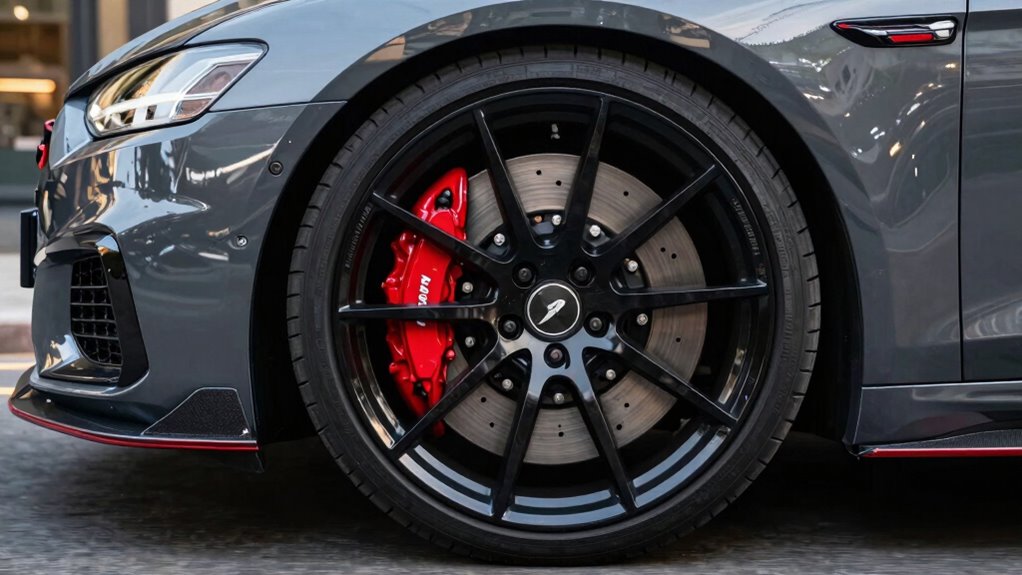
- Larger, ventilated rotors in upgrades improve heat dissipation, changing pedal feedback during repeated braking.
- Enhanced braking systems provide more consistent pedal feel, compensating for the added mass of heavier vehicles.

If you drive a heavier car, upgrading your brakes is essential for maintaining safety and performance. Heavier vehicles put more stress on braking components, which can lead to issues like brake fade and altered pedal feel if you don’t make the right upgrades. Brake fade happens when the brake system overheats during repeated or sustained braking, causing the brake fluid to boil or the pads to lose their grip. On a heavier car, this effect is more pronounced because the extra mass generates more heat during braking. Without improved brake systems, you might notice your brakes becoming less effective over time, especially during hard stops or downhill driving. This loss of braking power can be dangerous, and that’s why a proper upgrade is crucial.
When you upgrade your brakes on a heavier vehicle, you’ll likely notice a change in pedal feel. The pedal might feel firmer or more responsive than before. This is because heavier cars require stronger calipers, larger rotors, and upgraded brake pads that can handle the increased load and heat. If your previous brake setup was designed for a lighter car, it may feel soft or spongy under your foot, especially when the vehicle is loaded or descending steep grades. Upgraded brakes improve the firmness and consistency of pedal feel, giving you more confidence during braking. You’ll experience more direct feedback from the pedal, making it easier to modulate your braking force precisely.
The different weight distribution in a heavier vehicle also influences how brakes feel and perform. For example, trucks or SUVs tend to have more front bias in braking, which means the front brakes bear most of the stopping load. Upgrading these parts with high-performance calipers and rotors ensures that the front brakes can handle this increased demand without fading or becoming unresponsive. Additionally, upgrading the entire braking system to larger, ventilated, or slotted rotors helps dissipate heat more effectively. This reduces brake fade and maintains consistent pedal feel during aggressive or prolonged braking.
As an affiliate, we earn on qualifying purchases.
Frequently Asked Questions
How Do Brake Pad Materials Affect Heavy Vehicle Braking?
Brake pad materials considerably influence heavy vehicle braking. You’ll notice that brake pad composition, such as ceramic or semi-metallic, affects how well your brakes perform under heavy loads. Heavier vehicles require brake pads with higher wear resistance to handle increased stress and heat. By choosing the right brake pad material, you guarantee better stopping power, reduced fade, and longer-lasting brakes, keeping you safer and more confident during stops.
What Role Does Brake Fluid Play in Heavier Cars?
Think of brake fluid as the heart of your braking system, pumping life into every stop. In heavier cars, its viscosity must be just right to flow smoothly under pressure. A high boiling point prevents overheating and brake fade during heavy use. If the fluid’s too thin or boils easily, your brakes lose effectiveness, making stopping feel less confident. Selecting the right brake fluid guarantees your safety, especially on those demanding drives.
Are Larger Rotors Always Better for Heavy Cars?
Larger rotors aren’t always better for heavy cars. While they can improve braking power and help reduce brake noise, they often come with higher cost considerations and added weight, which may affect handling. If you upgrade to bigger rotors, make sure they’re compatible with your vehicle’s calipers and braking system. Sometimes, a well-chosen set of high-quality, properly matched rotors offers better performance without unnecessary expense or weight.
How Does Brake Fade Differ in Heavy Vehicles?
Brake fade in heavy vehicles occurs more quickly because of increased heat buildup from frequent braking. Your vehicle’s weight distribution affects how heat is dissipated, with uneven loads creating hotspots. To combat this, you need improved brake cooling systems that help manage temperature. Upgraded brakes with better ventilation and larger rotors can reduce fade, ensuring your heavy vehicle maintains stopping power, especially during prolonged or intense braking situations.
Can Upgraded Brakes Improve Stopping Distances on Heavy Cars?
Upgraded brakes can considerably improve stopping distances on heavy cars by providing better heat dissipation and increased friction. You’ll notice reduced brake noise and a firmer pedal feel, making your stops more confident and controlled. These improvements help counteract the additional mass, ensuring you can stop quickly and safely. Keep in mind, quality upgrades tailored for heavy vehicles make a noticeable difference in braking performance and overall driving confidence.
Conclusion
So, when you upgrade brakes on a heavier car, don’t expect the same feel as with a lighter one. The added weight is like a heavy load, requiring more from your braking system. It’s a classic case of “you get what you pay for,” so invest in quality parts and proper installation. Otherwise, you might find yourself chasing your tail, trying to compensate for the extra mass. Remember, a little preventive maintenance goes a long way.
Halloween Picks
halloween
As an affiliate, we earn on qualifying purchases.