
TL;DR

Get business pricing on garage and car supplies
- Business-only prices and quantity discounts
- Tax-exempt purchasing
- Multiple users, one account, clear invoices
A farmer successfully repaired a tractor via John Deere’s self-repair service, but many farmers remain unconvinced about its practicality and trustworthiness. The development highlights ongoing tensions over equipment control and repair autonomy.
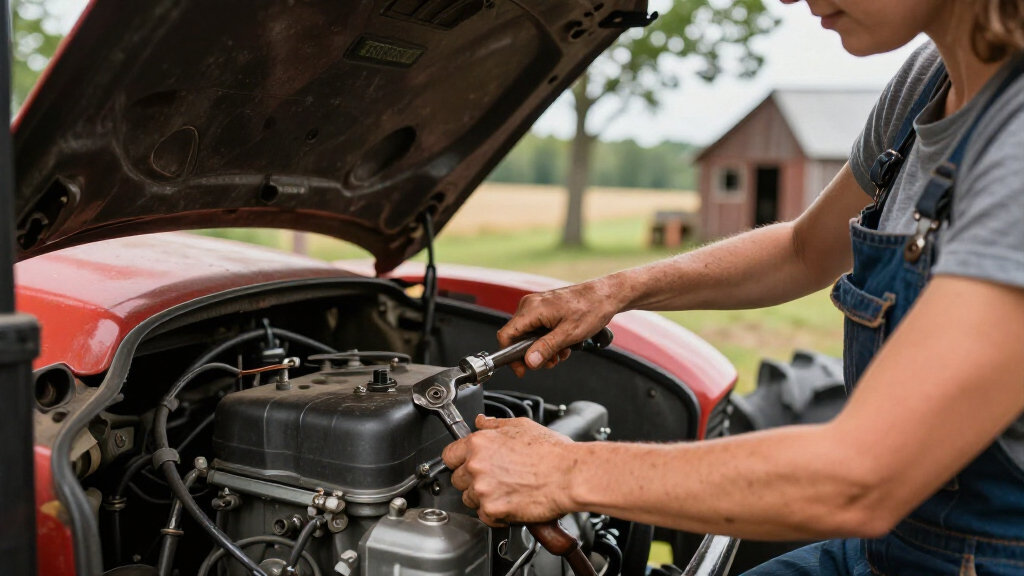
A farmer has successfully repaired a John Deere tractor using the company’s new self-repair service, marking a rare confirmed instance of the system in action. While this demonstrates the technical feasibility of remote repairs, widespread skepticism persists among farmers who question its reliability and implications for equipment independence.
The repair was conducted using John Deere’s Self-Repair Cloud Service, which allows farmers and independent mechanics to access diagnostic tools and parts remotely. According to the farmer involved, the process was straightforward, and the tractor was operational again within a few hours. This marks a significant milestone, as the company has been gradually rolling out this program to select customers amid ongoing debates about control over farm machinery.
John Deere has promoted the service as part of its broader push toward digital solutions that enable remote diagnostics, parts ordering, and even repairs without factory visits. The farmer who used the service stated that the experience was positive but emphasized that this is just one case among many farmers who remain hesitant. Critics and industry observers note that the system’s success depends heavily on internet connectivity, digital literacy, and trust in the company’s control over repair processes.
While John Deere claims that the self-repair system can reduce downtime and costs, many farmers are wary of relinquishing control over their equipment, especially given recent concerns about proprietary technology and data privacy. The company has not yet disclosed how many farmers have adopted the system or the long-term reliability of remote repairs.
Implications for Equipment Control and Farmer Autonomy
This development underscores a growing shift toward digital and remote repair solutions in agriculture, which could reshape how farmers maintain their machinery. While the system promises increased convenience and potentially lower repair costs, it raises questions about ownership of repair data and dependence on corporate-controlled platforms. Farmers’ skepticism reflects broader concerns about losing autonomy over their equipment, especially amid ongoing debates about proprietary technology and repair rights in the industry.
For the industry, this case signals a pivotal moment: acceptance of remote repair systems could accelerate adoption, but resistance remains strong among those who prefer traditional, hands-on maintenance. Policymakers and advocacy groups have also expressed interest in ensuring farmers retain repair rights, which could influence future regulations and company policies.
Products Worth Considering

Autel MaxiCheck MX808S Bidirectional OBD2 Diagnostic Scanner

Autel MaxiCOM MK900BT Bidirectional Diagnostic Scanner

Innova 5610 OBD2 Bidirectional Scan Tool
As an affiliate, we earn on qualifying purchases.
Background of John Deere’s Self-Repair Initiative
John Deere announced its Self-Repair Cloud Service in 2022 as part of a broader digital transformation strategy aimed at providing farmers with more tools for diagnostics and repairs. The initiative is part of a trend toward connected, software-driven farm equipment that can be managed remotely. However, the rollout has been cautious, with initial testing limited to select markets and customers.
Historically, farmers have relied on authorized service providers for repairs, which can be costly and time-consuming. The self-repair program aims to reduce downtime and costs but has faced criticism from independent repair advocates and some farmers wary of corporate control. The debate over repair rights has been ongoing, with legislative efforts in several regions seeking to expand farmers’ ability to repair their equipment freely.
The recent successful repair using the self-repair service is among the first confirmed examples of its practical application, but broader adoption and acceptance are still uncertain. Industry observers note that trust in the system and technological barriers will influence future uptake.
Extent of Farmer Adoption and Long-Term Reliability
It is still unclear how widely the self-repair service has been adopted by farmers beyond initial pilot cases. The long-term reliability, security, and user trust in the system remain untested, and there is limited data on overall satisfaction or potential technical issues that could arise with broader use. Additionally, the level of resistance or acceptance among different farming communities is still emerging and varies by region.
Monitoring Adoption and Regulatory Developments
Industry watchers and farmers will be observing how many adopt the self-repair system in the coming months. Further pilot programs and user feedback will shape the company’s future offerings. Policymakers may also scrutinize the system, especially regarding repair rights and data privacy, potentially leading to new regulations. John Deere and other manufacturers are expected to expand or refine their digital repair services based on early experiences and feedback.
Key Questions
Can farmers repair their John Deere tractors without official service?
John Deere’s self-repair service allows some farmers to perform repairs remotely, but access depends on the model and subscription status. Many still rely on authorized dealers for complex repairs.
Is the self-repair service reliable and secure?
Early reports suggest it is functional, but long-term reliability and data security are still under evaluation. Widespread trust has yet to be established among the farming community.
Will this system reduce repair costs for farmers?
Potentially, yes. Remote diagnostics and parts ordering can lower costs and downtime, but initial setup and subscription fees may offset some savings for now.
What are farmers’ main concerns about self-repair systems?
Farmers worry about losing control over their equipment, data privacy, and dependence on corporate platforms. Resistance is also driven by a preference for traditional, hands-on repairs.
Source: hn