Choosing between 2-post and 4-post lifts depends on your priorities for space, stability, and vehicle access. If you need a compact lift that offers easy tire and repair access, a 2-post lift could be best. For stability, heavier loads, or long-term vehicle storage, a 4-post lift is more suitable. Consider your garage size and vehicle needs to make the right choice, and you’ll find more helpful insights ahead.
Key Takeaways
- Consider space constraints; 2-post lifts require less floor space than 4-post lifts.
- Assess vehicle type and weight; 4-post lifts support heavier vehicles and long-term storage.
- Determine the need for stability; 4-post lifts offer superior support for precise alignments.
- Evaluate accessibility; 2-post lifts provide easier access underneath vehicles.
- Match lift choice to primary use; professional tasks favor 4-post, while space-saving needs lean toward 2-post.
When choosing between 2-post and 4-post lifts, understanding their differences is essential to selecting the right one for your needs. Both types serve the purpose of elevating vehicles, but they do so in ways that impact alignment accuracy, space efficiency, and overall usability. If precision in alignment is a priority, a 4-post lift often provides better stability and support, making it easier to perform wheel alignments accurately. The vertical posts and stable platform ensure the vehicle remains steady during adjustments, reducing the risk of shifting that could compromise precision. This stability leads to more consistent alignment results, which is particularly important if you run a professional shop or need to perform frequent alignments at home. Additionally, the quality of home garage equipment can influence how well these lifts perform over time, emphasizing the importance of choosing durable, high-quality options.
A 4-post lift offers superior stability and support for precise wheel alignments and professional use.
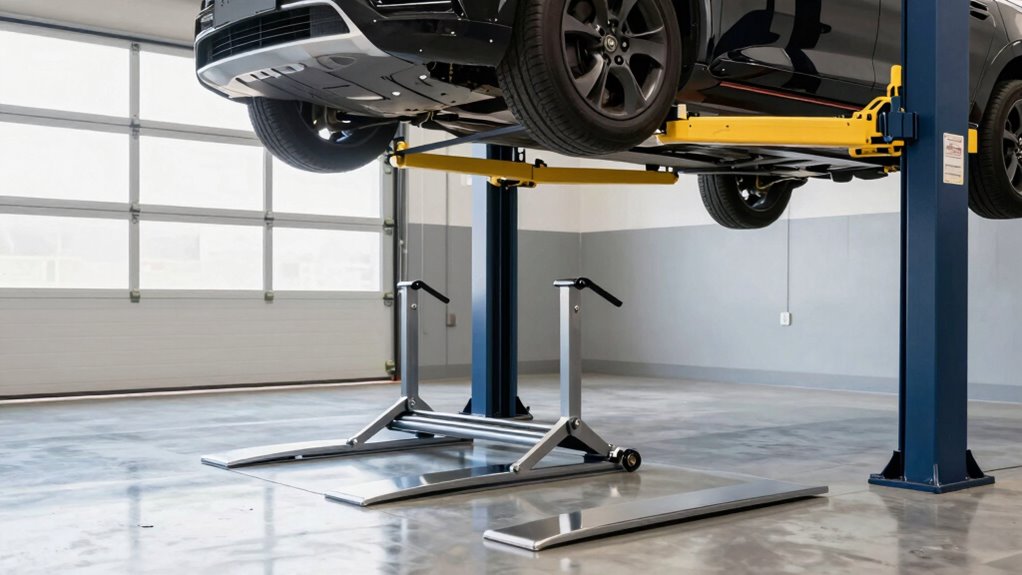
Space efficiency is another critical factor. A 2-post lift usually requires less floor space since it’s designed to lift vehicles by the frame with two posts, freeing up more room underneath. This makes it a great choice for smaller garages or workshops where space is limited. Its open design allows you to move around the vehicle easily, making tasks like tire changes, oil repairs, or inspections more manageable. On the other hand, a 4-post lift takes up more room because of its four sturdy uprights and a platform that supports the entire vehicle. While it might occupy more space, it offers a more straightforward experience for parking, storage, and aligning vehicles, especially heavier ones.
Another consideration is how each lift handles different vehicle types. The 2-post lift is typically preferred for lighter vehicles or those requiring frequent access to the chassis, as it allows you to work underneath more freely. Conversely, a 4-post lift is often used for heavier trucks or SUVs, offering the extra stability needed to support larger weights safely. It’s also better for long-term storage, as you can park a vehicle on top without needing to drive onto ramps.
Ultimately, your choice depends on your specific needs. If you prioritize alignment accuracy and need a compact footprint, a 4-post lift might be the best fit. If you want more open space, easier vehicle access, and don’t require as much support for heavy loads, a 2-post lift could serve you better. Both have their strengths, but understanding how they differ in key areas like stability, space efficiency, and vehicle handling will guide you to the right decision.
Frequently Asked Questions
How Do I Choose the Best Lift for My Garage Size?
Choose a lift based on your garage space and ceiling height. If you have limited space or lower ceilings, a 2-post lift offers better maneuverability and fits tighter areas. For spacious garages with high ceilings, a 4-post lift provides stability and extra storage. Measure your garage carefully, considering clearance and available room, so you select a lift that fits comfortably and meets your vehicle maintenance needs.
What Safety Features Should I Look for in a Lift?
Don’t get caught like a caveman without safety features. Look for emergency features such as safety locks, automatic shut-offs, and backup systems. Make sure the lift’s load capacity matches your needs to prevent accidents. These features protect you during operation, giving peace of mind while working on your vehicle. Always prioritize safety, because ignoring these details is like trying to send a telegram in today’s world—unwise and risky.
Can I Upgrade From a 2-Post to a 4-Post Lift Later?
Yes, you can upgrade from a 2-post to a 4-post lift later, but it depends on your garage layout and lift installation space. Make sure your garage has enough room for the larger setup and check the existing floor strength. Planning ahead guarantees the upgrade is smooth, and consulting a professional can help confirm your garage can accommodate the new lift safely and efficiently.
What Maintenance Is Required for Each Lift Type?
You need to regularly check and change the hydraulic fluid on both lift types to guarantee smooth operation. Keep to the lubrication schedule, applying grease to moving parts like hinges and latches. For 2-post lifts, inspect mounting points and hydraulic cylinders more often, while 4-post lifts require checking the integrity of the posts and cable systems. Regular maintenance helps prevent breakdowns and extends your lift’s lifespan.
Are There Specific Vehicle Types Better Suited for Each Lift?
Imagine lifting a compact sedan versus a heavy-duty truck. You’ll find 2-post lifts excel with lighter, smaller vehicles due to their maneuverability and ease of access, while 4-post lifts are better suited for larger vehicles like SUVs and trucks because of their higher lifting capacity and stability. Always consider vehicle compatibility and lifting capacity to choose the right lift, ensuring safety and efficiency during maintenance.
Conclusion
Ultimately, choosing between a 2-post and a 4-post lift depends on your needs. Consider your space, safety, and service style. Remember, the right lift revs up your repair routine and reduces hassle. Whether you opt for the versatility of a 2-post or the stability of a 4-post, making a mindful choice means more maintenance, more mobility, and more mastery. Make your move, and match your machine to maximize your mechanic’s mastery!