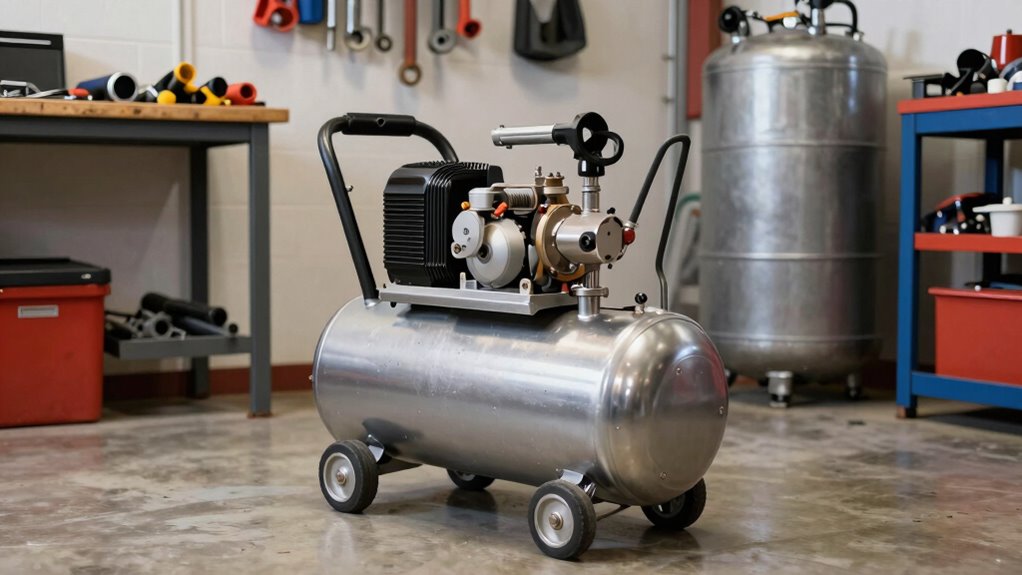

For most garage projects, a tank size between 6 and 20 gallons works well, offering enough capacity for inflating tires, small repairs, and running common tools like nail guns or paint sprayers without excessive noise or bulk. Larger tanks over 30 gallons are better if you do heavier, continuous work, but they can be noisier and harder to move. To find the perfect fit for your needs and workspace, keep exploring the details that match your projects.

Get garage and car supplies delivered free — and shop member deals
- Fast, free delivery on millions of items
- Access to Prime Big Deal Days deals on October 6–7
- Prime Video, Amazon Music and more included
Key Takeaways
- Smaller tanks (6-20 gallons) are ideal for intermittent, light-duty garage tasks like inflating tires or small repairs.
- Larger tanks (over 30 gallons) support continuous, heavy-duty work such as sanding or operating multiple tools.
- Consider noise levels; smaller tanks are generally quieter, making them suitable for shared or noise-sensitive environments.
- Match tank size with your project scope—smaller tanks for occasional use, larger tanks for extended, demanding jobs.
- Portability and workspace space influence tank size choice—smaller tanks are easier to move and fit into tighter garage spaces.
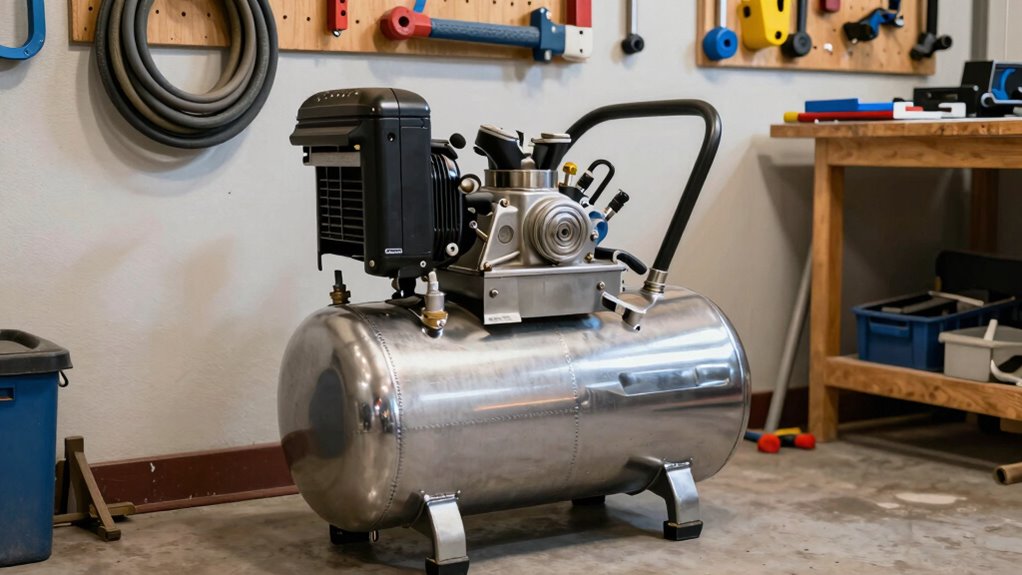
Having an air compressor in your garage can substantially enhance your DIY projects and maintenance tasks. Whether you’re inflating tires, powering pneumatic tools, or cleaning surfaces, a reliable compressor makes everything easier. One of the first decisions you’ll face is choosing the right tank size. It’s tempting to go for the largest tank available, but that’s not always necessary or practical. Instead, you should consider how you’ll use the compressor and what your specific needs are.
Choosing the right tank size depends on your specific DIY needs and workspace limitations.
A key factor in selecting the right tank size is understanding how you’ll use portable tools. If you plan to run nail guns, staplers, or paint sprayers, you’ll want a compressor that can deliver enough continuous airflow without constantly cycling on and off. Smaller tanks—around 6 to 20 gallons—are usually sufficient for these tasks because they provide enough air volume for intermittent use. They also tend to be more portable, so you can easily move them around your garage or even to different job sites.
Another important consideration is noise levels. Compressors can be loud, and if your garage shares a wall with living spaces or if you prefer a quieter work environment, you’ll want a model designed for low noise operation. Smaller tanks generally produce less noise because they run less frequently and have smaller motors. Look for compressors with noise ratings of around 70 decibels or less if noise is a concern. Many modern models feature sound-dampening technology, making them more suitable for home garages where noise could be disruptive.
In addition to size and noise, think about the peak and running horsepower of the compressor. A smaller tank with a higher horsepower motor can deliver a steady flow of air for longer periods, which is especially useful if you’re using multiple portable tools in a single session. However, bigger tanks, like those over 30 gallons, are better suited for continuous, heavy-duty tasks such as sanding large surfaces or operating air-driven machinery. They store more compressed air, so you don’t have to wait for the tank to refill as often, but they’re less portable and tend to be louder.
Furthermore, considering the versatility of water-based tools can help you determine the appropriate tank size, as some tasks may require more consistent airflow or specific features. In the end, the right tank size aligns with your typical projects and workspace limitations. If you mostly do small repairs, inflating tires, or occasional painting, a smaller, quieter compressor will suffice. For more extensive projects that require longer air runs or multiple tools simultaneously, investing in a larger tank makes sense. Always consider how portable your compressor needs to be, how much noise you can tolerate, and the type of work you’ll do most often. That way, you’ll select a tank size that truly matches your garage’s needs, ensuring efficient, convenient, and quieter operation.
6 gallon air compressor for garage
As an affiliate, we earn on qualifying purchases.
As an affiliate, we earn on qualifying purchases.
Frequently Asked Questions
What Is the Average Lifespan of a Garage Air Compressor?
You can expect your garage air compressor to last around 8 to 15 years, depending on compressor durability and maintenance. Properly caring for your unit, like draining moisture to prevent tank corrosion, prolongs its lifespan. Regular inspections and timely repairs help avoid issues that could shorten its life. Investing in quality materials and following manufacturer guidelines ensures your compressor remains reliable for many years.
How Often Should I Perform Maintenance on My Air Compressor?
Did you know that regular maintenance can extend your compressor’s lifespan by up to 50%? You should perform a maintenance schedule at least every 3 months or after 200 hours of use. This includes checking oil levels, draining moisture, and inspecting belts. Staying consistent with maintenance not only keeps your compressor running smoothly but also maximizes compressor longevity, saving you money and avoiding unexpected breakdowns.
Can I Use a Small Tank Compressor for Heavy-Duty Tasks?
You can use a small tank compressor for heavy-duty tasks, but it’s not ideal. The tank capacity and compressor size are vital—smaller tanks won’t provide sustained airflow needed for demanding jobs. For heavy-duty work, opt for a larger compressor with a bigger tank, which delivers consistent pressure and reduces the need for frequent restarts. A small tank might struggle to handle continuous or high-demand tasks efficiently.
What Safety Precautions Are Necessary When Operating an Air Compressor?
Imagine you’re working on a project when your compressor suddenly kicks in at high pressure. To stay safe, always wear safety gear like goggles and gloves, and check pressure regulation before use. Regularly inspect hoses for leaks or damage, and verify the compressor is grounded properly. These precautions prevent accidents, protect you from flying debris, and help maintain the equipment’s longevity. Safety first keeps your garage projects smooth and injury-free.
How Do I Choose the Right Compressor for Painting Projects?
To select the appropriate compressor for painting projects, focus on your paint sprayer’s needs and compressor capacity. Look for a compressor with at least 6-8 CFM at 40 PSI to guarantee smooth operation. Consider a tank size of 20 gallons or more for continuous use, reducing pauses. Match the compressor’s power to your sprayer’s requirements, ensuring steady airflow and a professional finish without delays.
Conclusion
Choosing the right tank size for your garage air compressor is essential—you’ll want enough capacity to handle your projects without overpaying. Did you know that the average garage uses about 4-6 CFM at 90 PSI? By selecting a tank that matches your needs, you’ll improve efficiency and extend the lifespan of your compressor. Remember, the right size isn’t just about volume; it’s about matching your tasks for maximum performance.
Halloween Picks
halloween
As an affiliate, we earn on qualifying purchases.