Using an automotive oscilloscope makes diagnosing sensors straightforward by showing you real-time waveforms of signals sent to your vehicle’s computer. Instead of guessing if a sensor is faulty, you can visually compare its waveform to known good patterns and quickly identify irregularities or issues like voltage drops. This visual approach cuts down diagnostic time and increases accuracy. Stay with us, and you’ll discover more about how waveform analysis can revolutionize your troubleshooting process.

Get business pricing on garage and car supplies
- Business-only prices and quantity discounts
- Tax-exempt purchasing
- Multiple users, one account, clear invoices
Key Takeaways
- Automotive oscilloscopes visualize sensor signals, helping technicians identify faults quickly and accurately without guesswork.
- Waveform analysis reveals deviations indicating sensor malfunctions, improving diagnostic confidence.
- Connecting an oscilloscope to sensors provides real-time visual confirmation of sensor health and operation.
- Using oscilloscopes reduces diagnostic time, especially for intermittent issues not detectable with standard tools.
- Cloud integration and data management enhance diagnostics by enabling secure sharing and comprehensive analysis of sensor signals.
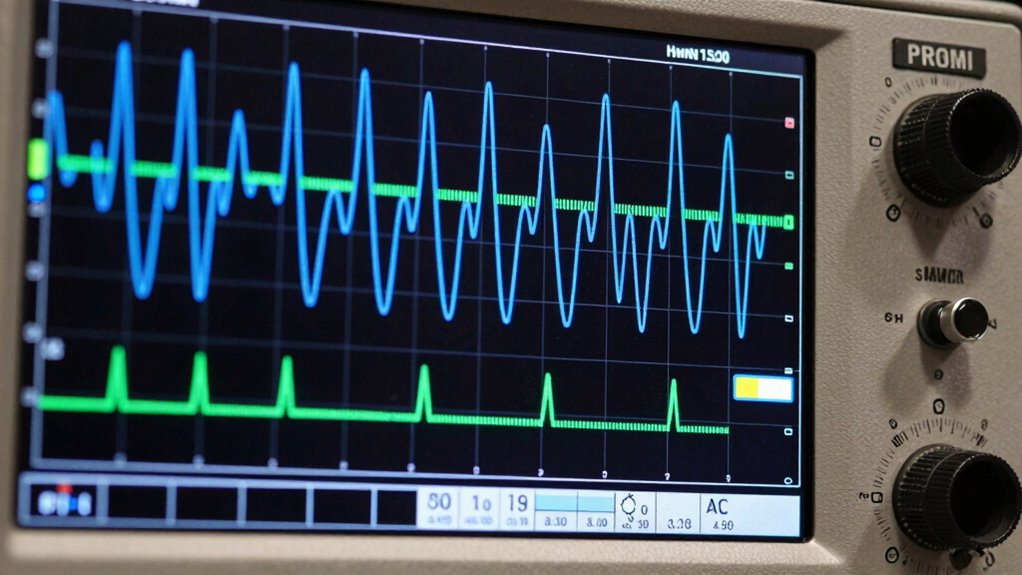
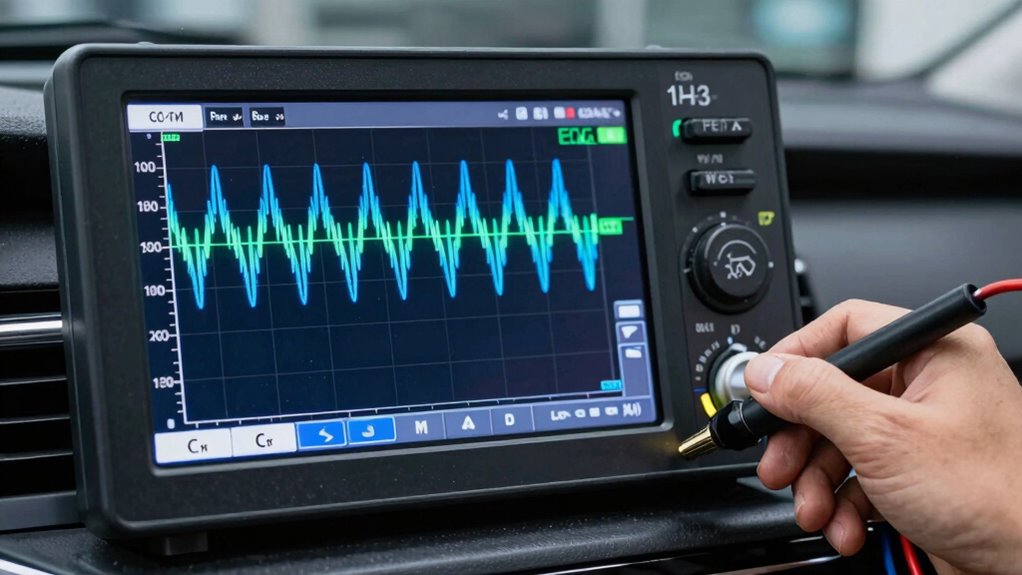
Have you ever wondered how modern vehicles diagnose complex electronic issues? It might seem like a formidable task, but automotive oscilloscopes make it much simpler. These tools allow you to perform sensor testing with confidence, pinpointing the exact source of problems without guesswork. Instead of relying on guesswork or trial-and-error diagnostics, you can directly observe the signals that sensors send to the vehicle’s computer. This is where waveform analysis becomes invaluable. By connecting an oscilloscope to a sensor, you can visualize the real-time electrical signals, making it easier to identify faults or inconsistencies that could cause engine misfires, poor fuel economy, or emissions problems.
Sensor testing with an oscilloscope is straightforward once you understand what to look for. Each sensor type, whether it’s a coolant temperature sensor, throttle position sensor, or oxygen sensor, produces a characteristic waveform. When you perform waveform analysis, you’re essentially comparing the signals you see on the scope to known good patterns. Deviations—such as irregular shapes, inconsistent voltage levels, or missing signals—indicate potential faults. For example, a coolant temperature sensor might show a smooth, steady waveform that gradually shifts as the engine warms up. If the waveform is erratic or flatlined, it suggests the sensor is malfunctioning or disconnected. This direct visual feedback saves you hours of troubleshooting and helps you focus on the actual issue.
The beauty of using an automotive oscilloscope lies in its ability to provide precise, real-time data. Instead of interpreting vague diagnostic trouble codes, you get concrete evidence from waveform analysis. This not only improves diagnostic accuracy but also speeds up repairs. You can quickly verify whether a sensor is functioning properly or if it’s sending faulty signals to the vehicle’s ECU. This method is especially helpful when dealing with intermittent issues that don’t trigger codes but cause noticeable performance problems. Moreover, leveraging waveform analysis with energy-efficient, secure European cloud solutions can enhance your diagnostic data management and sharing capabilities.
automotive oscilloscope for car diagnostics
As an affiliate, we earn on qualifying purchases.
As an affiliate, we earn on qualifying purchases.
Frequently Asked Questions
How Do Automotive Oscilloscopes Differ From Standard Lab Oscilloscopes?
Automotive oscilloscopes differ from standard lab oscilloscopes by designed specifically for analyzing sensor signals and device interfaces in vehicles. You can easily connect them to various automotive sensors, capturing real-time data that helps you diagnose issues accurately. These scopes often feature automotive-specific features like built-in vehicle communication protocols, making it easier to interpret sensor signals and troubleshoot problems quickly, unlike generic lab oscilloscopes that lack such tailored capabilities.
What Training Is Required to Effectively Use an Automotive Oscilloscope?
Using an automotive oscilloscope is like learning to read a new language. You’ll need training in sensor signal interpretation and waveform analysis to use it effectively. Start with basic courses or manufacturer-specific training to understand how to set up the device, identify signals, and analyze waveforms. Practice regularly to build confidence, and don’t hesitate to seek expert guidance—this skill improves with hands-on experience.
Are Automotive Oscilloscopes Compatible With All Vehicle Makes and Models?
Automotive oscilloscopes are generally compatible with most vehicle makes and models, but you should check for specific vehicle compatibility and model limitations. Some scopes have adapters or software updates to support a wider range of vehicles, while others may be limited. Always verify the device’s compatibility with your vehicle’s sensors and electronic systems before use to guarantee accurate diagnostics and avoid potential issues.
How Often Should Automotive Oscilloscopes Be Calibrated?
You should calibrate your automotive oscilloscope at least once a year to guarantee sensor accuracy. Regular calibration maintains precision, helping you diagnose issues more confidently. If you work in a high-usage environment or notice inconsistent readings, consider shorter calibration intervals. Proper calibration ensures your measurements stay reliable, preventing guesswork and costly mistakes. Keep track of calibration dates and follow manufacturer recommendations to keep your oscilloscope functioning at its best for accurate sensor testing.
What Are Common Troubleshooting Scenarios for Automotive Oscilloscopes?
Think of troubleshooting your automotive oscilloscope like fixing a tangled wire; you look for sensor signal inconsistencies or wiring faults. Common scenarios include diagnosing erratic sensor readings, dead signals, or fluctuating waveforms. You’ll check for damaged wiring, loose connections, or faulty sensors. By analyzing waveforms carefully, you identify issues quickly, preventing misdiagnosis and ensuring your vehicle’s sensors operate smoothly, much like untangling a knot for a clear signal flow.
Conclusion
Automotive oscilloscopes simplify diagnostics, clarify sensor signals, and eliminate guesswork. They empower you to see real-time data, identify issues quickly, and guarantee accurate repairs. By providing clear visuals, enabling precise measurements, and fostering confidence in your diagnostics, these tools transform complex troubleshooting into straightforward tasks. Embrace automotive oscilloscopes to improve efficiency, enhance accuracy, and achieve better results—making every diagnostic step easier, faster, and more reliable.
Halloween Picks
halloween
As an affiliate, we earn on qualifying purchases.