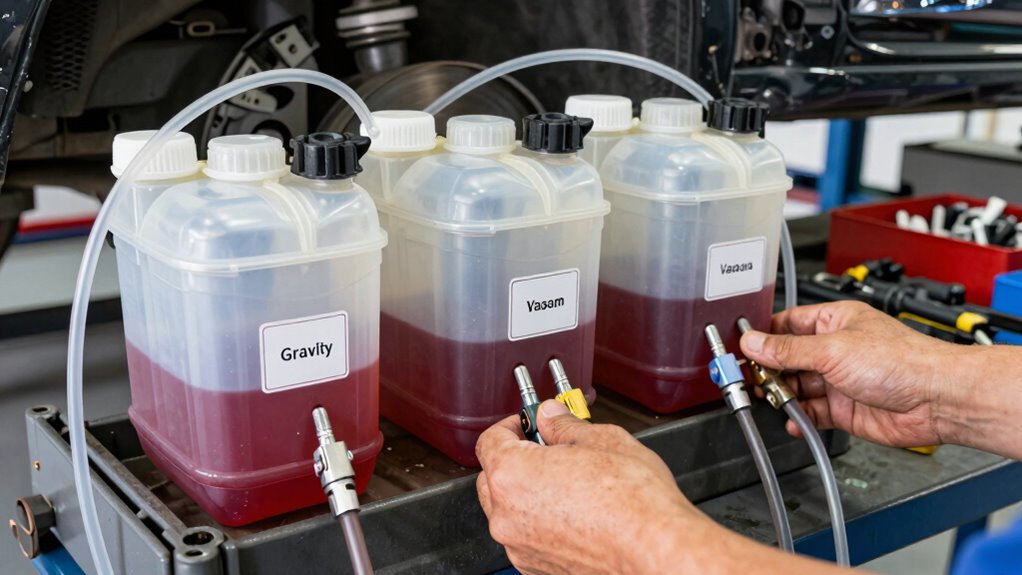
If you’re comparing brake bleeding methods, gravity bleeding is simple and slow but effective, perfect for basic maintenance without special tools. Vacuum bleeding uses a pump to efficiently pull out old fluid and air, making it easier for solo work or hard-to-reach brakes. Pressure bleeding quickly forces fluid through the system with compressed air, ideal for fast, professional results. Continue exploring to understand which method best suits your needs and how to perform each effectively.

Get business pricing on garage and car supplies
- Business-only prices and quantity discounts
- Tax-exempt purchasing
- Multiple users, one account, clear invoices
Key Takeaways
- Gravity bleeding is simple and slow, ideal for beginners, and minimizes air introduction during fluid replacement.
- Vacuum bleeding efficiently removes air and contaminants, suitable for hard-to-reach brakes and solo work.
- Pressure bleeding offers rapid results with consistent flow, making it preferred for professional or extensive brake servicing.
- All methods require proper sequence and technique to effectively remove air and old fluid from the brake system.
- The choice depends on skill level, tools available, and the need for speed or precision during the brake bleeding process.

Bleed brakes properly to guarantee your vehicle’s stopping power remains reliable and responsive. When you’re working on brake bleeding, one of the most critical aspects is ensuring the brake fluid remains uncontaminated. Brake fluid contamination can occur if moisture, dirt, or air gets into the system, leading to spongy brakes or reduced effectiveness. To prevent this, you need to follow a proper bleeding sequence—starting from the wheel farthest from the master cylinder and working your way closer. This systematic approach helps push out old, contaminated fluid and air, replacing it with fresh fluid that maintains the system’s integrity and performance.
Choosing the right bleeding method depends on your tools, experience, and vehicle type. Gravity bleeding is the simplest, requiring just a container of brake fluid, a clear hose, and patience. You open the bleeder valve, let gravity do the work, and watch for the old fluid to drain out. It’s slow but effective at removing air and contaminants, especially if you keep the master cylinder reservoir topped off. The key is to monitor the fluid’s clarity and ensure no air bubbles re-enter the system. Because gravity bleeding relies on natural flow, it’s less likely to introduce additional air if done carefully, but it can be time-consuming. Additionally, maintaining a clean environment minimizes the risk of introducing new contaminants during the process.
Gravity bleeding is simple, slow, and effective for removing air and contaminants with minimal risk of introducing new air.
Vacuum bleeding uses a hand or power vacuum pump to create negative pressure on the bleeder valve. You attach the vacuum to the bleed screw, and as you pump, it pulls old fluid, air, and contaminants out of the system. This method speeds up the process and reduces the chance of introducing new air, which is a common risk with manual methods. It’s especially useful if you’re working solo or on hard-to-reach brakes. Just be cautious not to over-pressurize the system, as excessive vacuum can damage seals or cause brake fluid leaks. Properly following the bleeding sequence ensures that all air and contaminants are systematically expelled from each caliper or wheel cylinder.
Pressure bleeding involves applying compressed air or a pressure bottle to the brake fluid reservoir, forcing new fluid through the system. It’s a fast, efficient method, ideal for professional settings or when you need quick results. You connect the pressurized container to the master cylinder and open the bleeder valves in sequence. As the pressurized fluid flows through, it pushes out old fluid, air, and contaminants, ensuring a thorough bleed. Always keep an eye on the pressure level—too high can damage components, while too low might not push out all contaminants. With pressure bleeding, you can maintain a consistent flow, reducing the chance of brake fluid contamination and ensuring the bleeding sequence is properly followed for complete system flushing. Using a high-quality pressure kit can improve the efficiency and safety of this process.
In all cases, the goal remains the same: removing air, contaminants, and old fluid to restore your brake system’s responsiveness. Each method has its advantages and challenges, but following the correct bleeding sequence and paying attention to brake fluid contamination are essential steps to a safe, reliable brake system. Proper technique and attention to detail ensure optimal performance and safety.
Products Worth Considering

DEWALT 20V MAX Cordless 1/2-Inch Impact Wrench Kit (DCF900P1)

Milwaukee M18 FUEL 18V Lithium-Ion Brushless Cordless 1 in. Impact Wrench Extended Reach D-Handle Kit with Two 12.0 Ah Batteries

DEWALT 20V MAX 1/4-Inch Impact Driver Kit with Battery and Charger (DCF787D1)
As an affiliate, we earn on qualifying purchases.
Frequently Asked Questions
Which Brake Bleeding Method Is Safest for Beginners?
You should choose the gravity method, as it’s the safest for beginners. It minimizes the risk of brake fluid contamination since you simply let fluid flow naturally through the system, reducing the chance of air bubbles. Always follow the proper bleeding sequence to guarantee all air is removed. This method is straightforward, safe, and less likely to cause accidents, making it ideal for those new to brake maintenance.
How Long Does Each Bleeding Method Typically Take?
Think of brake bleeding like a race against time. Gravity bleeding usually takes around 30–60 minutes, vacuum around 20–40 minutes, and pressure methods can be done in as little as 10–20 minutes. Fluid dynamics and brake fluid types influence the process; thicker fluids or complex systems may extend the time. For a smooth, efficient bleed, choose the method that matches your vehicle’s needs and your skill level.
Can I Bleed Brakes Without Professional Tools?
Yes, you can bleed brakes without professional tools, but prioritize DIY safety by wearing gloves and eye protection. Use compatible tools like a clear plastic tube and a container for brake fluid. While manual methods are possible, they might be less effective and more time-consuming. Follow proper procedures to avoid air pockets, and always dispose of old brake fluid responsibly. If unsure, consult a professional to guarantee safety and proper brake function.
Are There Specific Brake Types Better Suited for Each Method?
Yes, certain brake types and system designs respond better to specific bleeding methods. For example, vehicles with sealed brake systems or complex brake fluid pathways may benefit from vacuum or pressure methods for efficient bleeding. Always guarantee brake fluid compatibility with your vehicle, and follow manufacturer guidelines. Some brake systems are more sensitive to air, so choosing the right method helps maintain brake performance and safety.
What Are the Common Mistakes to Avoid During Brake Bleeding?
Oh, the joy of brake bleeding! First, avoid rushing—air bubble elimination takes patience, not speed. Don’t forget to keep the master cylinder topped off, or you’ll just suck in air again. Be wary of fluid contamination—using dirty tools or old fluid invites trouble. Finally, don’t ignore leaks or cross-threaded fittings; they sabotage your effort and make you repeat the process. Patience and cleanliness make for a safe, effective brake bleed.
Conclusion
No matter which bleeding method you choose—gravity, vacuum, or pressure—you’re about to unveil the secret to brakes so responsive they’ll feel like they’re powered by magic. Imagine stopping on a dime every time, with brakes so perfect, you’ll swear you’ve got a superpower. Just pick your method, follow the steps, and prepare for a driving experience so smooth, it’ll blow your mind. Now go on, make those brakes legendary!