To bed in your new brakes without ruining them, find a safe, open road and perform 8-10 controlled stops from around 30-40 mph, applying firm but steady pressure each time. Gradually build heat by doing lighter stops from higher speeds without letting the brakes cool completely between stoppages. Maintain smooth, consistent pressure throughout, avoiding hard or sudden stops. If you want to learn more tips for a safe and effective bedding process, keep exploring the essential steps.
Key Takeaways
- Use a safe, open space and perform 8-10 controlled stops from 30-40 mph to gradually transfer pad material.
- Avoid hard, abrupt stops; apply steady pressure to prevent uneven pad deposits and glazing.
- Build heat gradually with multiple stops, then allow brakes to cool naturally through normal driving.
- Monitor brake pedal feel and heat levels; pause bedding if brakes feel spongy or excessively hot.
- Follow manufacturer instructions and avoid excessive or aggressive braking to prevent damage.

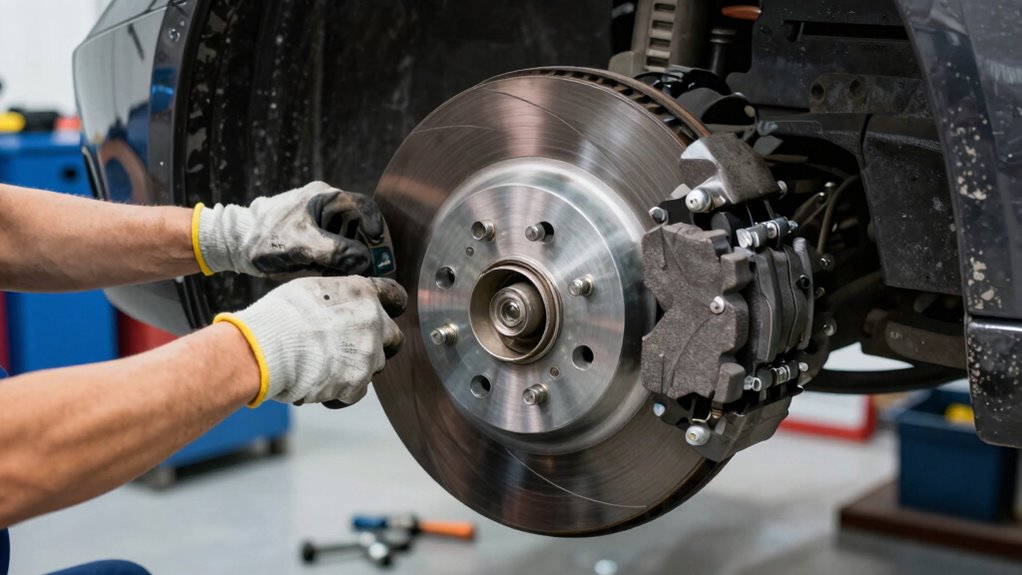
When you install new brakes, properly bedding them in is vital to guarantee they perform at their best and last longer. Bedding helps transfer a thin layer of brake pad material onto the rotor surface, ensuring ideal contact and friction. Different brake pad materials, such as semi-metallic, ceramic, or organic compounds, require specific bedding procedures to achieve proper performance. If you skip this step, your brakes might not deliver the stopping power you expect, and you risk experiencing brake fade phenomena, especially during repeated or aggressive braking. Brake fade occurs when the brake system overheats, causing a temporary loss of braking effectiveness. Proper bedding reduces this risk by ensuring even pad and rotor contact, which helps dissipate heat more efficiently.
Proper bedding ensures optimal brake performance and longevity by promoting even pad and rotor contact.
To start, make sure your vehicle is on a safe, open stretch of road with plenty of space. Accelerate to a moderate speed—around 30 to 40 mph—and then apply firm, steady pressure to bring the vehicle to a gentle stop. Repeat this process about 8 to 10 times, ensuring each stop is controlled and consistent. This initial bedding helps transfer brake pad material onto the rotor surface gradually, avoiding uneven wear or glazing of the pad. It’s essential to avoid hard or sudden stops during these early cycles, as they can cause uneven pad deposits or heat spots that lead to brake fade or reduced effectiveness. Proper bedding techniques are crucial for achieving optimal braking performance.
After the initial bedding, perform a series of light to moderate stops from a higher speed—around 50 mph—without letting the brakes cool completely. This step helps build up heat uniformly, aiding in the formation of a good pad-rotor interface. Once you’ve completed these steps, allow the brakes to cool down completely by driving normally without applying the brakes heavily. This cooling phase helps stabilize the brake system and ensures that the pad material fully adheres to the rotor surface.
Throughout the bedding process, pay attention to brake pedal feel and heat levels. If you notice excessive heat or a spongy pedal, pause and let your brakes cool. Remember, different brake pad materials require slightly different bedding procedures, so consult the manufacturer’s instructions for specific guidance. Properly bedding your new brakes minimizes brake fade phenomena, enhances stopping power, and prolongs the lifespan of your brake components. Taking the time to do it right not only improves safety but also guarantees you get the most out of your new braking system.
Frequently Asked Questions
How Long Does the Bedding Process Typically Take?
The bedding process usually takes about 15 to 30 minutes, depending on your driving style. During this time, you’ll perform a series of gentle and moderate stops to prevent brake fade and rotor glazing. Make certain to avoid hard stops initially, as rushing can damage the pads and rotors. Proper bedding guarantees peak braking performance and longer brake life, so take your time and follow the recommended process carefully.
Can I Drive Aggressively During Brake Bedding?
You shouldn’t drive aggressively during brake bedding because it risks brake fade and rotor glazing, which can undermine braking performance. Gentle, controlled stops allow the brake pads and rotors to properly mate, avoiding overheating and uneven wear. Pushing hard can cause the pads to overheat, leading to glazing and reduced effectiveness. So, take it easy—smooth braking helps your new brakes break in correctly, ensuring peak performance and longevity.
What Are Signs of Improper Brake Bedding?
If your brakes feel spongy, squeal excessively, or you notice uneven brake pad wear, these are signs of improper bedding. Poor brake pad materials or an uneven rotor surface finish can cause these issues. You might also experience reduced braking performance or vibrations during braking. Address these problems promptly by checking the rotor surface finish and ensuring the brake pad materials are suitable for your driving style, to maintain ideal brake function.
Is Special Brake Fluid Needed for New Brakes?
Imagine your brakes as a delicate dance; you wouldn’t use the wrong steps. You don’t need special brake fluid for new brakes, but you must guarantee brake fluid compatibility with your vehicle. If your brake fluid is old or contaminated, a brake fluid change is wise before bedding in new brakes. Using the correct fluid helps prevent damage and ensures ideal performance, giving you smooth, reliable stopping power.
How Often Should I Check Brake Pad Wear After Bedding?
You should check brake pad wear after bedding every 200 to 300 miles, or sooner if you notice any squealing or reduced braking performance. Regular brake pad inspection helps catch uneven wear or damage early. During brake wear monitoring, look for thinning pads or uneven surfaces. Keep an eye on your brake performance, and if you notice issues, get them examined promptly to ensure your brakes stay safe and effective.
Conclusion
Remember, bedding in your new brakes isn’t just about quick stops; it’s about building a strong, reliable stopping power. Some say that a proper bed-in process actually extends brake life and improves performance, but others believe it’s just a myth. While the science supports gradual heating and cooling, the real key is paying attention to your brakes and avoiding hard stops for the first few hundred miles. Trust the process, and your brakes will thank you.