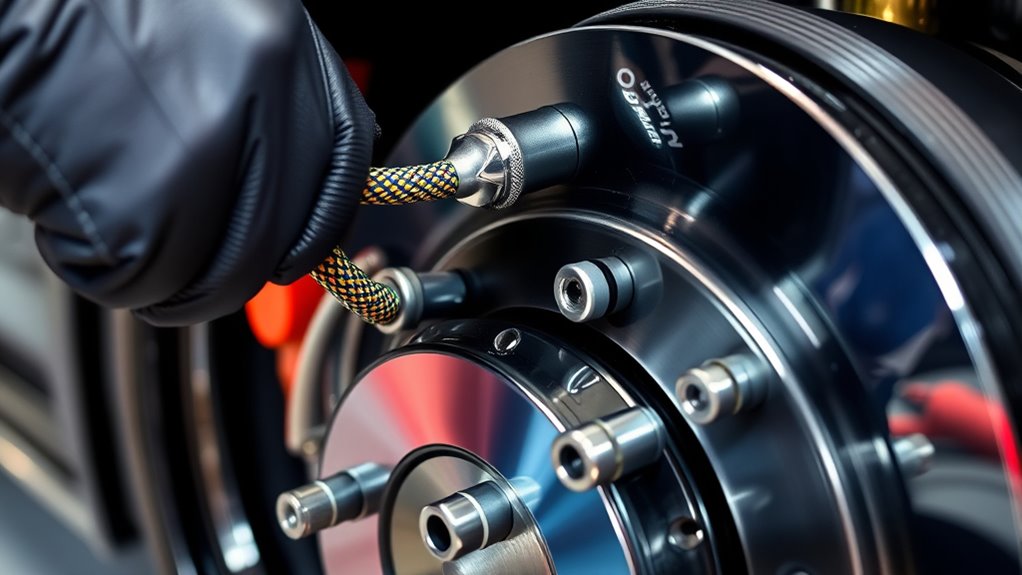
Upgrading to high-performance brake lines and fluid improves your vehicle’s stopping power, pedal feel, and safety. You’ll enjoy more direct brake response with braided stainless steel lines that resist expansion, reducing sponginess. Using high-quality brake fluid with a high boiling point prevents fade during demanding driving. Proper installation and regular fluid maintenance are key to peak performance. To discover the detailed benefits and steps involved, continue exploring how these upgrades can guarantee safer, more reliable braking.

Get business pricing on garage and car supplies
- Business-only prices and quantity discounts
- Tax-exempt purchasing
- Multiple users, one account, clear invoices
Key Takeaways
- Upgrade rubber stock lines to braided stainless steel for improved durability and more direct braking response.
- Replace old brake fluid with high-performance fluid to resist moisture, prevent vapor lock, and maintain high boiling points.
- Properly bleed the brake system after installation to ensure no air bubbles remain, ensuring consistent brake performance.
- Use components that meet or exceed OEM specifications for safety and compatibility during the upgrade.
- Regularly flush and replace brake fluid to maintain optimal braking performance and prevent moisture-related issues.
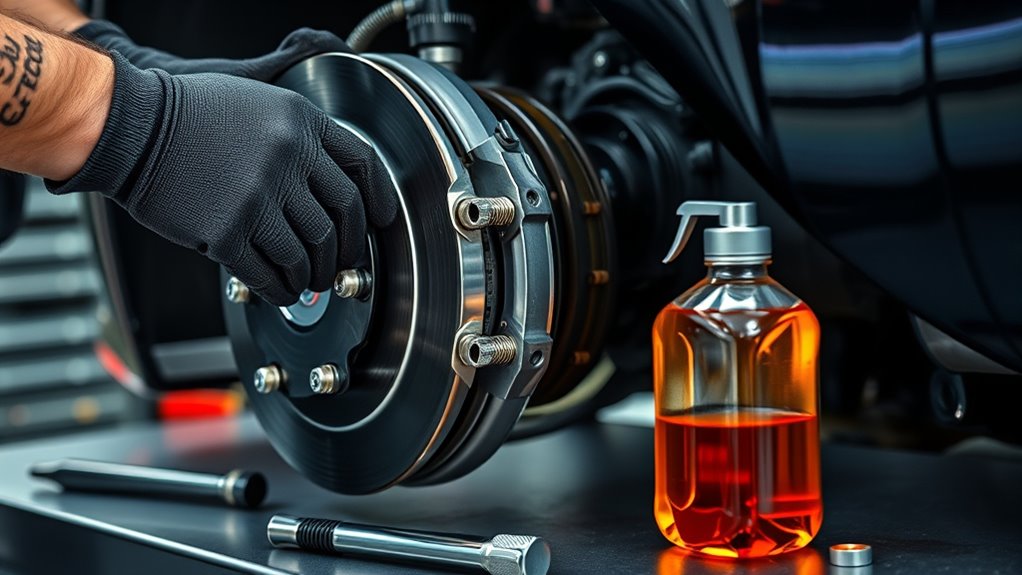
Upgrading to high-performance brake lines and fluid enhances your vehicle’s braking response and safety. When considering brake system upgrades, this is one of the most effective ways to improve overall braking performance. Stock brake lines are typically made of rubber, which can expand under heavy braking, leading to spongy pedal feel and reduced stopping power. High-performance brake lines, often constructed from braided stainless steel, provide a more rigid, durable connection between the master cylinder and the brakes. This rigidity minimizes line expansion and ensures that braking force is transmitted more directly and consistently. With these upgrades, you’ll notice a more immediate and predictable brake pedal feel, especially during intense driving situations or emergency stops.
Switching to high-performance brake fluid is equally important. Over time, brake fluid absorbs moisture from the environment, which can lower its boiling point and cause vapor lock—a dangerous situation where the brake fluid vaporizes under high stress, resulting in brake fade or failure. Upgrading to a high-quality, high-temperature brake fluid ensures your braking system maintains excellent performance under demanding conditions. This fluid resists boiling longer and helps prevent the spongy pedal feeling that can occur when moisture boils in the lines. Proper brake fluid selection and regular flushing are critical safety considerations, especially if you frequently drive in hilly terrain, tow heavy loads, or participate in spirited driving. Additionally, choosing a brake fluid with proven reliability can help maintain consistent braking performance over time.
When you’re performing brake system upgrades, safety should be your top priority. Make sure to use components that meet or exceed OEM specifications for your vehicle. Installing high-performance brake lines involves disconnecting the old rubber lines and replacing them with braided stainless steel ones, which are often supplied with necessary fittings and hardware. Bleeding the brake system properly after installation is essential to remove air bubbles and ensure firm pedal feel. Use the correct type of brake fluid specified for your vehicle—usually DOT 3, DOT 4, or DOT 5.1—and follow recommended procedures for bleeding and flushing to avoid introducing air or contaminants that could compromise safety.
braided stainless steel brake lines for cars
As an affiliate, we earn on qualifying purchases.
As an affiliate, we earn on qualifying purchases.
Frequently Asked Questions
Can I Install High-Performance Brake Lines Myself?
Yes, you can do a DIY installation of high-performance brake lines if you’re comfortable with automotive work. Just make sure to check brake line compatibility with your vehicle beforehand. You’ll need the right tools and follow safety procedures carefully. Take your time to avoid leaks or damage, and consider consulting a repair manual or online guide for step-by-step instructions. If unsure, professional installation is always a safe option.
How Often Should Brake Fluid Be Replaced After Upgrade?
Don’t wait for warning signs—brake fluid should be replaced every 2 years to stay ahead of fluid degradation. Regular brake maintenance is key to keeping your brakes responsive and safe. Over time, fluid absorbs moisture, which can lead to decreased braking performance. Think of it as giving your brake system a fresh start; staying proactive guarantees you won’t be caught off guard when you need your brakes most.
Will High-Performance Brake Lines Fit All Vehicle Models?
High-performance brake lines don’t fit all vehicle models because brake line compatibility varies. You need to check vehicle fitment carefully before purchasing. Manufacturers design brake lines for specific makes and models, so make certain you select lines tailored to your vehicle. If you’re unsure, consult your vehicle’s manual or a professional to confirm compatibility, preventing installation issues and guaranteeing ideal brake system performance.
Are There Any Specific Tools Required for Installation?
You’ll need some essential installation tools like wrenches, pliers, and a brake line flare tool to make the job smooth. Compatibility considerations are key, so double-check that your brake lines fit your vehicle perfectly—otherwise, it’s like trying to fit a square peg in a round hole! Having the right tools on hand guarantees a quick, safe install, preventing any minor mishaps that could turn into major brake system nightmares.
What Are the Signs of Brake Fluid or Line Failure?
You’ll notice brake fluid color turning dark or cloudy, which signals it needs replacing. Brake line corrosion can cause leaks or a spongy brake pedal, indicating failure. Watch for fluid leaks around brake lines or calipers, and if your brake pedal feels unusual or sinks, it’s a sign of line failure. Regularly inspecting brake fluid color and lining for corrosion helps catch issues early, keeping your brakes reliable.
Conclusion
Upgrading to high-performance brake lines and fluid transforms your stopping power from a sluggish crawl to a lightning-fast strike. Think of your brakes as the nervous system of your car—when you give them the right boost, they respond with precision and confidence. Don’t let old, tired components hold you back; instead, embrace the upgrade and feel the road beneath your fingertips become a smooth, controlled symphony of safety and performance.
Halloween Picks
halloween
As an affiliate, we earn on qualifying purchases.