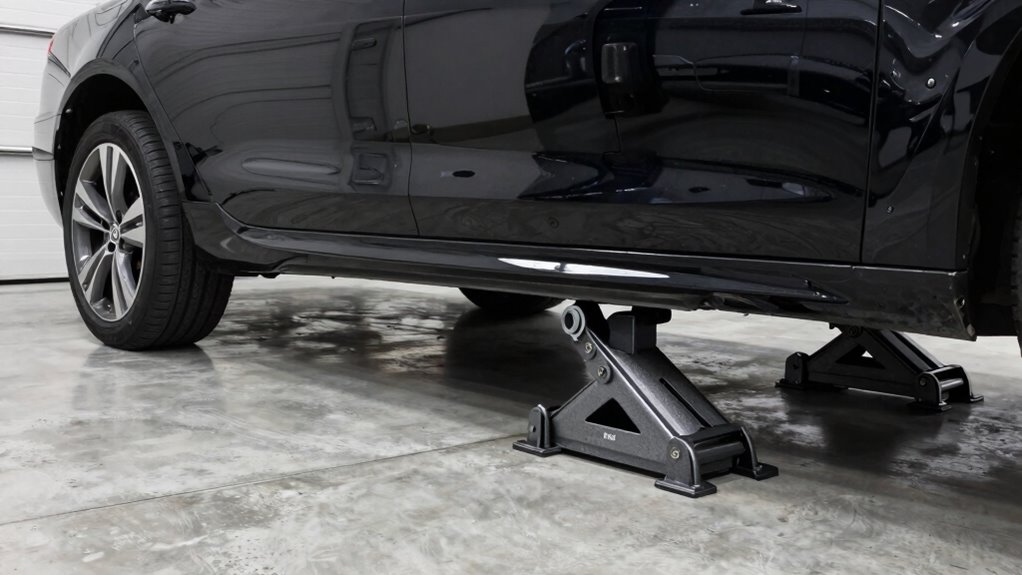
To lift your car safely without bending it, always locate the manufacturer-recommended support points, typically found along the frame or reinforced areas. Position your hydraulic jack under these points to prevent damage. Once lifted, place your jack stands directly beneath these same support points on a flat, stable surface. Ensuring proper placement and stability avoids bending or warping your vehicle. Keep reading to discover additional tips for secure, damage-free lifting.
Key Takeaways
- Use manufacturer-recommended lift points to prevent vehicle damage and ensure safe lifting.
- Position jack stands directly under reinforced support areas designed for lifting.
- Always place stands on flat, solid surfaces to maintain stability.
- After lifting, gently shake the vehicle to confirm it sits securely on the stands.
- Avoid lifting in areas with uneven or sloped surfaces to prevent instability.

Using jack stands correctly is essential for guaranteeing your safety when working under a vehicle. Before you begin, it’s crucial to understand that the way you lift your car greatly impacts your safety and the success of your project. Hydraulic jacks are commonly used to lift vehicles because they’re efficient and easy to operate. However, they are designed for temporary lifting and should never be relied upon alone to support a vehicle during maintenance. Once you’ve raised your car to the desired height, you must switch to sturdy jack stands to maintain vehicle stability. This changeover is vital because hydraulic jacks can fail or lose pressure, risking sudden drops that could cause injury or damage. Proper placement of the jack stands ensures that the vehicle remains stable and secure while you work beneath it.
When selecting where to lift your vehicle, look for the manufacturer’s recommended lift points. These are specific areas reinforced to bear the weight of the vehicle without causing damage. Using hydraulic jacks at these points allows you to lift the car safely and evenly. Once the vehicle is elevated, position the jack stands directly under the designated support points. Always make sure the stands are on a flat, solid surface to prevent any shifting or sinking. It’s best to use stands with a wide base for added stability, especially if you’re working on uneven ground or in a garage with a slightly sloped floor. Before fully trusting the stands, gently shake the vehicle to guarantee it’s stable and securely supported. If there’s any wobbling or instability, reposition the stands until you’re confident the vehicle won’t shift unexpectedly. Additionally, understanding proper support techniques and the limitations of hydraulic jacks ensures you maintain a safe working environment.
Frequently Asked Questions
Can I Use a Floor Jack Alone to Support My Car Safely?
You shouldn’t rely solely on a floor jack to support your car safely. Floor jacks are designed for lifting, not stabilizing, and they pose stability concerns during maintenance or tire changes. For safety, use jack stands on a solid, level surface and position them correctly at the vehicle’s designated lifting points. This minimizes side impact risks and guarantees your car remains steady, protecting you from potential accidents.
How Do I Choose the Right Jack Stand Weight Capacity?
You should choose a jack stand with a weight capacity that exceeds your vehicle’s weight, considering weight distribution for safety. Don’t worry about overestimating—it’s better to have a higher capacity than too low. Look for sturdy materials like steel, which provide reliable support under load. This guarantees your car stays stable while you work, preventing accidents caused by inadequate support during maintenance or repairs.
Are There Specific Areas on My Car to Avoid Lifting?
You should avoid lifting your vehicle at areas that aren’t designated as proper lifting points. Check your car’s owner’s manual for specific lifting points, usually reinforced areas like frame rails or designated pinch welds. Using incorrect lifting points can damage your vehicle during vehicle jacking. Always stick to the recommended lifting points and avoid parts like the suspension, fuel tank, or body panels to guarantee safety and prevent damage.
How Often Should I Inspect My Jack Stands for Safety?
You should inspect your jack stands regularly to keep safety in check, ideally before every use. Inspection frequency depends on how often you work on your car, but make it a habit to do visual checks for signs of wear or damage. Maintenance tips include checking for rust, cracks, or bent components. Staying vigilant ensures your stands stay reliable, giving you peace of mind while working underneath your vehicle.
Can I Lift My Car on Uneven or Sloped Surfaces Safely?
You should avoid lifting your car on uneven or sloped surfaces, as it compromises safety. If you must, guarantee proper jack placement on a stable, level surface. Use a hydraulic jack for quick lifts and a mechanical jack for controlled, steady support. Always use jack stands on firm ground, and double-check stability before working. Never rely solely on the jack; always secure your vehicle properly to prevent accidents.
Conclusion
Remember, when you’re working beneath your car, it’s like gently holding a delicate treasure. Use your jack stands wisely, placing them on solid ground to keep everything steady and secure. By choosing the right spots, you’re ensuring your safety and giving your vehicle the support it needs. Think of it as giving your car a sturdy pair of shoes—comfortably lifting without strain. Always prioritize stability, and you’ll navigate your repairs smoothly and confidently.