
Understanding the difference between kinetic and static recovery ropes is essential for safe rescues. Kinetic ropes stretch under load, absorbing shock, making them ideal for vehicle recoveries but prone to failure if overstressed. Static ropes have minimal stretch, providing control during rappelling or rescue work, but they can snap under sudden shock loads. Knowing when each type might fail helps you choose the right rope; continue to explore to guarantee your safety in critical situations.
Key Takeaways
- Kinetic ropes stretch to absorb shock during sudden loads, preventing equipment or personnel damage.
- Static ropes have minimal stretch, ideal for controlled descent but prone to failure under shock if misused.
- Material choice (nylon for kinetic, polyester for static) influences elasticity, strength, and durability.
- Regular inspection and maintenance are vital, as UV, chemicals, and abrasion degrade both rope types over time.
- Using the correct rope type for specific rescue scenarios reduces risk of failure and enhances safety.
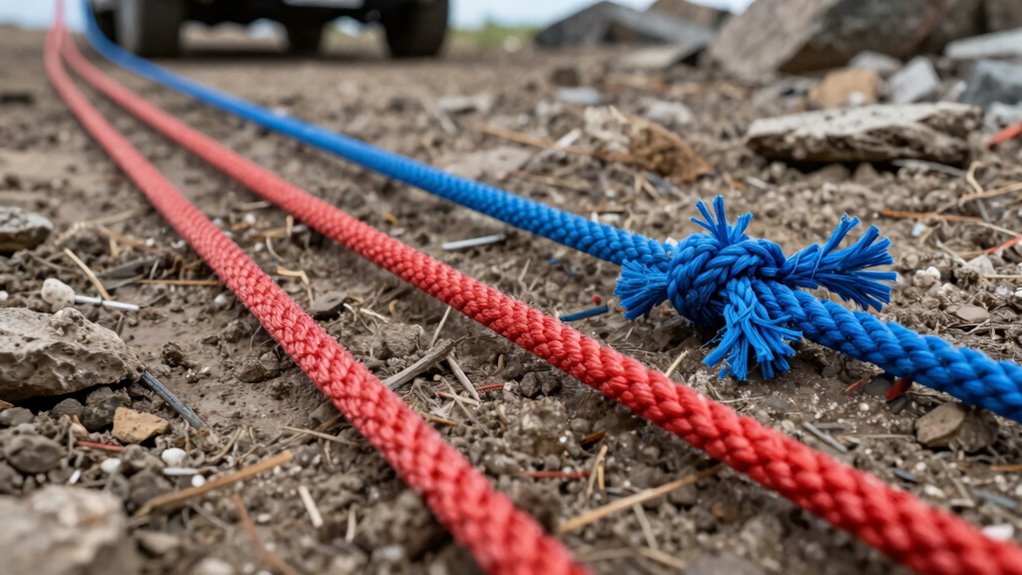
Have you ever wondered how recovery ropes can make a difference in rescue situations or outdoor adventures? The right choice of rope can be the difference between a successful rescue and a dangerous failure. When selecting recovery ropes, understanding the significance of rope material and safety standards is essential. Rope material determines the strength, durability, and flexibility of the rope, directly impacting its performance in critical moments. For example, synthetic fibers like nylon and polyester are popular because they offer high tensile strength, resistance to abrasion, and elasticity, which helps absorb shock loads during pulls. Natural fibers, such as manila or hemp, are less common today due to their lower strength and susceptibility to environmental damage. Ensuring your rope meets strict safety standards is equally essential. These standards, set by organizations like OSHA or ANSI, guarantee that the rope has been tested for load-bearing capacity, elongation, and resistance to wear. When you choose a recovery rope that adheres to these safety standards, you’re minimizing the risk of failure under heavy loads or during intense pulls.
Understanding the distinction between kinetic and static ropes is essential in knowing when your rope might fail. Kinetic ropes are designed to stretch and absorb energy during a sudden shock load, making them ideal for vehicle recoveries or situations where a quick, forceful pull is necessary. Their elasticity helps prevent sudden jerks that could cause injury or damage. However, this stretch can be a drawback if you’re trying to hold a steady, controlled tension. Static ropes, on the other hand, have minimal stretch and are used for rappelling, rescue operations, or lowering gear. They’re better suited for situations where control and precision are critical, but their lack of stretch means they can be more prone to failure if subjected to sudden shock loads. Additionally, selecting the appropriate rope type based on the specific environment can prevent unexpected failures during critical moments.
Both types of ropes have their limits, and knowing when they might fail depends on factors like wear, age, and how well they’re maintained. Over time, even ropes that meet safety standards can degrade, especially if exposed to UV rays, chemicals, or abrasion. Regular inspection is key—look for fraying, cuts, or discoloration. Using the wrong type of rope for a specific task can also cause failure. For example, using a static rope for a vehicle recovery where a shock load is involved can result in rupture. Conversely, relying on a kinetic rope for a delicate rescue could lead to excessive elongation and loss of control. Ultimately, choosing the right recovery rope, understanding its material and safety standards, and knowing its limitations will keep you safe and effective during rescue or outdoor adventures.
Frequently Asked Questions
How Often Should Recovery Ropes Be Inspected for Safety?
You should inspect your recovery ropes before every use to guarantee safety standards are met. Regular inspections help identify wear, fraying, or damage that could cause failure. Additionally, schedule thorough inspections at least monthly for static ropes and after each heavy or stressful use for kinetic ropes. Staying diligent with inspection frequency helps prevent accidents and prolongs your ropes’ lifespan, keeping your recovery gear reliable and safe.
Can Recovery Ropes Be Repaired After Damage?
Yes, recovery ropes can be repaired after damage, but only if you perform a thorough damage assessment first. You might think a little tear is no big deal, but a tiny flaw can turn into a catastrophic failure. Rope splicing is often used to restore strength, but it’s essential to guarantee the splice is correctly done and the rope is safe. Always prioritize safety over saving a damaged rope.
What Are the Environmental Impacts on Rope Durability?
Environmental degradation and UV exposure considerably impact your recovery rope’s durability. Prolonged exposure to sunlight causes UV rays to weaken fibers, leading to faster wear and potential failure. Additionally, environmental factors like moisture, chemicals, and temperature fluctuations accelerate degradation. To preserve your rope’s strength, store it properly, avoid prolonged sun exposure, and regularly inspect for signs of damage, ensuring safer and more effective recovery operations.
Are There Specific Brands Recommended for Different Recovery Scenarios?
You should look for brand recommendations tailored to your scenario-specific choices. For extreme recovery scenarios, consider brands known for durability and high load capacity, like ARB or Maxtrax. If you’re dealing with lighter, less demanding situations, brands like Smittybilt or Tuff Stuff offer reliable options. Always check product specifications to guarantee the rope’s strength and material match your recovery needs, and prioritize reputable brands for safety and performance.
How Does Weather Affect the Performance of Recovery Ropes?
Imagine you’re stuck in muddy weather conditions, and moisture effects weaken your recovery rope’s integrity. Weather conditions like rain or snow reduce a rope’s strength, especially static ones, making them more prone to failure. Moisture can cause kinetic ropes to slip or degrade faster, risking safety. Always inspect your recovery ropes after adverse weather, and consider weather-resistant options to guarantee reliable performance in challenging conditions.
Conclusion
Understanding the differences between kinetic and static recovery ropes helps you choose the right tool for the job, ensuring safety and effectiveness. You need to recognize when flexibility matters, when strength is critical, and when failure is not an option. Whether you’re pulling or stabilizing, remember that your choice impacts your safety, your vehicle’s safety, and your peace of mind. Know your ropes, know your limits, and always prioritize safety — because recovery is only as reliable as the rope you trust.