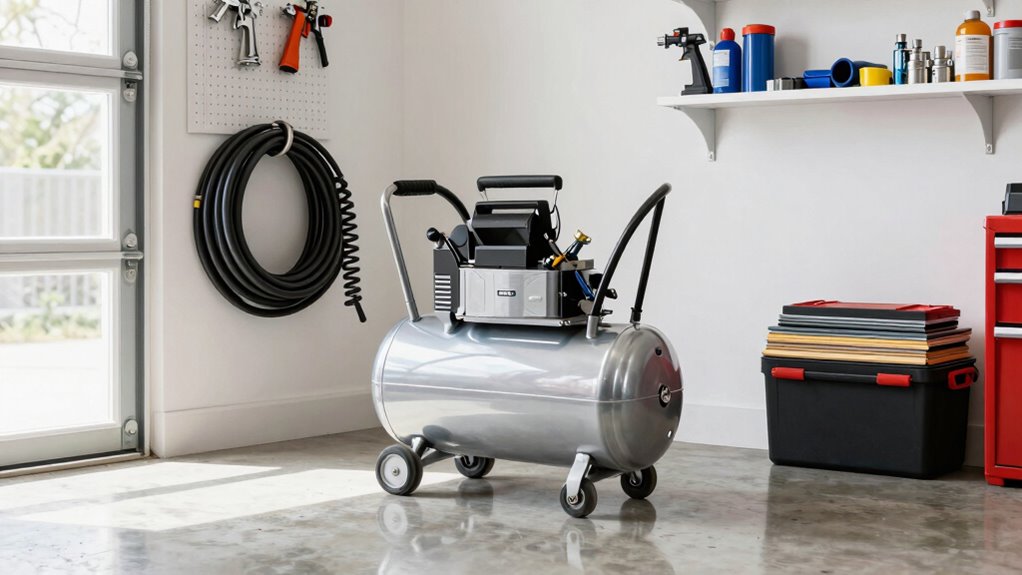

To keep your garage air compressor ready for weekend projects, perform routine checks like inspecting hoses, fittings, and filters before each use. Tighten any loose connections and drain moisture from the tank after every session. Store it in a dry, cool place and run it briefly before extended storage. Make safety a priority by ensuring proper grounding and wearing protective gear. For more tips to keep your compressor in top shape, keep exploring how to maintain peak performance.

Get business pricing on garage and car supplies
- Business-only prices and quantity discounts
- Tax-exempt purchasing
- Multiple users, one account, clear invoices
Key Takeaways
- Perform a pre-use inspection, checking for leaks, damage, and loose connections.
- Drain moisture from the tank after each use to prevent rust and corrosion.
- Ensure proper air pressure and filter maintenance for optimal performance.
- Store in a dry, cool place and run briefly before extended inactivity.
- Follow safety precautions and review the manual for model-specific care.
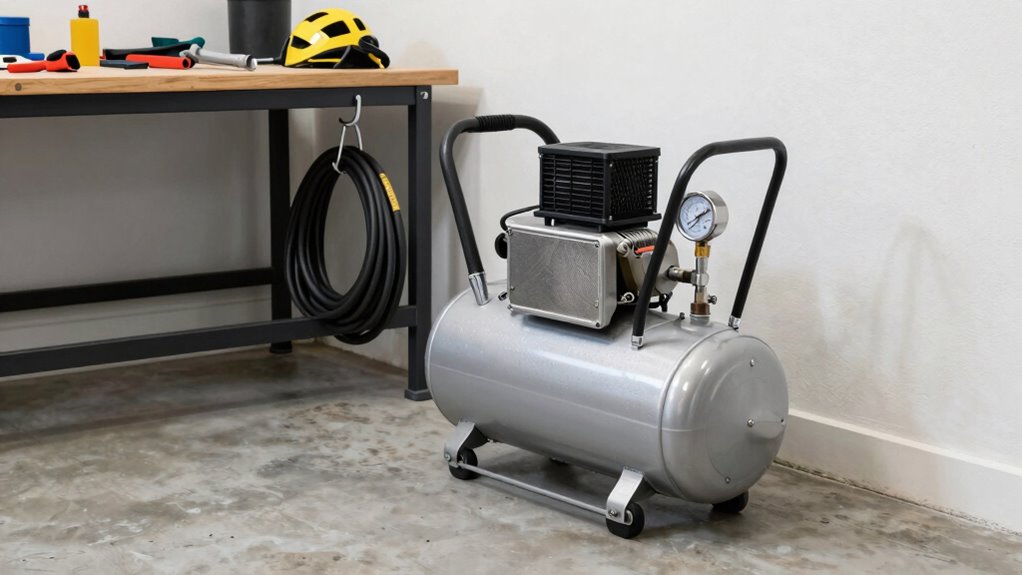
A garage air compressor is a versatile tool that can make your DIY projects and maintenance tasks much easier. To keep it ready for weekend projects, you need to follow some essential maintenance tips and safety precautions. Regular upkeep ensures your compressor runs efficiently and safely, preventing breakdowns when you need it most.
Start by inspecting your compressor before each use. Check for signs of wear, leaks, or damage to hoses and fittings. Tighten any loose connections, and replace cracked or worn hoses immediately. Keeping the air filter clean is fundamental; a clogged filter restricts airflow, reducing performance and increasing strain on the motor. Remove the filter cover regularly and clean or replace the filter as recommended by the manufacturer. Draining moisture from the tank after each use is another critical maintenance tip. Water buildup inside the tank can lead to rust and corrosion, shortening the lifespan of your compressor. Use the drain valve at the bottom of the tank to release accumulated water, especially after heavy use or humid conditions. Additionally, understanding the air quality requirements for your compressor can help prevent internal damage caused by contaminants. Proper air filtration helps maintain optimal compressor performance and longevity. Ensuring your compressor has the correct air pressure levels is also vital for safe and efficient operation, as over-pressurization can cause damage or accidents. Also, regularly checking the oil level (if applicable) and changing it as recommended can extend the life of your compressor and keep it running smoothly. Moreover, familiarizing yourself with compressor maintenance guidelines can help identify potential issues early and prevent costly repairs.
Inspect your compressor before each use; check for wear, leaks, and tighten connections regularly.
In addition to maintenance, adhering to safety precautions is essential. Always operate your air compressor in a well-ventilated area, away from flammable materials, and ensure the workspace is clear of clutter. Wear protective gear such as safety goggles and hearing protection to prevent injuries from flying debris or loud noise. Never bypass safety features or modify the compressor, as these changes can lead to hazardous situations. Make sure the compressor is properly grounded to avoid electrical shocks, and unplug it when performing maintenance or adjustments. Never operate the compressor if it’s damaged or if safety guards are missing. Proper storage is another key aspect to keep your compressor ready. Store it in a dry, cool place, protected from dust and moisture. Cover it if necessary to prevent dirt from settling on moving parts or electrical components. Before storing for an extended period, run the compressor briefly to circulate oil (if it’s oil-lubricated) and check all connections. Regularly reviewing the user manual for specific maintenance tips and safety precautions tailored to your model will help you avoid common pitfalls.
garage air compressor maintenance kit
As an affiliate, we earn on qualifying purchases.
As an affiliate, we earn on qualifying purchases.
Frequently Asked Questions
How Often Should I Replace the Compressor Oil?
You should replace the compressor oil every 3 to 6 months, depending on usage. Check the oil viscosity regularly; if it becomes thick or dirty, it’s time for an oil change. Regularly changing the oil guarantees your compressor runs smoothly and prolongs its lifespan. Keep an eye on the oil level and quality, especially before big projects, to prevent overheating and maintain peak performance.
Can I Leave My Compressor Outside During Winter?
Did you know that nearly 60% of compressor failures are due to weather damage? Leaving your compressor outside during winter isn’t advisable. You need garage insulation and outdoor protection like covers or enclosures to prevent moisture and freezing issues. Without proper shelter, cold temperatures can cause internal damage, reducing lifespan. Keep your compressor indoors or properly protected outside to guarantee it stays functional and ready when you need it for weekend projects.
What Safety Gear Is Recommended When Using the Compressor?
When using your compressor, you should wear protective gloves to prevent injuries from hot surfaces or flying debris. Hearing protection is essential because compressors can be loud and damaging to your ears over time. Always follow safety guidelines, keep your work area clear, and make certain your compressor is properly maintained. Wearing the right safety gear helps prevent accidents and keeps your weekend projects safe and enjoyable.
How Do I Troubleshoot Common Compressor Startup Issues?
Troubleshooting compressor startup issues is like fixing a car engine—quick, focused, and precise. First, check your pump maintenance to make certain no leaks or blockages. Next, verify airflow optimization by inspecting filters and vents for obstructions. If it still won’t start, examine the power source and pressure switch. Regularly maintaining these components helps prevent issues and keeps your compressor ready for weekend projects.
Is It Necessary to Drain Moisture After Each Use?
Yes, it’s necessary to drain moisture after each use to prevent moisture buildup inside your compressor. Regular compressor maintenance includes draining the tank to remove accumulated water, which can cause rust and damage over time. By doing this after every session, you guarantee your compressor stays in good shape, operates efficiently, and is ready for your next weekend project. Consistent maintenance prolongs the lifespan of your compressor and improves performance.
Conclusion
So, now that you’re armed with the secret sauce to keep your garage air compressor ready for weekend projects, go ahead—ignore those little maintenance chores at your peril. Because nothing screams “professional handyman” quite like a compressor that’s as dead as last year’s paint. Remember, a little attention today keeps you from the embarrassing “it’s broken again” dance tomorrow. Happy compressing—and don’t forget to give it a little love!
Halloween Picks
halloween
As an affiliate, we earn on qualifying purchases.