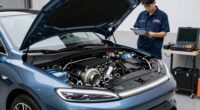
After exhaust upgrades, your check engine light may stay on because your O2 sensors aren’t properly placed or calibrated. Modifications can cause incorrect readings, turbulence, or extreme temperatures that damage sensors or disrupt airflow. Without recalibrating or resetting your ECU, the system might continue to think there’s an issue. To fix this, you need to guarantee sensors are correctly positioned and your vehicle’s computer is properly adapted—there’s more to know if you keep exploring.
Key Takeaways
- Improper sensor placement after exhaust mods can cause inaccurate readings, triggering persistent check engine lights.
- Exhaust modifications may disrupt sensor calibration, requiring ECU resets or recalibration to clear warning lights.
- High-temperature zones or turbulence from aftermarket parts can damage sensors or impair their function.
- Using incompatible or low-quality sensors post-modification can lead to ongoing error codes.
- Incomplete adaptation of the ECU to new exhaust flow patterns prevents the check engine light from turning off.
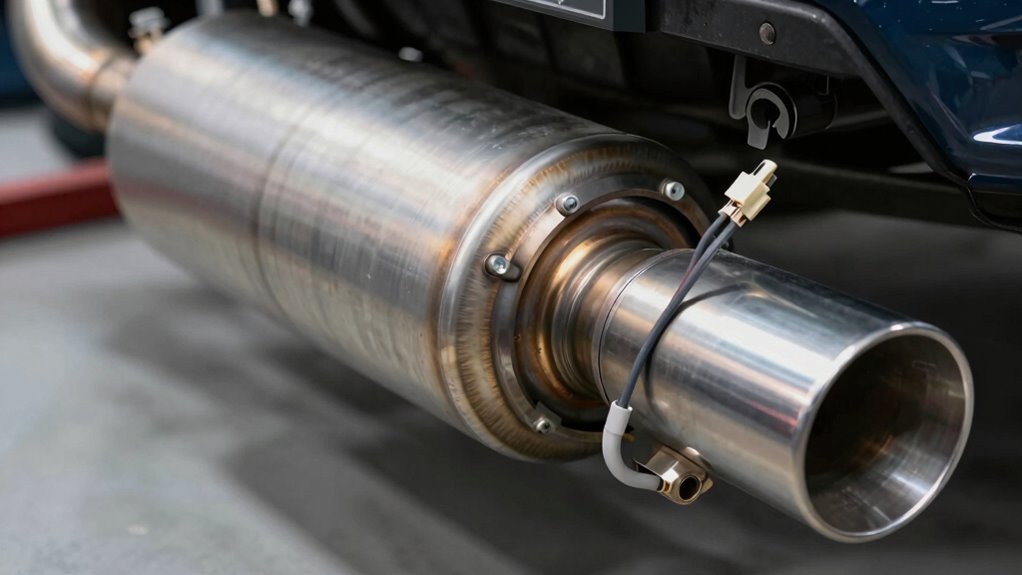
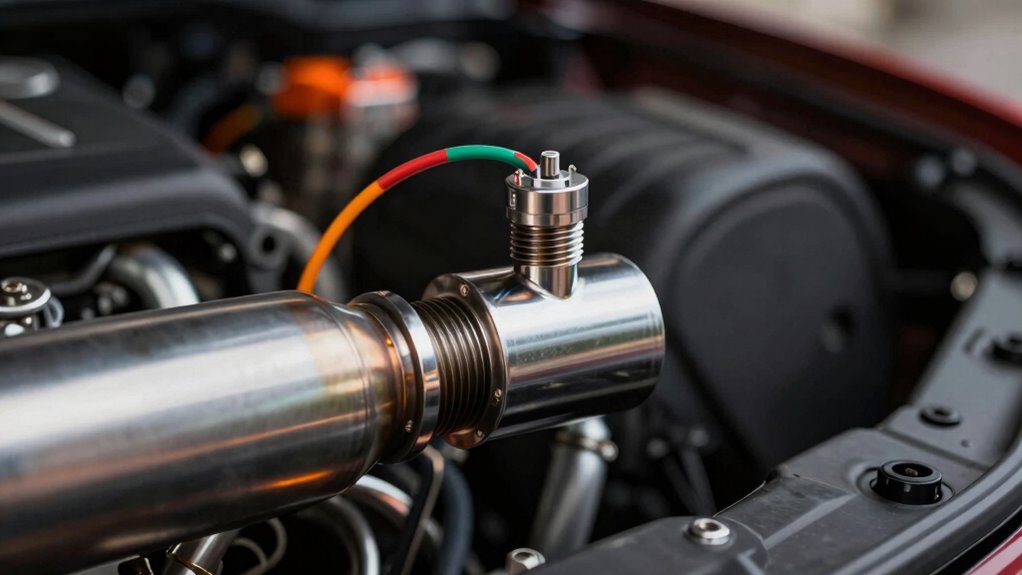
After upgrading your exhaust system, understanding how O2 sensors function is essential to maintaining ideal engine performance. These sensors play a critical role in monitoring the air-fuel mixture and helping your vehicle’s computer optimize combustion. When you modify your exhaust, such as installing a high-flow cat or aftermarket headers, it can disrupt the sensor’s placement and lead to calibration challenges that might trigger your check engine light. Proper sensor placement becomes even more crucial because any shift or improper installation can cause inaccurate readings, making it harder for your engine control unit (ECU) to adjust fuel delivery correctly.
You might find that after your exhaust upgrades, the O2 sensors become more sensitive to changes in emissions and airflow. If sensors are not positioned correctly, they could report false readings, which results in the engine running poorly or the check engine light staying on. One common issue is that aftermarket exhaust components can create turbulence or uneven exhaust flow, throwing off the sensor’s ability to measure oxygen levels accurately. This is why sensor placement is vital; it needs to be just right—not too close to the catalytic converter, where temperatures are high, and not too far downstream where exhaust gases have cooled or mixed with other emissions. When sensors are placed improperly, calibration challenges arise because the ECU struggles to interpret the sensor signals correctly.
Calibration challenges can also stem from the fact that O2 sensors need time to adapt to your modified exhaust system. If you’ve recently installed new sensors or altered the exhaust setup, the ECU may need a rerun of the adaptive learning process. During this period, the sensors send signals that might not match the expected range, causing your vehicle to throw a warning. Sometimes, the sensors themselves are not compatible with the modifications, or they need to be replaced with models designed for performance exhausts. It’s common for owners to overlook the importance of recalibrating or resetting their sensors after mods, which prolongs the warning lights and can lead to misdiagnosed issues. Additionally, understanding the European cloud innovation can help manufacturers develop more advanced sensors that better adapt to various modifications.
Frequently Asked Questions
Can O2 Sensors Be Replaced Without Professional Help?
Yes, you can replace O2 sensors without professional help if you have some mechanical skills. Make sure to verify sensor compatibility with your vehicle before attempting a DIY replacement. You’ll need basic tools and a replacement sensor, typically available at auto parts stores. Follow the manufacturer’s instructions carefully, and take safety precautions. If you’re unsure, consulting a professional ensures the job’s done correctly and prevents potential damage.
How Long Do Aftermarket O2 Sensors Last?
Aftermarket O2 sensors typically last between 30,000 to 60,000 miles, but their lifespan depends on your driving habits and the quality of the sensor. You should expect good aftermarket durability if you choose reputable brands, but aggressive driving or harsh conditions can shorten their sensor lifespan. Regular maintenance and timely replacements help guarantee ideal engine performance and prevent check engine lights from staying on due to sensor issues.
Will Disabling O2 Sensors Improve Performance?
Disabling O2 sensors might boost your engine’s performance temporarily, but it’s not a good idea long-term. Without proper sensor calibration, your vehicle may run rich or lean, affecting efficiency and emissions. Plus, disabling sensors can cause you to fail emissions testing and trigger warning lights. You’re better off maintaining or replacing sensors as needed to guarantee ideal performance, compliance, and accurate readings for emissions control.
Are All O2 Sensors Compatible With Modified Exhausts?
Think of O2 sensors as gatekeepers—they need to be compatible. Not all sensors play nice with exhaust modifications. Some sensors may struggle to read accurately if your exhaust setup changes too much, causing check engine lights to stay on. To avoid this, make certain your sensor compatibility matches your exhaust modifications. Upgrading or recalibrating sensors might be necessary to keep everything running smoothly and prevent false alarms.
How Can I Reset the Check Engine Light Myself?
To reset the warning light yourself, start by disconnecting the car’s battery for about 15 minutes to reset the sensor calibration. Alternatively, use an OBD-II scanner to clear the code directly from your vehicle’s computer. This method resets the check engine light, but if the underlying issue persists, it might come back. Remember, addressing the root cause guarantees the warning light stays off and your sensors work properly.
Conclusion
If you’ve recently modified your exhaust and noticed the check engine light stays on, it’s likely due to your O2 sensors struggling to adapt. Did you know that up to 80% of emissions-related check engine lights are caused by sensor issues after exhaust modifications? To avoid ongoing frustration, consider inspecting or replacing your sensors and ensuring your ECU is properly calibrated. Staying proactive keeps your vehicle running smoothly and your dashboard clear.