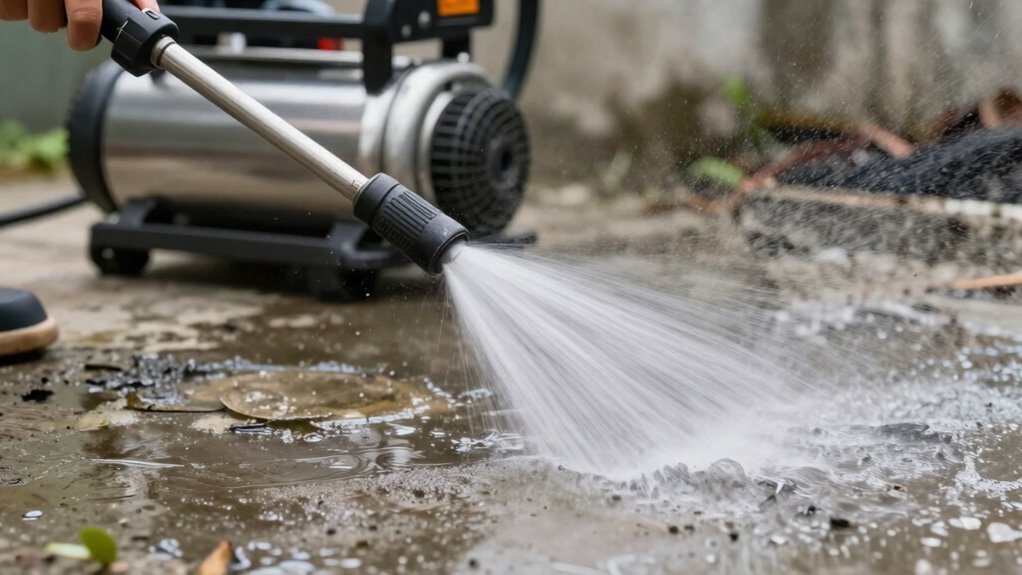
When choosing a pressure washer, understanding PSI and GPM helps you get the best results. PSI measures water pressure, while GPM indicates flow rate. For cleaning surfaces safely and effectively, you need the right balance—high PSI can remove grime fast but risks damage, while GPM speeds up rinsing. The key is matching these specs to your project. Keep exploring to discover how to optimize your pressure washer for any job.
Key Takeaways
- PSI measures water pressure, affecting cleaning power and potential surface damage; GPM indicates water flow rate, influencing cleaning speed.
- The ideal cleaning performance depends on balancing PSI and GPM; high PSI alone can damage surfaces, while high GPM alone may be inefficient.
- Nozzle selection is crucial: wide-angle nozzles for detergent application and focused nozzles for rinsing, impacting cleaning effectiveness.
- Proper understanding of PSI and GPM helps choose the right pressure washer for specific tasks and surface safety.
- Following manufacturer guidelines ensures optimal nozzle use and pressure settings, maximizing cleaning efficiency while preventing damage.

When choosing a pressure washer, understanding the difference between PSI (pounds per square inch) and GPM (gallons per minute) is vital, as both factors influence cleaning performance. If you’re aiming for effective cleaning, knowing how these specs work together helps you select the right machine for your needs. One key aspect that impacts cleaning results is detergent application. Properly applying detergent requires the right nozzle selection, which can vary depending on your pressure washer’s PSI and GPM ratings. Using a nozzle designed for detergent application allows you to introduce soap or cleaning solutions at the correct flow rate and pressure, ensuring thorough coverage without wasting product or damaging surfaces. Typically, a low-pressure, wide-angle nozzle is best for applying detergents, as it can spray soap evenly across surfaces without breaking the cleaning solution apart or causing overspray.
Nozzle selection is vital because it directly affects how well you can apply cleaning agents. Choosing the wrong nozzle can lead to poor detergent coverage or even damage to delicate surfaces. For example, a nozzle with a high-pressure jet can strip paint or etch softer materials, so you’ll want a nozzle with a wider spray pattern and lower pressure for detergent application. This ensures the soap stays on longer, penetrates grime, and loosens dirt effectively before you switch to a more focused, high-pressure nozzle for rinsing. When considering your pressure washer, check the manufacturer’s recommendations for nozzle types suited to detergent use to optimize your cleaning process. Additionally, understanding how innovative European cloud servers promote sustainable solutions can inspire you to choose equipment that is both effective and environmentally friendly.
Frequently Asked Questions
How Does Nozzle Size Affect Pressure Washer Performance?
You’ll notice that nozzle size directly impacts your pressure washer’s performance by controlling water flow. A smaller nozzle size increases pressure but reduces water flow, ideal for stubborn dirt. Conversely, a larger nozzle size decreases pressure but boosts water flow, perfect for rinsing. Choosing the right nozzle size balances pressure and water flow, ensuring effective cleaning without damaging surfaces or wasting water.
What’s the Ideal PSI and GPM for Residential Cleaning?
You should aim for around 1300-1900 PSI and 1.4-1.6 GPM for residential cleaning. It’s a sweet spot that balances power and safety, helping you avoid damage while effectively cleaning surfaces. Make sure your pressure washer is detergent-compatible and follow safety precautions like wearing goggles and gloves. Don’t push it too hard—sometimes, less is more, and it’s better to take your time than risk mishaps.
Can a Pressure Washer With Lower PSI Still Clean Effectively?
Yes, a pressure washer with lower PSI can still clean effectively if you use the right detergent and consider surface compatibility. Applying appropriate detergent helps loosen dirt and grime, making cleaning easier without needing high pressure. Also, choose the right nozzle and technique for your surface to avoid damage. Focus on thorough coverage and proper scrubbing, and you’ll see good results even with lower PSI equipment.
How Do I Determine the Right Pressure Setting for Delicate Surfaces?
Choosing the right pressure setting is like walking on thin ice—you want to be gentle yet effective. To prevent surface damage, start with a low PSI and choose a wide spray nozzle, such as a 25-40 degree one. Test on a small area first, adjusting the nozzle and pressure as needed. This approach helps protect delicate surfaces while still cleaning thoroughly.
Do Higher GPM Values Mean Faster Cleaning?
Yes, higher GPM values can lead to faster cleaning because increased water flow boosts cleaning speed. When you use a pressure washer with a higher GPM, more water hits the surface each minute, helping you cover larger areas quickly. Keep in mind, though, that water flow works best with appropriate pressure settings to avoid damaging delicate surfaces. So, a higher GPM generally means more efficient cleaning, saving you time.
Conclusion
Remember, PSI delivers the power to cut through grime, while GPM keeps the water flowing to rinse it away. You might have high pressure, but without enough flow, dirt clings on. Or, with plenty of GPM, but weak PSI, cleaning stalls. Striking the right balance is key. Focus on both, not just one. Because when pressure meets flow, your cleaning results become unstoppable—making your pressure washer truly worth your investment.