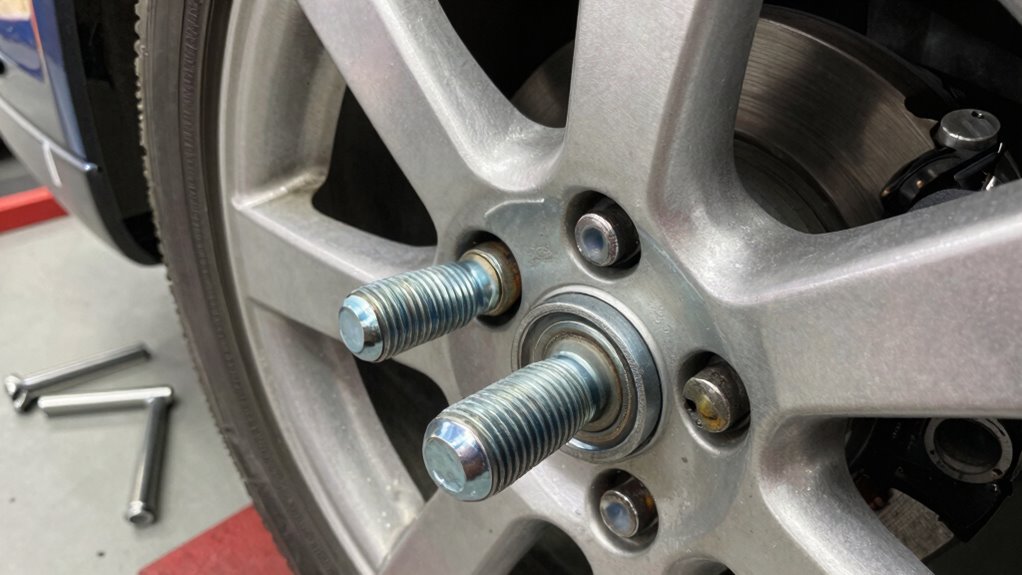

To keep your wheel studs healthy with frequent wheel changes, regularly inspect them for damage, cracks, or corrosion, and replace any compromised studs immediately. Always apply proper torque using a torque wrench during installation to prevent overstretching or loosening. Protect studs from rust by using anti-seize or light grease, especially after each change. Handle wheels carefully and double-check lug nut tightness afterward. For more tips on maintaining your wheel studs, keep exploring safe and effective practices.

Get business pricing on garage and car supplies
- Business-only prices and quantity discounts
- Tax-exempt purchasing
- Multiple users, one account, clear invoices
Key Takeaways
- Regularly inspect wheel studs for wear, cracks, corrosion, or elongation, especially after multiple wheel changes.
- Always tighten lug nuts to manufacturer-recommended torque using a torque wrench.
- Apply anti-seize compound or light wheel grease during reinstallation to prevent corrosion.
- Handle wheels carefully to avoid damaging studs and ensure proper installation techniques.
- Double-check lug nut tightness after each wheel change to maintain proper stud integrity.
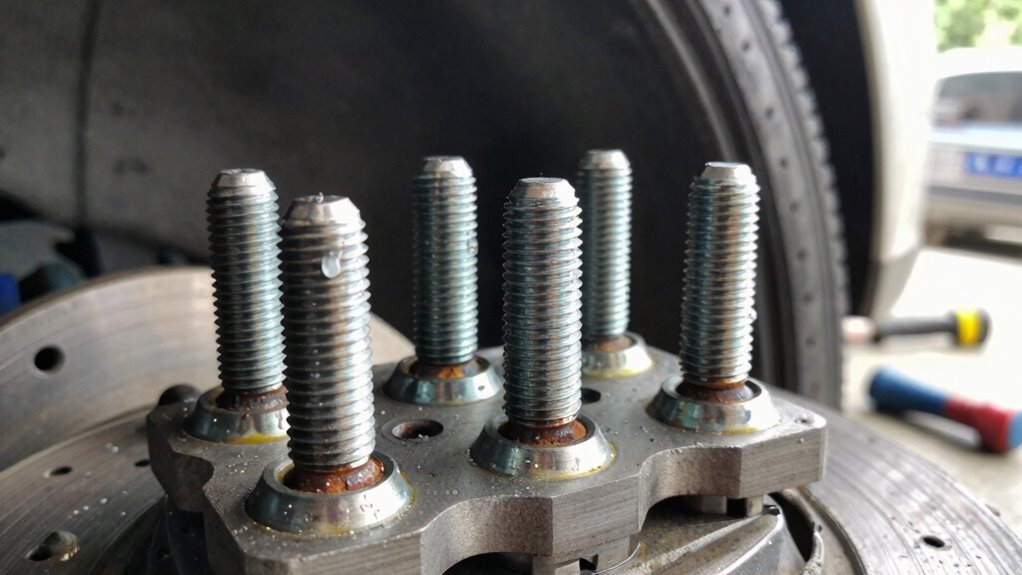
If you frequently change your car’s wheels, maintaining the health of your wheel studs is essential to guarantee safety and proper performance. Each time you remove and reinstall wheels, you risk putting extra strain on these critical components. Over time, this can cause corrosion, stretching, or even damage that compromises your vehicle’s stability. To keep your wheel studs in top shape, you need to pay attention to a few key practices. Regularly check the studs for any signs of wear or damage, especially after multiple wheel changes. If you notice any cracks, corrosion, or elongation, replace the studs immediately to prevent failure during driving.
Regularly inspect and replace worn or damaged wheel studs to ensure safe and stable driving.
Proper tire balancing is another important factor in preserving wheel and hub integrity. When you perform tire balancing, you’re ensuring that the weight of the wheel and tire assembly is evenly distributed around the axle. This reduces vibrations and uneven stress on the wheel studs during driving. When wheel studs are subjected to uneven forces, they can loosen or crack, especially if you often switch wheels. Balancing your tires not only improves ride comfort but also minimizes undue stress on your wheel mounting points, extending the lifespan of your wheel studs. Additionally, understanding the importance of proper maintenance can significantly extend the lifespan of these components.
Ensuring proper torque specifications during wheel installation is crucial because improper tightening can lead to overstressing or insufficient clamping force on the studs. Additionally, when you replace your brake pads, you should inspect the wheel studs thoroughly. Brake pad replacement often involves removing the wheel, and during this process, you might inadvertently damage the studs if you’re not careful. Use the correct tools and torque specifications when reinstalling wheels to guarantee the studs aren’t over-tightened or under-tightened. Over-tightening can stretch or weaken the studs, while under-tightening can cause the wheel to come loose. Always follow manufacturer guidelines for torque settings, and consider using a torque wrench for accuracy. Protecting your wheel studs from corrosion is also essential. Applying anti-seize compound or a light coat of wheel grease during reinstallation can prevent rust and make future removals easier. After completing a wheel change, double-check that all lug nuts are tightened to the proper torque. This guarantees even pressure distribution and prevents uneven stress on the studs. Remember, consistent maintenance and careful handling during wheel changes are your best defenses against premature wear or failure of wheel studs.
Products Worth Considering

Chemical Guys 16-Piece Ceramic Car Wash and Protection Kit with Big Mouth Foam Cannon

DEWALT 20V MAX XR Cordless 1/2-Inch Impact Wrench Kit (DCF900P1)

Chemical Guys 17-Piece Car Detailing Kit
As an affiliate, we earn on qualifying purchases.
Frequently Asked Questions
Can Using Aftermarket Lug Nuts Harm Wheel Studs?
Using aftermarket lug nuts can harm wheel studs if they aren’t compatible, leading to uneven tightening or damage. Poor Lug nut compatibility may cause stress on the studs, increasing the risk of failure. Be cautious with alloy wheel risks, as some aftermarket lug nuts can scratch or weaken alloy wheels. Always choose high-quality, compatible lug nuts to sustain wheel stud health and guarantee safe, secure wheel installation.
How Does Temperature Affect Wheel Stud Durability?
Think of your wheel studs like a metal bridge, enduring constant traffic. Temperature effects, especially heat cycling, can weaken the metal over time, causing fatigue and potential failure. When temperatures rise and fall repeatedly, the metal expands and contracts, leading to stress. To protect your wheel studs, avoid extreme heat exposure and guarantee proper torque. This helps maintain their strength and longevity, preventing costly failures on the road.
Is It Necessary to Replace Wheel Studs After Each Wheel Change?
You don’t need to replace wheel studs after every wheel change if they’re in good condition. Regularly check for wear, cracks, or damage, especially after hitting potholes or during brake disc replacements. Proper wheel alignment guarantees even stress on studs, prolonging their life. If you notice any damage or looseness, replace the studs promptly to maintain safety and guarantee they hold the wheel securely during future drives.
What Are Signs of Damaged or Worn Wheel Studs?
You’ll notice damaged or worn wheel studs if they show signs like rust, corrosion, or cracks during a thorough wheel stud inspection. If you experience uneven tire wear, difficulty tightening lug nuts, or if lug nuts feel loose, it’s a sign to check torque application and examine studs closely. Always guarantee proper torque to prevent undue stress. Replacing damaged studs promptly helps maintain safety and prevents further damage.
How Does Wheel Weight Impact Stud Integrity?
You might think that wheel weight doesn’t matter, but it actually impacts stud integrity. Excessive weight can cause uneven balancing, stressing the studs and leading to corrosion or fatigue over time. When wheels are poorly balanced, vibrations increase, putting more strain on the studs during driving. To protect your studs, guarantee proper wheel balancing and regularly check for signs of corrosion, especially if you frequently change wheels.
Conclusion
To keep your wheel studs in top shape, remember that prevention is better than cure. Regularly inspect and clean them, apply anti-seize compound, and don’t over-tighten during wheel changes. These small steps can save you from bigger headaches down the road. Stay attentive to their condition, and you’ll avoid having to face a problem head-on. After all, it’s better to nip issues in the bud before they turn into a full-blown headache.