To test for exhaust leaks before tuning problems occur, visually inspect your exhaust system for cracks, corrosion, or soot buildup. Use a soap water solution on joints and pipes while the engine runs—bubbles indicate leaks. You can also employ a smoke machine or gently feel near joints for escaping gases (be cautious of hot surfaces). Regular checks help catch small issues early. Keep exploring to discover more effective techniques and safety tips for maintaining your exhaust system.

Get business pricing on garage and car supplies
- Business-only prices and quantity discounts
- Tax-exempt purchasing
- Multiple users, one account, clear invoices
Key Takeaways
- Perform a visual inspection of exhaust components for cracks, soot, or corrosion signs.
- Use a soap water solution on joints and pipes to detect bubbling indicating leaks.
- Apply a smoke machine to introduce smoke and identify escaping fumes during a controlled test.
- Carefully feel near joints and pipes for escaping gases or a rush of air (with caution for hot surfaces).
- Regularly inspect for unusual smells, noises, or visible damage to catch leaks early.
Have you noticed a strange smell or unusual noise coming from your vehicle? If so, it’s vital you address it quickly, as these signs could point to an exhaust leak. The exhaust system plays an essential role in directing harmful gases away from your engine and passenger cabin. Over time, wear and tear can create small holes or cracks, leading to leaks that not only affect your vehicle’s performance but also violate emission control regulations. Regular exhaust system maintenance helps keep everything running smoothly, but detecting leaks early is key before they turn into more serious tuning problems or costly repairs.
Noticing strange smells or noises? Address potential exhaust leaks early to maintain safety and vehicle performance.
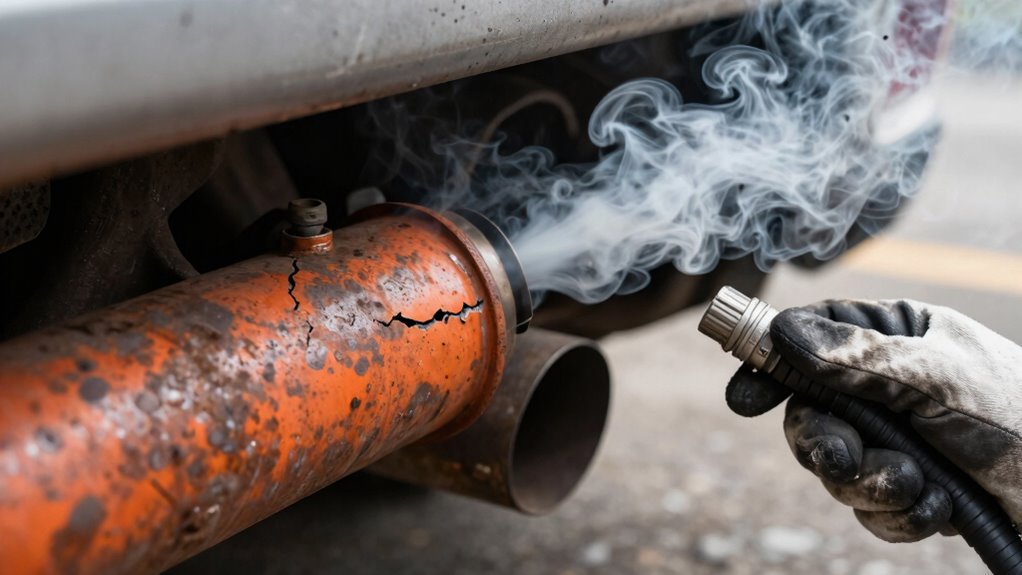
To test for exhaust leaks, start by listening carefully for any odd sounds. If you hear hissing, popping, or a loud exhaust noise that wasn’t there before, it could be a sign of a leak. Next, turn on your engine and let it idle in a well-ventilated area. Carefully inspect the exhaust manifold, pipes, and joints for visible cracks, corrosion, or black soot marks, which often indicate escaping gases. Sometimes, leaks are small and not immediately visible, so you might need to get more precise. Using a smoke machine or a soapy water solution can be very effective in pinpointing leaks and preventing unnecessary dismantling.
One effective method is to use a soap water solution. For the soap method, spray the mixture along the exhaust pipe and joints while the engine is running. If bubbles form or you see bubbles escaping from a particular spot, that’s your leak. A smoke machine pushes non-toxic smoke into the exhaust system, and if there’s a leak, you’ll see the smoke escaping from the damaged area. Both techniques are reliable ways to pinpoint leaks without dismantling your entire exhaust system. Additionally, visual inspection can sometimes reveal signs of leaks, especially if corrosion or soot buildup is evident around joints and connections. Performing a proper inspection regularly can help you catch issues early and prevent further damage. Using detection techniques like these can save you time and money in the long run.
Another way to check is by feeling for leaks. Carefully hold your hand near the joints and pipes while the engine runs, but be cautious of hot surfaces. You might detect a faint rush of air or gases escaping if there’s a leak. Remember, if your vehicle is emitting a strong smell of exhaust fumes inside the cabin, it’s a serious safety concern and requires immediate attention. Regular inspections and maintenance help you catch these issues early and ensure safety.
Detecting exhaust leaks early can prevent further damage and ensure your vehicle remains compliant with emission regulations. Addressing exhaust leaks promptly not only guarantees your vehicle complies with emission control regulations but also preserves engine efficiency. If you find any leaks, it’s best to have a professional mechanic perform the necessary repairs. Ignoring small issues can result in poor performance, increased emissions, and tuned problems down the line. Regular inspections and proper exhaust system maintenance help you avoid costly repairs and keep your vehicle running smoothly and safely.
exhaust leak detection smoke machine
As an affiliate, we earn on qualifying purchases.
As an affiliate, we earn on qualifying purchases.
Frequently Asked Questions
Can Exhaust Leaks Cause Poor Fuel Economy?
Yes, exhaust leaks can cause poor fuel economy. When there’s a leak, your engine’s sensors detect incorrect oxygen levels, leading to improper air-fuel mixture adjustments. This affects fuel efficiency and compromises emission control. You might notice reduced mileage and increased emissions. To prevent this, regularly check for leaks and get them fixed promptly. Keeping a sealed exhaust system guarantees your engine runs efficiently, saving you money and helping the environment.
How Do Exhaust Leaks Affect Engine Performance?
It’s ironic, but exhaust leaks often seem harmless—until they mess with your engine performance. An exhaust system leak can cause your engine to run lean, reduce power, and increase emissions. Leak detection is vital to catch issues early. When you ignore exhaust leaks, sensors get confused, and your engine struggles to breathe properly. So, addressing exhaust leaks promptly keeps your engine running smoothly and efficiently.
Are Exhaust Leaks Dangerous to Breathe In?
Exhaust leaks can be dangerous to breathe in because they release harmful gases like carbon monoxide, which pose serious health hazards. You might notice an unusual odor detection around your vehicle, signaling a leak. Breathing in these fumes can cause dizziness, headaches, or even more severe health issues. It’s vital to address exhaust leaks promptly to protect yourself and guarantee your vehicle’s safe operation.
What Tools Are Best for Detecting Exhaust Leaks?
You’ll want a smoke machine or a soapy water spray for leak detection methods, as coincidence often helps pinpoint issues. Sensor diagnostics tools, like OBD-II scanners, can reveal exhaust-related trouble codes, indicating leaks. Use a flashlight to visually inspect joints and connections. Combining these tools guarantees thorough testing, helping you detect leaks early and prevent tuning problems. Your keen eye and the right equipment make all the difference in maintaining peak exhaust system health.
How Often Should I Check for Exhaust Leaks?
You should check for exhaust leaks regularly, ideally every few months or before long trips. Start with a visual inspection around joints, clamps, and welds for cracks or damage. If you suspect a leak, perform a smoke test to identify hidden issues. Consistent checks help catch leaks early, preventing engine tuning problems and ensuring your vehicle runs smoothly. Don’t wait too long to inspect; early detection saves you time and money.
Conclusion
By regularly checking for exhaust leaks, you can catch potential issues before they turn into costly tuning problems. Don’t wait until you notice strange smells or decreased performance—stay proactive and inspect your exhaust system. After all, isn’t it better to enjoy a smooth ride and peak engine health rather than deal with unexpected repairs? Keep your vehicle in top shape by testing for leaks now, so you can hit the road confidently tomorrow.
Halloween Picks
halloween
As an affiliate, we earn on qualifying purchases.