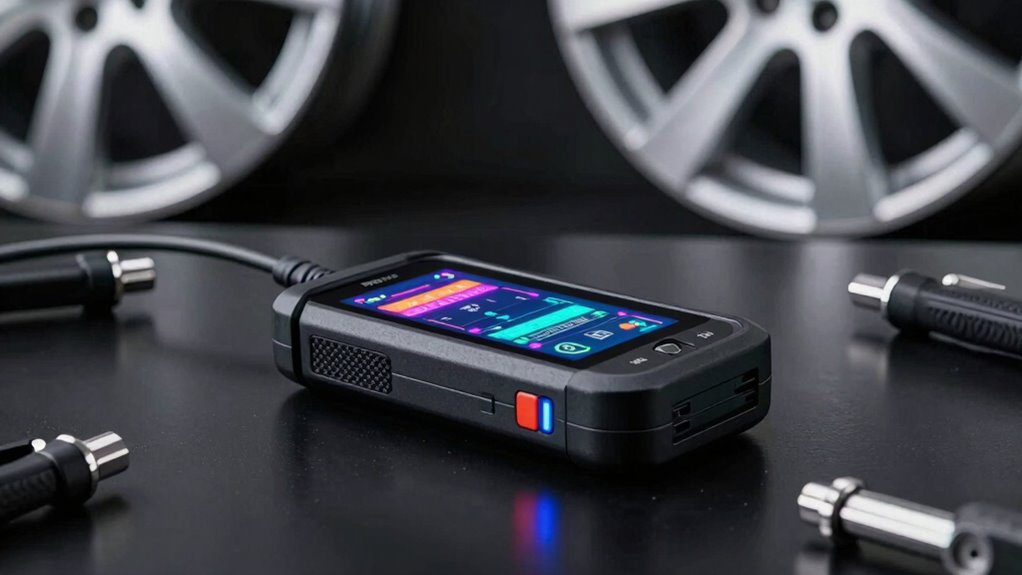

Before swapping wheels, you need to ask if your TPMS programming tool is compatible with your vehicle and sensors. Ensuring it can update sensor IDs, reset sensors, and calibrate pressure levels is key to maintaining system accuracy. Using the wrong tool can cause false alerts or system errors. Choosing a versatile, user-friendly device saves time and prevents safety issues. Stick with us to discover how selecting the right tool keeps your tire pressure monitoring smooth and reliable.

Get business pricing on garage and car supplies
- Business-only prices and quantity discounts
- Tax-exempt purchasing
- Multiple users, one account, clear invoices
Key Takeaways
- Verify the programming tool’s compatibility with your vehicle’s make, model, and sensor type.
- Ensure the device supports updating sensor IDs and recalibrating tire pressure settings.
- Confirm the tool can identify and communicate correctly with your specific TPMS sensors.
- Check if the tool offers multi-brand support for future vehicle or sensor upgrades.
- Use a user-friendly and reliable tool to prevent false readings and system errors during wheel swaps.
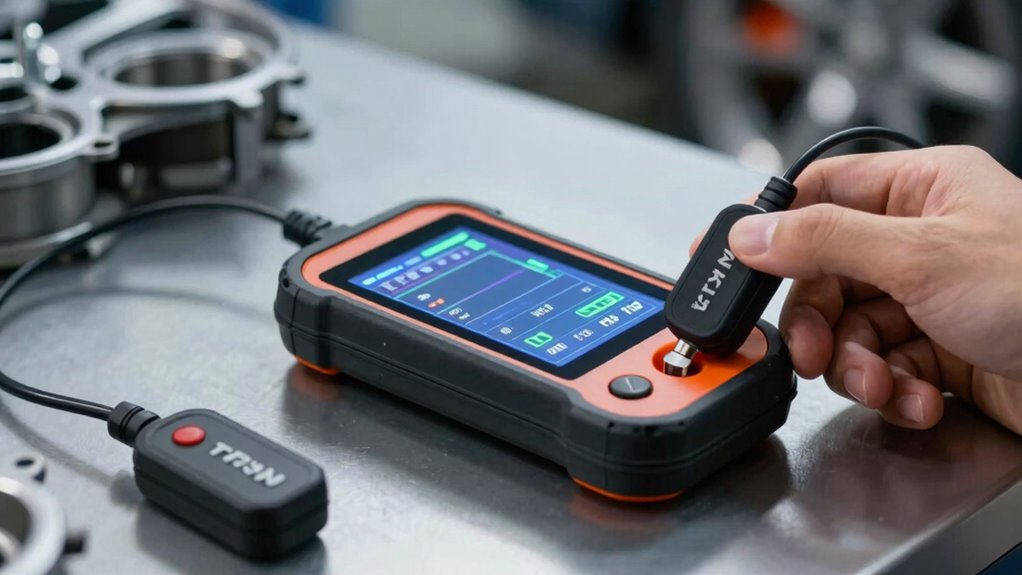
If you’re working with TPMS (Tire Pressure Monitoring System) sensors, you might have questions about the best programming tools to use. When swapping wheels or replacing sensors, guaranteeing proper programming is vital. The right TPMS programming tool can save you time and prevent headaches, but choosing one depends on understanding a few key factors. First, you need to take into account tire pressure and how the sensors are designed to relay that information. Each sensor communicates with the vehicle’s ECU, so compatibility is essential. Not all sensors work with every vehicle, and using incompatible sensors can lead to inaccurate tire pressure readings or system errors.
Sensor compatibility is a major concern when selecting a programming tool. Some tools are designed for specific makes or models, while others offer broader compatibility. If you’re working with a variety of vehicles, investing in a universal or multi-brand TPMS programming tool might be more practical. These tools often support a wide range of sensors and vehicle systems, making it easier to swap sensors or install new ones without worrying about compatibility issues. However, keep in mind that some advanced sensors may require specialized programming features that only certain tools provide. Additionally, choosing a multi-brand tool can help future-proof your investment as new sensors are developed.
Universal TPMS tools support diverse sensors, simplifying wheel swaps and reducing compatibility concerns.
Another critical aspect is how the tools handle tire pressure data. Accurate programming guarantees that the sensors correctly transmit tire pressure information to the vehicle’s system. A reliable TPMS programming tool will allow you to update sensor IDs, reset sensors, and calibrate the system to reflect the new tire pressure levels. This process helps maintain proper monitoring, alerting you if tire pressure drops below safe levels. Without proper programming, the system might not recognize new sensors or might give false readings, which defeats the purpose of having a TPMS in the first place. Additionally, understanding the sensor identification process ensures that the system can accurately recognize and monitor each individual sensor.
Before you proceed with swapping wheels, ask yourself if your chosen programming tool can handle the specific sensors you plan to use. Confirm its compatibility with your vehicle’s make and model, and verify that it supports the sensor types you have or plan to install. Don’t overlook the importance of a user-friendly interface and reliable performance, especially if you’re working on multiple vehicles regularly. By selecting the right tool, you guarantee your tire pressure monitoring system remains accurate and dependable, providing peace of mind when driving or performing maintenance. Ultimately, understanding sensor compatibility and having the proper programming tools on hand is the key to a smooth, hassle-free wheel swap.
TPMS programming tool for vehicle sensors
As an affiliate, we earn on qualifying purchases.
As an affiliate, we earn on qualifying purchases.
Frequently Asked Questions
How Do I Determine if My Vehicle Requires a Specific TPMS Tool?
You determine if your vehicle needs a specific TPMS tool by checking the manufacturer’s guidelines for sensor calibration and tool compatibility. Consult your vehicle’s manual or contact the dealer to see which tools are compatible with your make and model. If your vehicle uses unique sensors or calibration procedures, you’ll need the right tool to avoid errors. Always verify compatibility to guarantee proper TPMS programming and avoid potential issues.
Can TPMS Programming Tools Be Used on All Vehicle Makes and Models?
A stitch in time saves nine, so you should know that not all TPMS programming tools work on every vehicle make and model. Sensor compatibility is key—many tools are designed for specific brands or years. You’ll also need to verify proper tool calibration to effectively program your sensors. Always check the tool’s compatibility and calibration requirements before using it, to avoid issues and ensure accurate TPMS sensor programming.
What Safety Precautions Should I Take When Using a TPMS Programming Tool?
When using a TPMS programming tool, you should always follow safety precautions like wearing gloves and eye protection to prevent injuries. Verify the sensor calibration process is correct and confirm tool compatibility with your vehicle’s make and model. Keep the workspace clear of distractions, and handle the sensors gently to avoid damage. Double-check that the tool is properly connected before programming, ensuring safe and effective sensor calibration.
How Long Does It Typically Take to Program a TPMS Sensor?
It usually takes about a minute or two to program a TPMS sensor, but it depends on sensor compatibility and your device’s features. Ensuring the sensor is compatible with your vehicle is vital for smooth programming. For the best programming accuracy, follow the manufacturer’s instructions carefully, double-check connections, and stay patient during the process. Rushing can lead to errors, so take your time for reliable results.
Are There Aftermarket TPMS Tools Compatible With OEM Sensors?
Yes, there are aftermarket TPMS tools compatible with OEM sensors. You need to check sensor compatibility first, as some tools may not support certain OEM models. Proper tool calibration is essential to *guarantee* accurate programming and readings. Always verify that the aftermarket tool is compatible with your vehicle’s OEM sensors before use. This way, you avoid issues and guarantee reliable TPMS functionality after a wheel swap or sensor replacement.
Conclusion
Think of your TPMS programming tool as the key to accessing your vehicle’s safety. Before you swap wheels, make sure you’ve got the right tool and know how to use it—otherwise, you risk leaving your ride vulnerable like a ship without a compass. When you’re prepared, your tires will communicate perfectly with your car, keeping you confident and on course. Don’t let a simple oversight steer you into trouble; check your tools first!
Halloween Picks
halloween
As an affiliate, we earn on qualifying purchases.