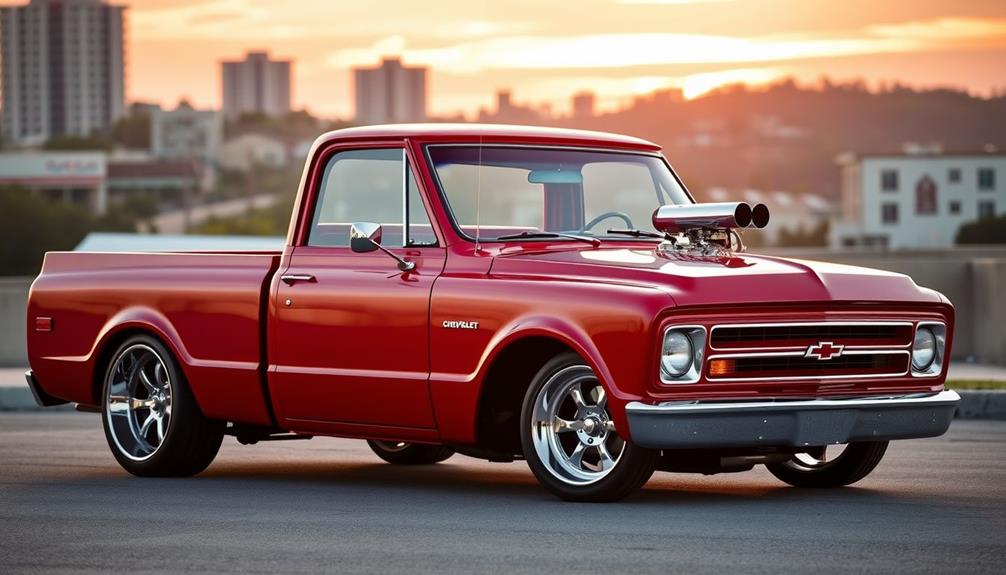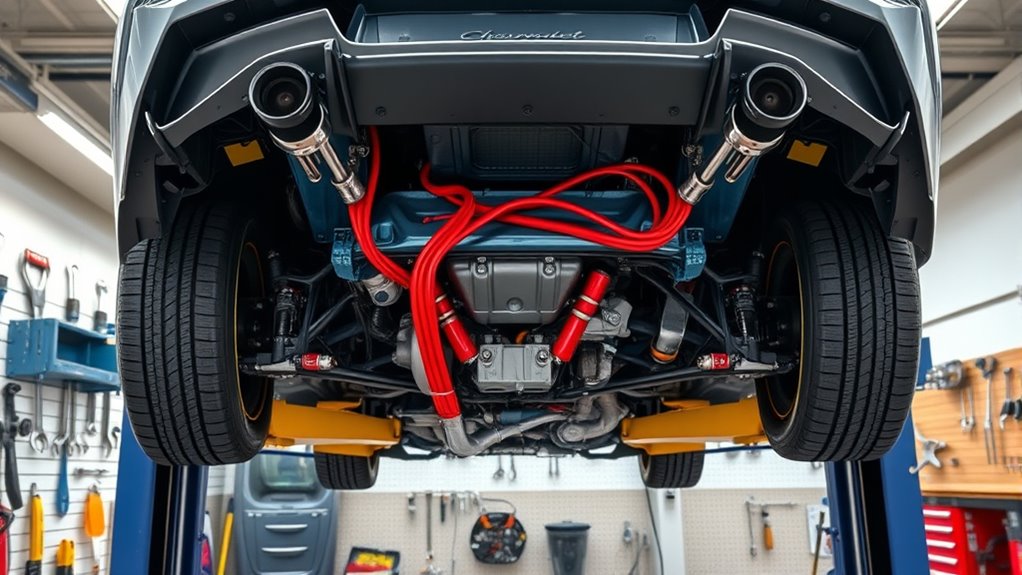

When planning your LS swap, start with the wiring harness by choosing a setup that matches your vehicle and ensuring proper routing away from heat or moving parts. Verify your cooling system can handle the engine’s heat, upgrading radiators or fans if needed. Select secure engine mounts, and make sure your driveshaft is correctly aligned with the transmission and differential to prevent vibrations. Don’t forget to check exhaust clearance and fuel system compatibility. Keep these essentials in mind, and you’ll be ready to tackle your swap confidently.
Key Takeaways
- Select a compatible wiring harness tailored for the LS engine and vehicle, routing wires away from heat and moving parts.
- Verify engine and transmission mounts for proper alignment and secure fit to prevent movement and vibrations.
- Measure and adjust driveshaft length and angle to ensure smooth operation and prevent vibrations.
- Confirm radiator size and hose routing to ensure proper cooling and avoid contact with steering or suspension components.
- Check fuel system capacity and exhaust clearance, customizing headers and lines for safety and optimal performance.
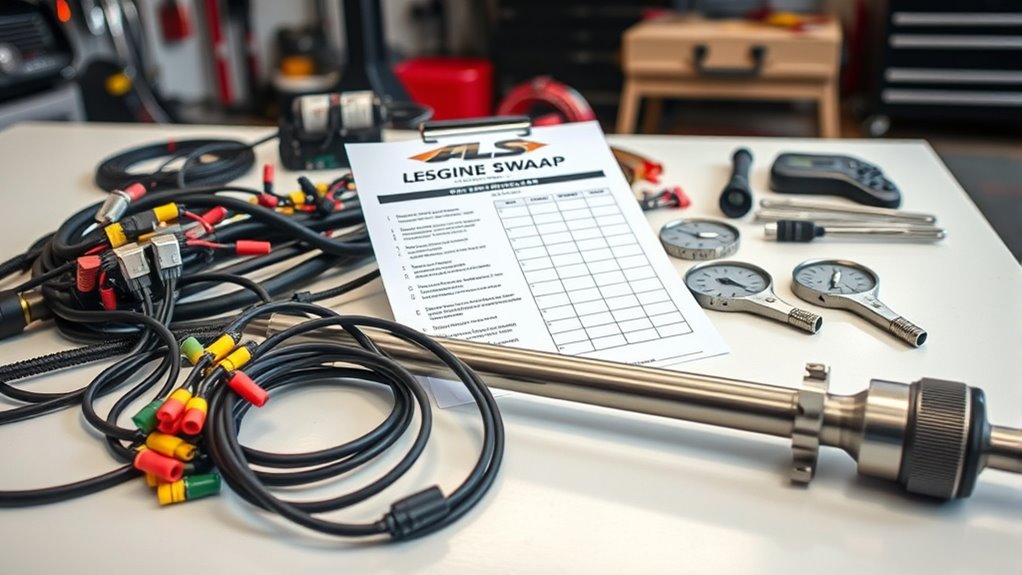
Considering an LS swap? You’re about to undertake a rewarding project that can considerably boost your vehicle’s performance, but it’s essential to plan carefully. One of the first things you’ll want to focus on is the engine mounts. These are critical because they secure the engine in place and align it with your transmission and chassis. When selecting engine mounts, ensure they’re compatible with your specific vehicle model and the LS engine. Proper mounts help reduce vibrations and prevent unnecessary stress on other components. Don’t forget about the cooling system—an often overlooked but vital element of your swap. The LS engine generates a lot of heat, so you need a reliable cooling setup to prevent overheating. Upgrading to an aluminum radiator or adding an electric fan can make a huge difference. Make sure your radiator fits well within your engine bay and connects properly to the hoses. You’ll also want to consider the placement of the coolant hoses to avoid interference with other parts like the steering or suspension components.
Next, pay close attention to your wiring harness. The LS engine’s electronics are sophisticated, and a proper harness ensures seamless integration with your vehicle’s existing systems. Plan out where the wiring will run, securing it away from heat sources and moving parts. You might need a custom harness, or you can opt for a pre-made one designed specifically for your car model. Proper wiring ensures reliable starting, smooth operation, and easy troubleshooting down the line. Additionally, understanding regional laws related to emissions or modifications can save you legal headaches later.
The driveshaft is another vital component you shouldn’t overlook. During an LS swap, you’ll likely need to modify or replace the driveshaft to match the new transmission and rear differential. Pay attention to driveshaft angles—incorrect angles can lead to vibrations and premature wear. Measure carefully and consider adjustable U-joints to fine-tune the alignment. Also, verify that your transmission mount is secure and properly aligned to avoid unnecessary stress on the drivetrain.
Fuel delivery is another aspect that deserves attention. Check if your fuel pump can handle the LS engine’s requirements, and upgrade the fuel lines if necessary. This ensures consistent fuel flow and optimal performance. Additionally, verify the exhaust system clearance; custom headers often require modifications to avoid contact with the chassis or steering components.
Completing an LS swap successfully involves multiple steps, but focusing on these key areas—engine mounts, cooling system, wiring, driveshaft angles, and fuel system—sets a solid foundation. Planning ahead and double-checking every connection will save you headaches later and help you enjoy your upgraded ride with confidence.
Frequently Asked Questions
What Are Common LS Swap Mistakes to Avoid?
When doing an LS swap, you should avoid common mistakes like improper engine mounting, which can cause alignment issues, and overlooking fuel injection compatibility. Make sure your wiring harness fits perfectly and that your fuel system supports the new engine. Rushing the process or skipping measurements can lead to costly errors. Carefully plan each step, double-check engine mounts, and guarantee your fuel injection system is compatible to ensure a smooth swap.
How Do I Choose the Right Transmission for My Swap?
Did you know that choosing the right transmission can improve your LS swap’s efficiency by up to 15%? To do this, check transmission compatibility with your engine and vehicle. Consider gear ratio selection to match your driving style—whether towing, racing, or daily commuting. Confirm the transmission’s bell housing and shifter linkage fit properly. Doing your research now saves headaches later and guarantees smoother performance on the road.
Are There Any Legal Considerations for LS Swaps?
When considering an LS swap, you need to verify emissions regulations in your area, as some modifications might require testing or special permits. Also, think about insurance implications, since an engine swap could affect your coverage or premiums. You should inform your insurance company beforehand to avoid issues later. Staying compliant helps you avoid fines and ensures your vehicle remains street-legal, giving you peace of mind on the road.
What Tools Are Essential for an LS Swap?
When tackling an LS swap, you’ll need essential tools like engine hoists, socket sets, and screwdrivers. Make certain you have the right engine mounts and wiring harnesses to connect everything properly. A torque wrench helps tighten bolts to specifications, while pliers and wire cutters assist in wiring adjustments. Having these tools ready ensures a smoother swap, saving you time and preventing frustrations during installation.
How Can I Improve LS Engine Cooling Efficiency?
Like Da Vinci refining his masterpiece, you can enhance your LS engine’s cooling efficiency by upgrading your radiator to a high-performance unit. Improve coolant flow with a larger, more efficient pump and consider adding a dual-fan setup for better airflow. Ensuring proper hose routing and using quality coolant also prevents overheating, keeping your engine running smoothly. These steps help maintain peak temperatures, even under demanding conditions.
Conclusion
Now that you’re armed with this LS swap checklist, think of your project as a finely tuned symphony waiting to come alive. Every wire, angle, and component plays a essential part in creating a powerhouse that roars with life. Stay vigilant, follow each step like a skilled conductor, and soon your build will hum along smoothly—an automotive masterpiece roaring down the road with confidence and precision. Your dream machine is just a swap away from hitting high gear.