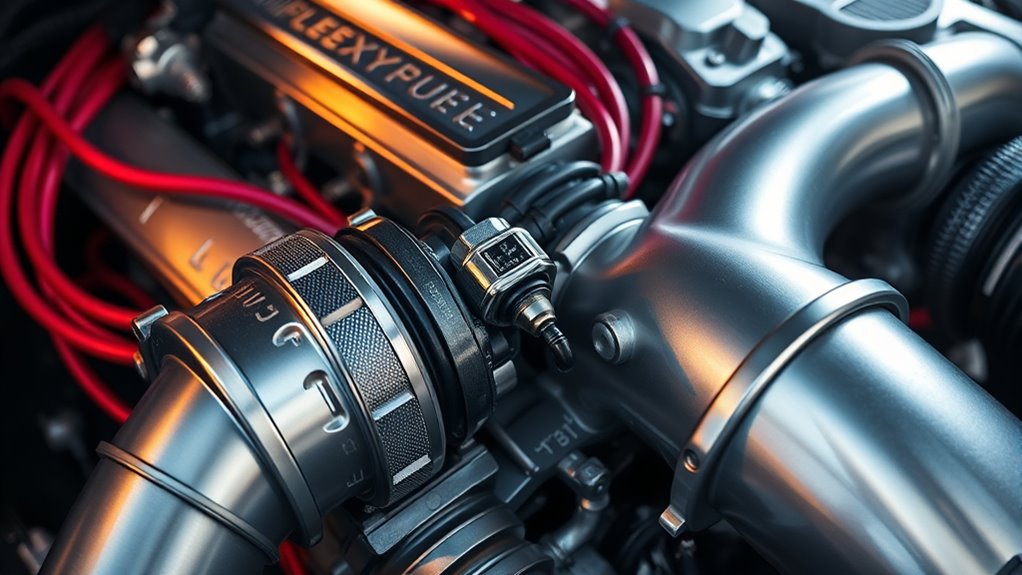

To master flex-fuel tuning on your LT1, start by understanding how ethanol blends like E85 require different fuel maps and air-fuel ratios. Use wideband O2 sensors for real-time monitoring and adjust your ECU’s fuel tables carefully to optimize performance and safety. Proper calibration open up more power, better efficiency, and reliable operation across all fuel types. Keep these tips in mind, and you’ll uncover even more secrets to achieving the best results.
Key Takeaways
- Use wideband oxygen sensors for accurate real-time air-fuel ratio adjustments when tuning for ethanol blends.
- Gradually modify fuel maps and volumetric efficiency tables to optimize performance with higher ethanol content.
- Monitor engine response and avoid running too lean or rich to prevent knocking or damage during calibration.
- Utilize ECU features or manual calibration to adapt fuel tables specifically for ethanol’s different combustion properties.
- Consistently track ethanol blend levels and adjust tuning parameters to maintain engine safety, power, and efficiency.
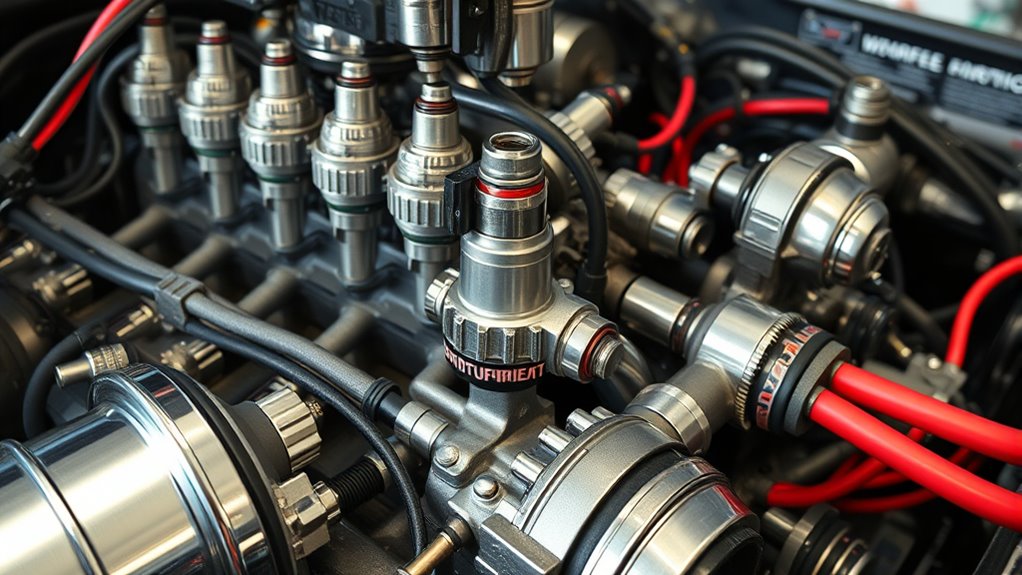
If you’ve ever wondered how to maximize your LT1 engine’s performance with flex-fuel, you’re in the right place. Flex-fuel technology allows your engine to run on gasoline, ethanol, or a blend of both, but to get the most out of this capability, proper tuning is essential. Ethanol calibration is at the heart of this process. Ethanol has a higher octane rating and burns differently than gasoline, so your engine’s fuel system and ECU need to be calibrated accordingly. Without correct ethanol calibration, your engine might run lean or rich, leading to poor performance, reduced fuel economy, or even engine damage.
To start, you need to understand how ethanol affects your fuel mixture. Ethanol blends, like E85, contain up to 85% ethanol, which requires different fuel mixture adjustments compared to regular gasoline. Your engine’s fuel maps must be adjusted to account for these differences. This involves reprogramming the ECU with custom fuel maps that consider ethanol’s unique properties, guaranteeing the air-fuel ratio stays optimal across all engine loads and speeds. Proper fuel mixture adjustments will help you maintain power, efficiency, and reliability regardless of the ethanol content in your fuel.
When tuning for flex-fuel, you’ll want to use a wideband oxygen sensor to monitor your air-fuel ratio precisely. This real-time data allows you to fine-tune the fuel mixture adjustments on the fly, making sure your engine runs at its best with any ethanol blend. It’s important to remember that the more ethanol you introduce, the more your engine’s fueling needs will change. You might need to lean out or enrich the mixture depending on the specific fuel you’re running. Adjustments should be made gradually, testing performance and response at each step to avoid running too lean or too rich, which can cause knocking or damage.
Another key aspect is updating your engine’s calibration for ethanol content. Many modern ECUs allow for flex-fuel calibration settings, which automatically adapt to different ethanol percentages. If yours doesn’t, then manual adjustments are necessary. This involves modifying the calibration tables, specifically the volumetric efficiency and fuel tables, to guarantee the engine can safely handle the higher ethanol content without sacrificing power or risking damage. Keeping track of your fuel blends and tuning accordingly will give you consistent performance and maximize your engine’s potential.
In essence, proper ethanol calibration and thoughtful fuel mixture adjustments are vital to unlocking the full benefits of flex-fuel on your LT1 engine. With precise tuning, you’ll enjoy optimized power, better fuel economy, and the confidence that your engine is running safely and efficiently on any ethanol blend you choose.
Frequently Asked Questions
How Does Flex-Fuel Tuning Affect Engine Longevity?
Flex-fuel tuning can impact your engine’s longevity by influencing engine wear and maintenance needs. When you optimize fuel mixture and timing for ethanol-blended fuels, it helps reduce engine stress and wear over time. However, if not properly tuned, it might lead to increased engine strain, requiring more frequent maintenance. Maintaining a consistent maintenance schedule and ensuring correct tuning are key to preserving your engine’s health and longevity.
What Are the Cost Implications of Flex-Fuel Modifications?
It’s no coincidence that flex-fuel modifications can seem costly upfront. You’ll need to take into account the cost comparison between standard fuel systems and those designed for ethanol blends, along with installation costs. While initial expenses might be higher, you could save money in the long run by taking advantage of cheaper fuel options. Just keep in mind that investing in quality components ensures better performance and durability, offsetting some of the initial costs.
Can Existing LT1 Engines Be Retrofitted for Flex-Fuel?
Retrofit feasibility depends on your LT1 engine’s existing setup and ethanol compatibility. Usually, you can retrofit older engines for flex-fuel, but it involves installing ethanol-compatible fuel lines, a compatible fuel sensor, and updating the ECU. You might also need to modify the fuel injectors. Keep in mind, the process varies, and consulting a professional ensures proper adjustments for maximum performance and safety.
How Does Fuel Economy Change With Flex-Fuel Tuning?
When you switch to flex-fuel tuning, your fuel economy can vary based on ethanol blending levels. Ethanol typically has a lower energy content than gasoline, which might reduce fuel efficiency slightly. However, if your engine is optimized for flex-fuel, it can adapt to ethanol blends, maintaining performance and efficiency. Overall, expect some reduction in fuel economy with higher ethanol blending, but tuning helps mitigate these effects for better efficiency.
Are There Specific Brands of Ethanol Fuel Best for LT1 Engines?
Did you know ethanol blends can contain up to 85% ethanol? For your LT1 engine, sticking with reputable brands like E85 from major fuel providers guarantees better fuel compatibility and performance. While many stations offer ethanol blends, it’s best to opt for those with consistent quality to avoid issues. Always verify fuel labels, and avoid unknown brands that might have inconsistent ethanol content, protecting your engine’s longevity.
Conclusion
Mastering flex-fuel tuning on your LT1 engine opens its full potential, blending power with flexibility. Imagine the thrill of effortless switchovers between gasoline and ethanol, like seamlessly shifting gears in a well-orchestrated dance. While the technology may seem complex, your understanding transforms it into an art. Embrace the challenge, and you’ll find yourself confidently steering the road ahead, turning what once seemed intricate into a simple, smooth experience—fueling your passion with every mile.