
TL;DR

Get business pricing on garage and car supplies
- Business-only prices and quantity discounts
- Tax-exempt purchasing
- Multiple users, one account, clear invoices
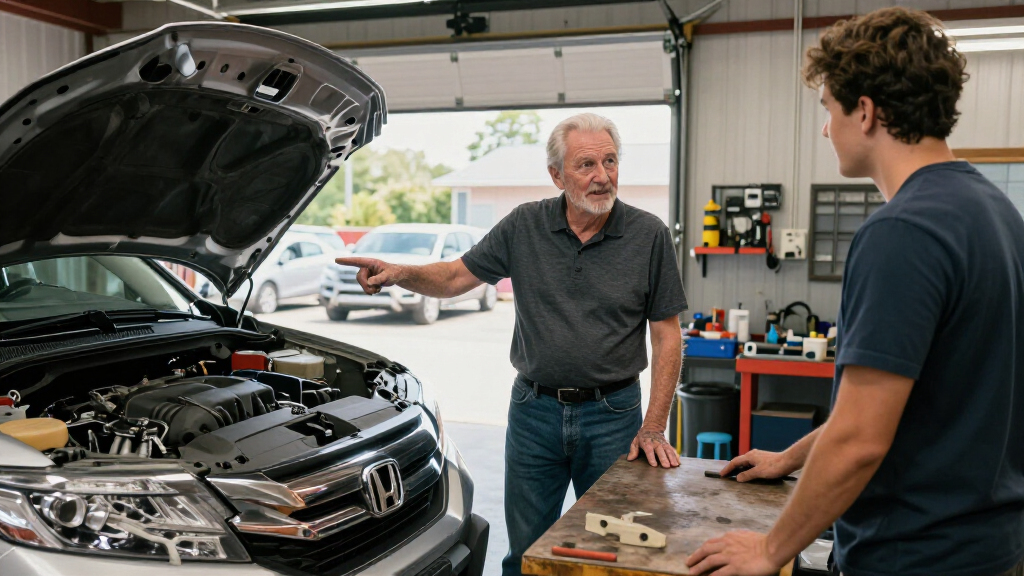
Former Honda design lead Don Herner has recounted the first-generation Ridgeline’s development in an interview with YouTuber Jack Bontatibus. Herner says the project began as an “Advanced Capabilities Vehicle,” not a conventional truck, and describes how engineering priorities shaped its design and features.
Don Herner, exterior design lead for the original Honda Ridgeline, has described how the unconventional pickup took shape in an interview with YouTuber Jack Bontatibus. Herner says Honda initially called the project the “Advanced Capabilities Vehicle”, reflecting a concept that did not begin as a conventional truck program.
According to Herner’s account, the Ridgeline began with designers sketching ideas during a quiet period at Honda. A marketing executive later saw some truck sketches and promoted them as the basis for a production vehicle. Herner said the project was not initially defined as a truck, in part because Honda did not have a transmission suited to turning very large wheels and tires.
Designers experimented with oversized tires in early sketches, including 32- and 35-inch options, Herner said. Engineering pushed instead for smaller wheel-and-tire combinations to maximize torque at the wheels. The production truck used a 3.5-liter V6 paired with a five-speed automatic, rated at 255 horsepower and 252 pound-feet of torque. The source report lists a 5,000-pound towing capacity and 1,550-pound payload capacity.
Herner also discussed durability decisions behind the bed and tailgate. The cargo box was made from fiberglass, and Honda ran simulations that overloaded the bed to test when the rear suspension would fail. The dual-action tailgate mechanism extended nearly the length of the bed, he said, to make it sturdy enough to support multiple people. The first-generation truck also included a hidden CD-loading mechanism, a small storage space near the dashboard and center console, and rear seats that folded up.
How Honda Reframed a Pickup
The interview offers a first-person account of why the original Ridgeline departed from the body-on-frame construction common among pickups. Honda used a unibody platform related to the Odyssey rather than following traditional truck conventions, creating a distinct approach in a market where buyers often expected a separate frame and bed.
That design choice mattered beyond styling. The Ridgeline became Honda’s first production vehicle with a cargo bed and, according to the source report, the largest Honda production vehicle at the time. Its size required changes to assembly lines. Herner’s recollections also connect the truck’s unusual form to practical engineering concerns, including torque, durability, and everyday storage—not simply an effort to look different.
2006-2014 Honda Ridgeline bed accessories
As an affiliate, we earn on qualifying purchases.
As an affiliate, we earn on qualifying purchases.
From 2005 Concept to Production
The first-generation Ridgeline arrived in 2005 as a 2006 model. Its integrated cab and bed and unibody construction made it a departure from familiar pickup design. Honda’s internal “Advanced Capabilities Vehicle” label was not used publicly, Herner said, though he recalled that the company even explored a collaboration with Nike, which then had an “Advanced Capability Gear” line.
The truck was based on a modified version of the then-current Odyssey platform. Another departure was the word “Honda,” spelled out in the company typeface on the tailgate. Herner said that choice required personal approval from the company president because it ran against Japanese corporate convention. The current Ridgeline retains unibody construction and several features associated with the original, while adopting more conventional pickup styling, the source report says.
“This never really started out to be a truck project per se, because Honda doesn’t make a transmission robust enough to turn gigantic wheels and tires.”
— Don Herner, Ridgeline exterior design lead, as quoted in the interview
What the Interview Does Not Establish
The source account is based on Herner’s recollections in an interview, and it does not provide Honda documents or additional company voices to independently verify each development detail. The account also does not specify when the interview was recorded or provide a full transcript in the supplied material.
Herner’s comments about the original program do not confirm the design or engineering plans for a future Ridgeline. The source report suggests a next-generation model may look more like a conventional truck, but it does not identify a launch date, specifications, or an official Honda announcement confirming those details.
Watch for Honda’s Next Plans
No next-generation Ridgeline announcement or timetable is included in the source material. The immediate development is Herner’s account of the original vehicle’s design process, available through his conversation with Jack Bontatibus on YouTube. Any claims about what the next Ridgeline will look like remain unconfirmed here; readers will need an official Honda announcement for production plans or specifications.
Key Questions
Who is Don Herner?
Don Herner was the exterior design lead for the first-generation Honda Ridgeline. The source report says he also worked on the first-generation Acura RDX and later worked at Fisker.
What did Honda call the Ridgeline project internally?
Herner said Honda used the internal name “Advanced Capabilities Vehicle.” He said it was not a public name for the production truck.
Why did the production Ridgeline use smaller tires than some early sketches?
Herner said designers drew versions with 32- and 35-inch tires, but engineering favored smaller wheel-and-tire sizes to maximize torque at the wheels.
Was the original Ridgeline body-on-frame?
No. The first-generation Ridgeline used unibody construction and was based on a modified version of the then-current Honda Odyssey platform.
Has Honda confirmed what the next Ridgeline will look like?
Not in the supplied source material. It says a future model may look more like a conventional truck, but gives no official announcement, timing, or specifications.
Source: rss
Halloween Picks
halloween
As an affiliate, we earn on qualifying purchases.