To keep your EcoDiesel DPF in top shape, regularly use fuel additives designed for DPF cleaning, especially during off-road adventures where soot buildup can be higher. Follow the manufacturer’s recommendations for fueling and consider periodic manual or chemical cleaning to prevent clogging. Watch for warning signs like reduced power or warning lights. Consistent maintenance saves you money and keeps your vehicle running smoothly—discover more tips to prolong your DPF’s lifespan.
Key Takeaways
- Regularly use fuel additives designed for DPF to reduce soot buildup and promote cleaner combustion.
- Monitor for signs of DPF clogging, such as reduced power or warning lights, and schedule cleaning promptly.
- Use high-quality diesel with low ash content to minimize ash accumulation in the filter.
- Perform periodic manual cleaning or professional DPF servicing based on manufacturer recommendations.
- Drive at sustained higher speeds periodically to enable active DPF regeneration and prevent clogging.
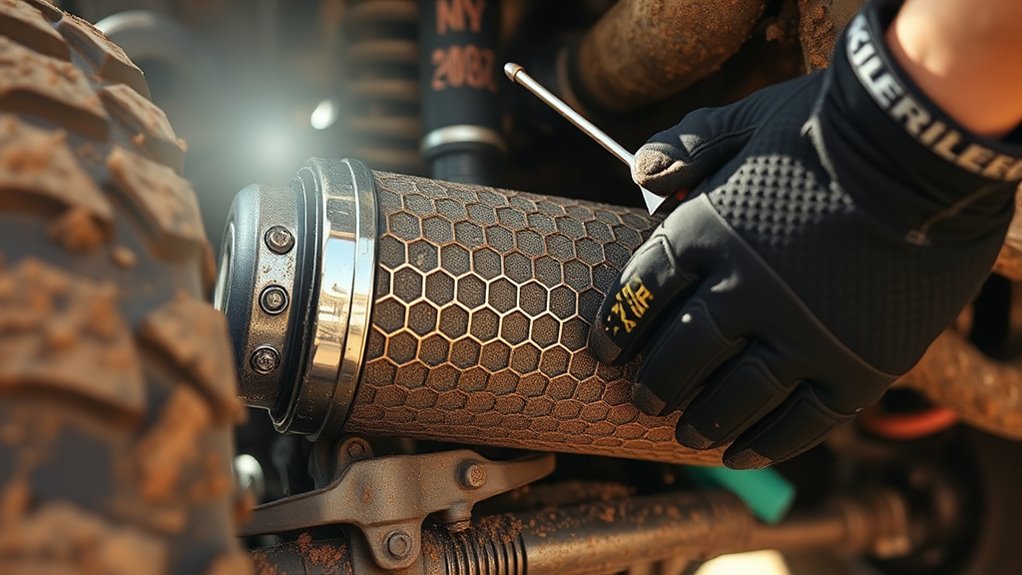
Maintaining the Diesel Particulate Filter (DPF) on your EcoDiesel is essential to keep your vehicle running smoothly and reduce emissions. A clogged DPF can cause poor engine performance, increased fuel consumption, and even costly repairs. To prevent these issues, regular DPF cleaning is key. You don’t necessarily need to visit a mechanic every time; sometimes, you can manage maintenance yourself with the right approach. Using fuel additives designed for DPF maintenance can markedly help keep the filter clean and functioning properly. These additives work by lowering the ash content in the diesel, promoting more complete combustion, and reducing soot buildup. When you choose the right fuel additive, it can make DPF cleaning less frequent and more effective, saving you time and money in the long run.
Incorporating fuel additives into your routine is straightforward. Simply add the recommended amount to your fuel tank when filling up. This process ensures that the additive mixes thoroughly during combustion, helping to burn off accumulated soot and ash particles before they cause blockages. It’s especially useful if you frequently drive in stop-and-go traffic or short distances, which tend to accelerate the clogging process. Regular use of fuel additives not only improves DPF longevity but also enhances overall engine efficiency, giving you smoother rides and better fuel economy. Remember, though, that additives are a helpful supplement, not a replacement for periodic DPF cleaning when necessary. If your vehicle shows signs of DPF clogging—such as reduced power, increased exhaust smoke, or warning lights—it’s time to take a proactive approach and schedule a proper DPF cleaning service.
Performing DPF cleaning yourself can be simple if you follow manufacturer guidelines or trusted DIY methods. Many mechanics and auto parts stores sell cleaning products specifically formulated for DPFs, which you can use during a maintenance cycle. Some products are designed to be added directly to the fuel, working continuously during normal driving. Others may require a more thorough cleaning process, like removing and cleaning the filter manually. Regular cleaning prevents soot accumulation from reaching critical levels, minimizing the risk of costly replacements. Combining this with the strategic use of fuel additives creates a thorough maintenance plan that keeps your EcoDiesel running at peak performance. Staying on top of DPF maintenance not only benefits your vehicle but also contributes to cleaner air by reducing harmful emissions. So, make DPF cleaning and the use of fuel additives a regular part of your off-roading routine to enjoy trouble-free adventures and extend your vehicle’s lifespan.
Frequently Asked Questions
How Often Should I Perform DPF Regeneration on an Ecodiesel?
You should perform DPF regeneration based on your EcoDiesel’s specific needs, which depends on your driving habits. Typically, you don’t need to do it manually; the vehicle manages regeneration frequency automatically. However, if you notice warning lights or reduced performance, it’s a good idea to check the DPF and consider DPF cleaning. Regularly maintaining your vehicle helps guarantee ideal regeneration and keeps your DPF functioning properly.
Can I Manually Clean the DPF Myself?
You can attempt DIY cleaning of your DPF, but it’s tricky. You might consider chemical treatments designed for DPF cleaning, which can help break down soot buildup. However, be cautious—improper cleaning can damage the filter. If you’re unsure, it’s best to consult a professional or follow manufacturer guidelines to avoid costly repairs. Always prioritize safety and use products specifically made for DPF maintenance.
What Are Signs of DPF Clogging in Ecodiesel Trucks?
Think of your EcoDiesel’s DPF like a sponge soaking up emissions. When it’s clogged, you’ll notice DPF warning lights on your dash and exhaust smoke turning gray or black, like a storm cloud. You might also experience reduced engine performance or strange smells. Keep an eye out for these signs; they signal your DPF needs attention before it causes more serious issues. Prompt action keeps your truck running smoothly.
Does Fuel Quality Affect DPF Maintenance Frequency?
Fuel quality definitely affects how often you need to maintain your DPF. Poor fuel, with low-quality diesel formulation or contaminants, can cause more soot buildup, leading to clogging. Using fuel additives can help improve combustion and reduce deposits. Stick to high-quality diesel and consider additives if you’re frequently off-roading or towing heavy loads. This proactive approach keeps your DPF cleaner longer and minimizes maintenance needs.
Are There Aftermarket Solutions to Improve DPF Lifespan?
Is your DPF’s lifespan a question mark? You can extend it by exploring aftermarket solutions like specialized filters and DPF additives, which act as shields against clogging and wear. These options work proactively, much like a knight’s armor, helping your EcoDiesel perform better and last longer. Just make certain you choose quality aftermarket filters and use DPF additives properly to keep your off-roading adventures worry-free.
Conclusion
So there you have it—your eco-friendly, diesel-powered buddy’s secret recipe for staying clean and happy. Keep those DPFs happy, and they’ll thank you with fewer headaches and more miles. Forget the fuss—just follow these tips, and you’ll be cruising through dirt and grime like a pro. After all, a little maintenance now means fewer surprises later. Stay diligent, stay eco-wise, and enjoy the ride—your off-road adventures depend on it!