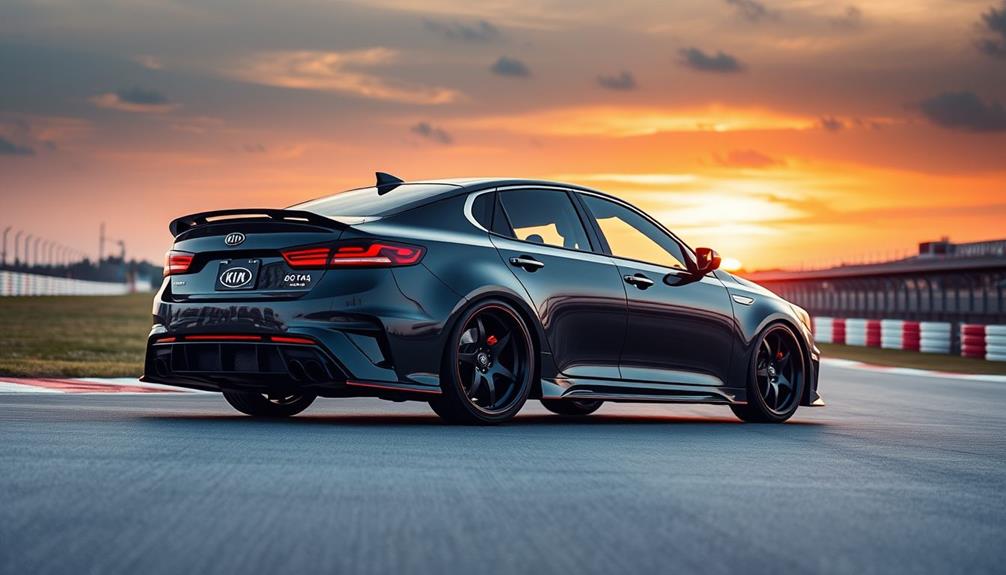

To fix heat soak on your Stinger GT twin-turbos, upgrade your intercooler and radiator for better cooling capacity, and add heat-resistant insulation wraps around your turbos. Installing an aftermarket oil cooler and improving airflow can also help keep temperatures down during extended drives. Proper maintenance of these upgrades guarantees consistent power and reliability. Keep going to discover more effective strategies that truly tame heat soak and boost your car’s performance.

Get garage and car supplies delivered free — and shop member deals
- Fast, free delivery on millions of items
- Access to Prime Big Deal Days deals on October 6–7
- Prime Video, Amazon Music and more included
Key Takeaways
- Upgrade to a larger intercooler and radiator for improved heat dissipation.
- Install turbo blankets and high-quality insulation to contain turbo heat.
- Add aftermarket oil coolers and upgraded cooling fans to reduce overall engine bay temperatures.
- Ensure proper maintenance and monitoring of cooling system components and turbo insulation.
- Combining cooling upgrades with turbo insulation enhances heat management and maintains consistent performance.

If you’ve upgraded your Kia Stinger GT with twin turbos, you’ve probably noticed that heat soak can substantially reduce your car’s performance during extended drives or track days. When the turbochargers heat up excessively, they lose efficiency, leading to power drops, sluggish acceleration, and increased turbo lag. To combat this, you need effective cooling upgrades and proper turbo insulation to keep temperatures in check and sustain peak performance.
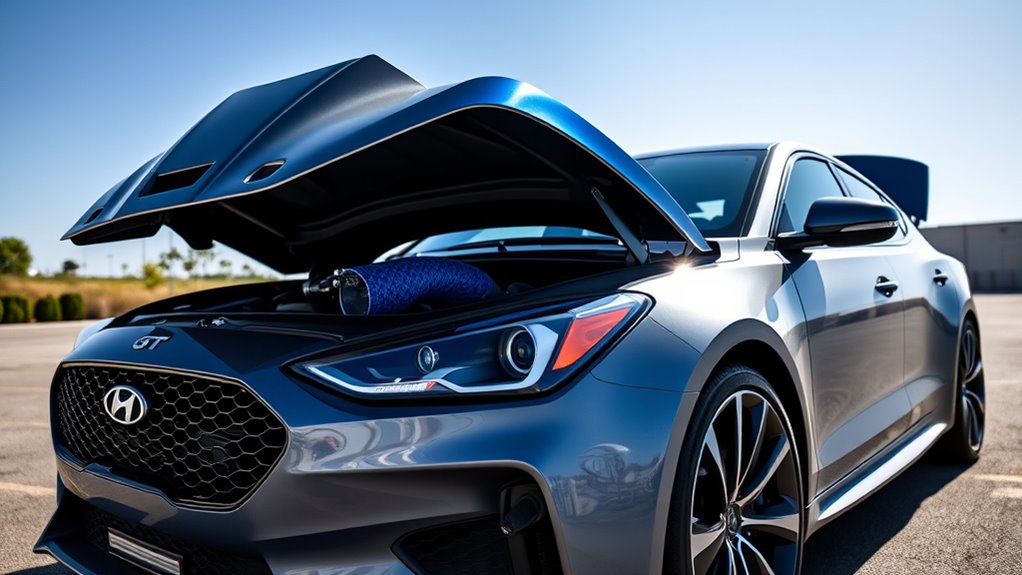
Cooling upgrades are your first line of defense against heat soak. Upgrading your intercooler is a proven method; a larger, more efficient intercooler improves heat dissipation, lowering intake air temperatures and maintaining consistent power. You might also consider installing an aftermarket oil cooler or upgrading the radiator. These components help remove excess heat from critical engine parts, preventing heat transfer from the engine bay to the turbo system. Proper airflow is essential, so upgrading your cooling system often involves better ducting or installing fans to push more air through radiators and intercoolers. This ensures that the turbochargers stay cooler during prolonged runs, reducing the likelihood of heat soak.
Turbo insulation is another vital element. Covering your turbochargers with high-quality insulation wraps or blankets prevents heat from radiating into surrounding components, which can cause a chain reaction of elevated temperatures. Insulation helps keep the turbo’s heat contained, making it easier to maintain consistent boost pressure and prevent heat transfer to the intake system. When installing turbo insulation, make sure it’s heat-resistant and properly fitted, avoiding contact with moving parts or electrical components. This simple upgrade can markedly improve heat management, especially during track sessions where turbo temps spike quickly.
Combining these approaches is often the most effective way to battle heat soak. Improving your cooling system reduces overall temperatures, while turbo insulation prevents heat from escaping the turbo and affecting other engine bay parts. Regular maintenance, such as checking for leaks or blockages in your cooling system, ensures these upgrades perform at their best. Remember, the goal is to keep your turbochargers cool and efficient, so your Stinger GT maintains peak performance mile after mile. These upgrades aren’t just about power; they’re about reliability and consistency, especially when pushing your car to its limits. With proper cooling upgrades and turbo insulation, you’ll notice less heat soak, better throttle response, and sustained performance even during extended drives or intense track sessions.
Kia Stinger GT intercooler upgrade
As an affiliate, we earn on qualifying purchases.
As an affiliate, we earn on qualifying purchases.
Frequently Asked Questions
How Long Does the Heat Soak Typically Last on a Stinger GT?
Heat soak on your Stinger GT typically lasts around 15 to 30 minutes, depending on driving conditions and ambient temperature. To improve heat management, you should consider cooling upgrades like better intercoolers or upgraded radiators. These modifications help keep your engine cooler during hard driving, reducing heat soak duration and maintaining peak performance. Proper heat management ensures you get the most out of your car without losing power due to heat buildup.
Can Aftermarket Parts Fully Eliminate Heat Soak Issues?
Did you know that aftermarket parts can reduce heat soak by up to 40%? While they can help, they rarely eliminate it completely. You might see aesthetic improvements, like better cooling ducts, or slight gains in fuel efficiency, but full elimination isn’t guaranteed. Aftermarket solutions improve performance, yet heat soak can still occur under extreme conditions, so combining these with proper tuning offers the best results.
Are There Specific Driving Conditions That Worsen Heat Soak?
You should know that certain driving habits and ambient conditions can worsen heat soak. For example, aggressive driving or frequent high-speed acceleration increases engine heat, while hot weather and high ambient temperatures make heat buildup worse. When you’re stuck in traffic or driving in the sun, heat soak can become more severe. Being aware of these conditions helps you anticipate and manage heat issues more effectively.
What Are the Signs Indicating Heat Soak Is Affecting Performance?
You notice your Stinger GT’s performance drops during hard acceleration or after highway cruising, indicating heat soak. You might feel a loss of power, or the engine feels sluggish. Signs include increased turbo lag and engine temperature rising quickly. An intercooler upgrade or adding thermal insulation can help prevent these issues, maintaining cooler intake air and consistent performance, even under demanding conditions. Keep an eye out for these signs to address heat soak early.
Is Heat Soak More Problematic in Certain Climates or Temperatures?
Heat soak can be more problematic in hot climates or during high ambient temperatures, as climate impact raises the engine and intercooler temperatures faster. When temperatures hit certain thresholds, performance drops become more noticeable. You’ll notice issues sooner if you drive in regions with extreme heat, making it essential to evaluate temperature thresholds and climate influence when planning upgrades or cooling fixes to keep your car running at its best.
Conclusion
Think of these heat soak fixes as your car’s shield in a battle against relentless heat. Just like a warrior dons armor to stand strong, your Stinger GT is protected when you implement these solutions. With each fix, you’re forging a stronger barrier, ensuring your twin-turbo heart keeps beating fiercely. Embrace these strategies, and watch your car rise above the heat, symbolizing resilience and power—ready to conquer every drive with unwavering strength.
Halloween Picks
halloween
As an affiliate, we earn on qualifying purchases.