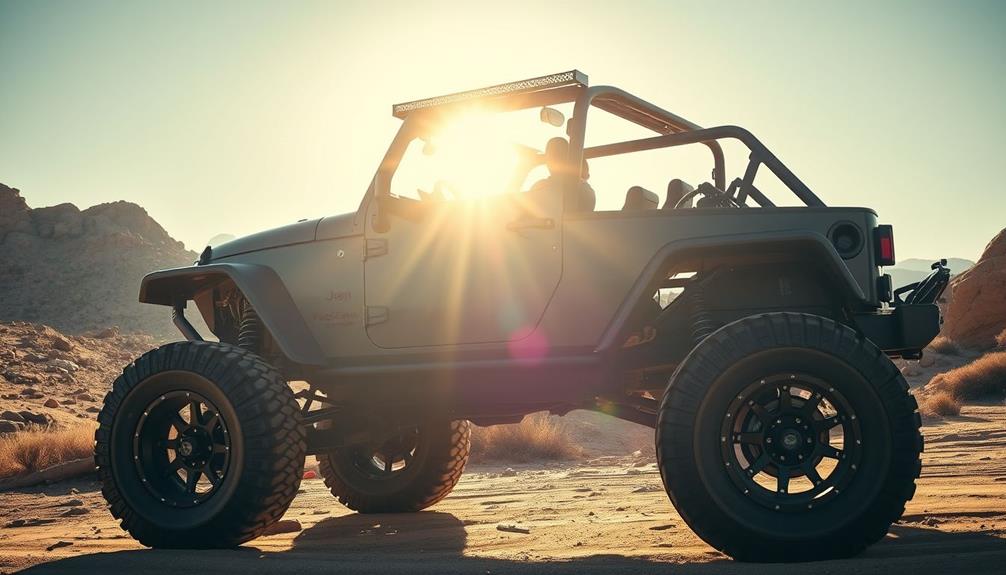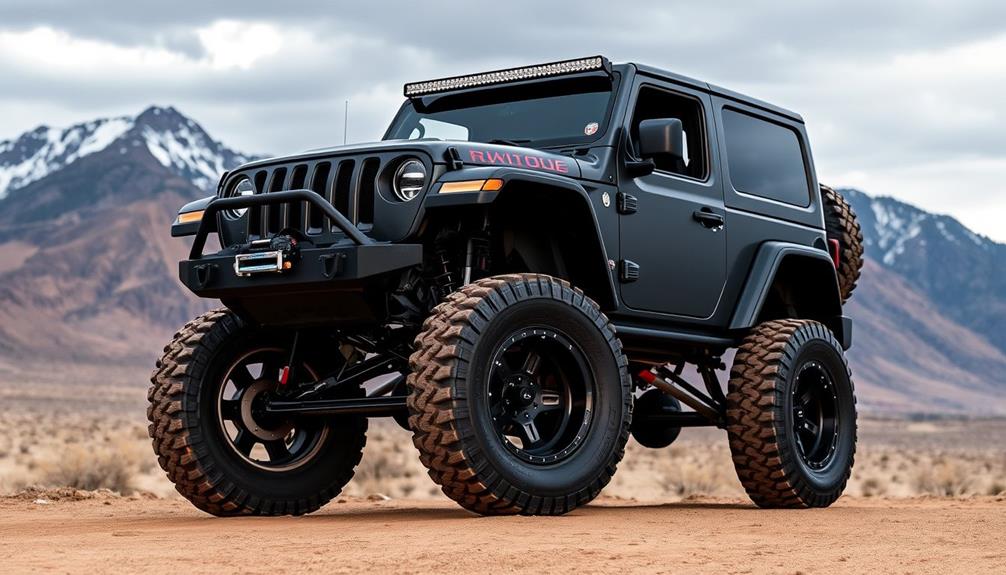
To re‑gear your Wrangler for 37s, you need to adjust your differential ratios to maintain proper RPMs and fuel efficiency. Typically, gear ratios between 4.56 and 4.88 work well with 37-inch tires. A calculator can help you estimate the impact on your engine speed and MPG, ensuring smooth performance both on and off-road. Keep exploring to get detailed steps and tips for accurately re‑gearing your vehicle for ideal results.
Key Takeaways
- Re-gearing adjusts differential ratios (typically 4.56–4.88) to optimize power and fuel efficiency with 37-inch tires.
- RPM and MPG calculators estimate how larger tires impact engine speed and fuel economy before and after re-gearing.
- Proper re-gearing restores correct speedometer readings and maintains vehicle responsiveness with bigger tires.
- Upgrading drivetrain components, like the transmission, can enhance performance and handling of the new gear ratios.
- Accurate calculations help prevent sluggishness, improve control, and ensure reliable off-road and daily driving with 37s.
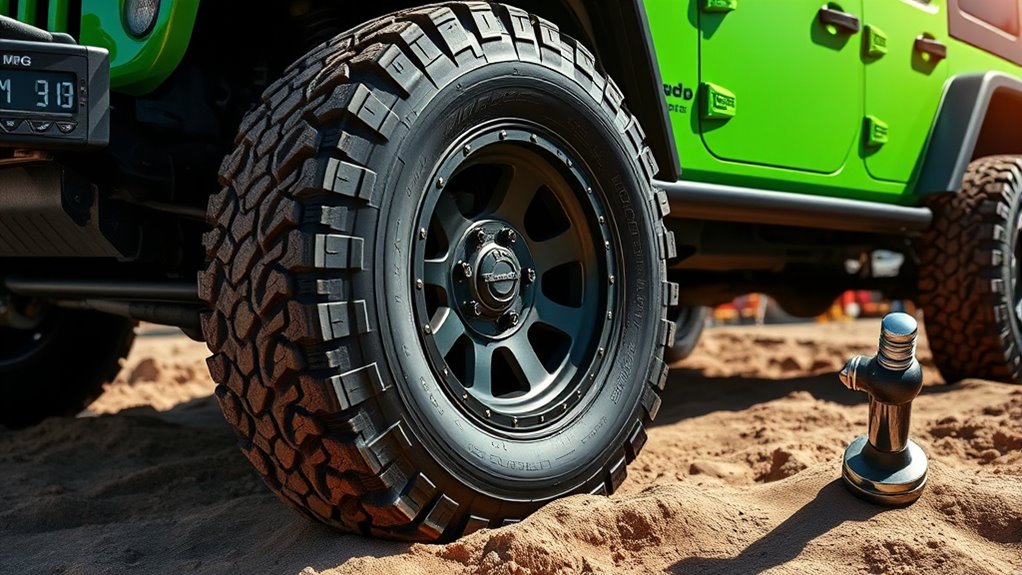
Thinking about installing 37-inch tires on your Jeep Wrangler? Before you make the switch, it’s vital to understand how this change impacts your vehicle’s performance, especially when it comes to tire size adjustments and fuel efficiency impacts. Larger tires will alter your Wrangler’s overall gear ratio, which affects engine RPMs and how efficiently your vehicle consumes fuel. When you install bigger tires, your speedometer and odometer readings will also become inaccurate unless you recalibrate them. This is because the increased diameter changes the number of rotations each tire makes per mile, which can lead to misreadings and affect your driving experience.
Installing 37-inch tires affects your Jeep’s gear ratio, speedometer accuracy, and fuel efficiency.
Tire size adjustments are essential when upgrading to 37s. If you don’t re-gear, your Jeep’s engine will have to work harder to turn those larger tires at the same speed, causing the RPMs to rise and resulting in sluggish acceleration and potential strain on your drivetrain. Re-gearing involves changing your differential gears to better match the new tire size. For 37-inch tires, most owners opt for a gear ratio around 4.56 or 4.88, depending on how you plan to use your Jeep. This adjustment guarantees the engine operates within its ideal power band, providing a balance between torque, acceleration, and fuel efficiency.
Speaking of fuel efficiency impacts, larger tires tend to decrease your miles per gallon because your engine must exert more effort to rotate the heavier, bigger tires. The increased rotational mass means your engine consumes more fuel to maintain the same speed as before the upgrade. Without re-gearing, this effect becomes even more pronounced, leading to higher fuel costs and potentially reduced driving range. Using a RPM and MPG calculator can help you estimate these impacts more precisely, giving you a clearer picture of what to expect in real-world driving conditions.
Re-gearing your Jeep for 37s isn’t just about replacing gears; it’s about optimizing your entire drivetrain for the new setup. When done correctly, it minimizes the negative effects on fuel economy while restoring the responsiveness and power you need. It’s also wise to consider other modifications, such as adjusting your speedometer calibration and possibly upgrading your transmission to handle the new gear ratios more efficiently. By taking these steps, you’ll enjoy better control, improved acceleration, and a more accurate gauge of your fuel consumption, making your off-road adventures and daily drives more enjoyable and cost-effective. Ultimately, proper re-gearing ensures that your Wrangler not only looks impressive with those big tires but also performs reliably and efficiently.
Frequently Asked Questions
How Does Re-Gearing Affect Off-Road Performance?
Re-gearing your Wrangler improves off-road performance by boosting axle strength and traction control. When you re-gear, you enable better power transfer to the wheels, giving you more control on tough terrain. It helps prevent slipping and reduces strain on your axle components. With ideal gearing, you’ll experience increased torque and stability, making off-road adventures smoother and safer, especially on steep inclines or uneven surfaces.
What Are the Best Gear Ratios for Daily Driving?
When choosing gear ratios for daily driving, you want a balance between fuel efficiency and smooth performance. Pick a gear ratio that reduces engine strain and maintains ideal RPMs, improving MPG and comfort. Typically, a ratio around 3.21 to 3.73 works well for most daily drivers with 37s, but your specific vehicle and driving style should guide your gear ratio selection to guarantee a reliable and efficient ride.
Can I Re-Gear My Wrangler Myself?
Did you know that improper re-gearing can reduce your Jeep’s driveline efficiency by up to 20%? You can re-gear your Wrangler yourself, but it’s not for beginners. It requires specialized tools, knowledge of gear ratios, and careful installation. If you’re confident in your mechanical skills, follow a detailed guide and double-check your work. Otherwise, it’s best to consult a professional to guarantee maximum performance and avoid damaging your driveline.
How Long Does Re-Gearing Typically Take?
Re-gearing your Wrangler usually takes about 4 to 8 hours, depending on your experience and tools. You’ll need to modify the gear ratio to improve drivetrain efficiency, especially with larger tires like 37s. This process involves disassembling parts of your axle and replacing the gears, so patience is key. If you’re new to this, consider allowing extra time or consulting a professional to ensure everything is done correctly and safely.
What Are the Costs Associated With Re-Gearing?
When you consider re-gearing, the cost analysis varies based on parts and labor. Expect to spend between $1,500 and $4,000, including gears, installation, and possible upgrades. Maintenance considerations include regular fluid changes and inspections to guarantee longevity. Labor costs depend on your location and shop rates. Budgeting for unforeseen issues is wise, as re-gearing can sometimes uncover additional repairs needed for ideal performance.
Conclusion
Re-gearing your Wrangler for 37s transforms your off-road experience, boosting both performance and efficiency. Did you know that proper re-gearing can improve your fuel economy by up to 15%? That’s a significant saving over time, especially on long trips or tough terrain. By understanding RPM and MPG impacts, you make sure your Jeep runs smoothly and efficiently. So, take the time to gear it right—you’ll enjoy better power, savings, and confidence on every adventure.