Upgrading your Mazdaspeed3’s fuel pump with a 2.3 DISI engine is vital for handling increased horsepower and supporting your performance upgrades. You’ll want to make certain the new pump matches your vehicle’s flow rate, pressure, and connector type for proper fitment and reliability. Carefully follow installation steps, including safety precautions, and verify system pressure afterward. Keep exploring to discover detailed tips that will help you achieve a smooth, successful upgrade.
Key Takeaways
- Upgrading the fuel pump enhances fuel delivery to support increased horsepower and modified fueling components in Mazdaspeed3 MZR 2.3 DISI.
- Compatibility involves matching pump flow rate, pressure, and connector type to ensure proper fitment and reliable performance.
- Proper installation includes disconnecting safety measures, relieving fuel pressure, and accessing the pump via tank removal or access panel.
- Securely disconnect electrical and fuel lines, confirm correct pump orientation, and check for leaks after installation.
- Post-upgrade, perform leak inspections and fuel pressure tests to ensure optimal fuel system performance and engine responsiveness.

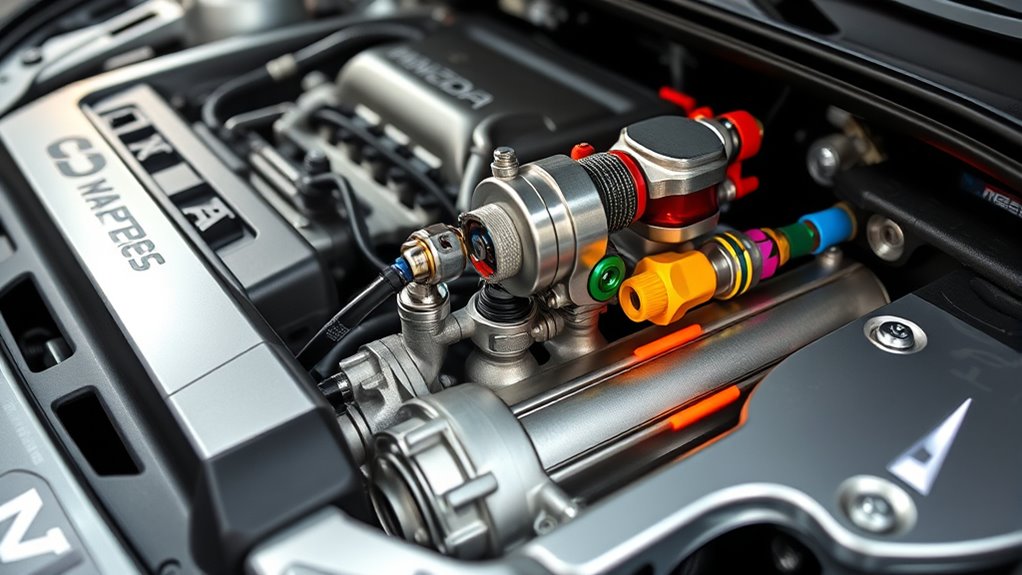
Upgrading the fuel pump on your Mazdaspeed3 MZR 2.3 DISI is a vital step if you’re aiming to increase horsepower or support upgraded fueling components. When considering a fuel pump upgrade, you need to pay close attention to fuel pump compatibility. Not all pumps fit every vehicle, and choosing the right one guarantees proper fitment, reliable performance, and avoids potential issues down the line. The MazdaSpeed3’s fuel system is designed with specific parameters, so selecting a pump that matches those specifications is crucial. You’ll want to verify the pump’s flow rate, pressure, and connector type to guarantee it aligns with your performance goals and existing system. Doing your homework on compatibility helps prevent installation headaches and guarantees your build’s success.
Once you’ve identified the right fuel pump, the upgrade installation process becomes the next focus. Removing the stock pump requires some careful steps: disconnecting the battery, relieving fuel system pressure, and safely draining the fuel tank. You’ll need the right tools, like a jack, jack stands, and possibly a fuel line removal tool, to access the pump inside the tank. Once the tank is lowered or accessed through an access panel, you can disconnect the electrical connector and fuel lines. It’s important to handle fuel safely and work in a well-ventilated area, as fuel vapors are flammable. Installing the new pump involves connecting it correctly, ensuring the wiring is secure, and reassembling everything carefully.
Carefully disconnect the electrical connector and fuel lines when replacing the stock fuel pump.
During the upgrade installation, pay attention to the pump’s orientation and mounting to avoid vibrations or leaks. Some aftermarket pumps come with adapters or require slight modifications; confirm these details beforehand. After installing, you should perform a thorough check for leaks and re-pressurize the fuel system. Once everything is reassembled, start your engine and check for proper fuel pressure and operation. This step verifies that your upgrade installation was successful and that your fuel system is functioning optimally.
Upgrading your fuel pump isn’t just about swapping parts; it’s about guaranteeing your vehicle’s fuel system can support your performance enhancements reliably. By choosing the right fuel pump based on compatibility and executing a precise upgrade installation, you set the foundation for a more powerful and dependable Mazdaspeed3. This process helps you unlock better airflow, more horsepower, and improved overall engine responsiveness, making every drive more thrilling.
Frequently Asked Questions
How Does Fuel Pump Upgrade Affect Engine Tuning?
Upgrading your fuel pump directly impacts engine tuning by increasing fuel pressure and flow, ensuring your engine receives enough fuel for ideal performance. When you boost fuel flow, you can safely push your engine harder, especially with modifications like larger injectors or increased boost. This prevents lean conditions, maintains proper air-fuel ratios, and allows your tuning to maximize power without risking damage, making your setup more responsive and reliable.
Are There Compatibility Issues With Stock Fuel Injectors?
Think of your fuel injectors as the gatekeepers of fuel delivery—upgrade your fuel pump, and they might struggle to keep up. Compatibility issues can arise if stock injectors can’t handle increased fuel flow, impacting fuel economy and emissions standards. You might notice rough idling or poor performance, especially during tuning. To avoid this, verify your injectors are rated for higher fuel pressure or upgrade them alongside your fuel pump.
What Is the Expected Lifespan of Upgraded Fuel Pumps?
When considering upgraded fuel pumps, you wonder about their fuel pump durability and upgrade longevity. Generally, high-quality upgrades last between 40,000 to 100,000 miles, depending on driving habits and maintenance. Proper installation and regular checks can extend their lifespan. Expect a reliable upgrade to provide consistent fuel delivery, but keep in mind that aggressive driving or poor maintenance may shorten its durability.
Can Fuel Pump Upgrades Improve Overall Vehicle Acceleration?
Imagine upgrading your fuel pump and seeing quicker throttle response and better acceleration. Upgraded fuel pumps deliver more consistent fuel flow, which can boost overall vehicle acceleration, especially under high demand. While they may slightly improve fuel economy by optimizing fuel delivery, they might also impact emissions if not properly calibrated. Overall, a quality upgrade helps your engine perform better, giving you a more responsive driving experience.
What Tools Are Necessary for Installing a High-Performance Fuel Pump?
To install a high-performance fuel pump, you need basic hand tools like screwdrivers, pliers, and socket wrenches. You’ll also require a fuel line disconnect tool and safety equipment such as gloves and eye protection. When following installation procedures, choose reputable fuel pump brands to guarantee quality and compatibility. Be cautious during removal and installation, and always relieve fuel system pressure to avoid spills or injuries.
Conclusion
Upgrading your fuel pump can make all the difference in activating your Mazdaspeed3’s true potential. With the right enhancements, you’ll enjoy smoother power delivery and improved reliability, especially when pushing for more boost. Isn’t it worth investing in your car’s performance to feel confident every time you hit the accelerator? Don’t settle for less—upgrade smartly, and keep your driving experience exciting and dependable. After all, your car deserves the best, doesn’t it?