
TL;DR

Get business pricing on garage and car supplies
- Business-only prices and quantity discounts
- Tax-exempt purchasing
- Multiple users, one account, clear invoices
A report on home backup systems says most vehicle-to-home setups separate outage power from charging, preventing a car from recharging from solar while the grid is down. The author identifies Tesla’s Cybertruck Powershare setup as the only option they could find that supports that combination today, while other offerings face product, compatibility or availability limits.
A report on bidirectional electric-vehicle charging says most vehicle-to-home systems can send power from a car to a house during an outage but do not let the car recharge from rooftop solar while the grid remains down. The limitation means households seeking both car-powered backup and solar replenishment may need a separate home battery or a specific vehicle-and-equipment combination.
The report’s author says that, among the products they reviewed, the setup they could identify for both functions was Tesla Powershare paired with a Cybertruck. Tesla’s guidance, as quoted in the report, says a qualifying solar system must be included in the backup circuit for the Cybertruck to recharge during an outage. The author says that option is not suitable for them and would cost more than the Enphase home battery they are considering.
Other vehicle-to-home products described in the report appear to operate as discharging-only backup modes. The author cites GM Energy Home Hub documentation saying the system disconnects a home from the grid and sends power from the GM inverter during an outage. It says the vehicle resumes charging after grid service returns, but the author found no mention of charging the vehicle from solar during the outage.
The report also describes constraints with Ford and Kia-related equipment. Ford’s Charge Station Pro, required for Automatic Home Backup Power, is no longer for sale, according to the company wording quoted by the author; the report says the system did not appear to offer solar recharging of the vehicle during an outage. Wallbox’s Quasar 2 is cited as a Kia-compatible option, but the author says it does not work with current models and that its solar-charging feature cannot be used at the same time as V2H. The report characterizes customer experience with Quasar 2 as problematic, without providing a detailed customer count or case data.
Why Solar-to-Car Backup Matters
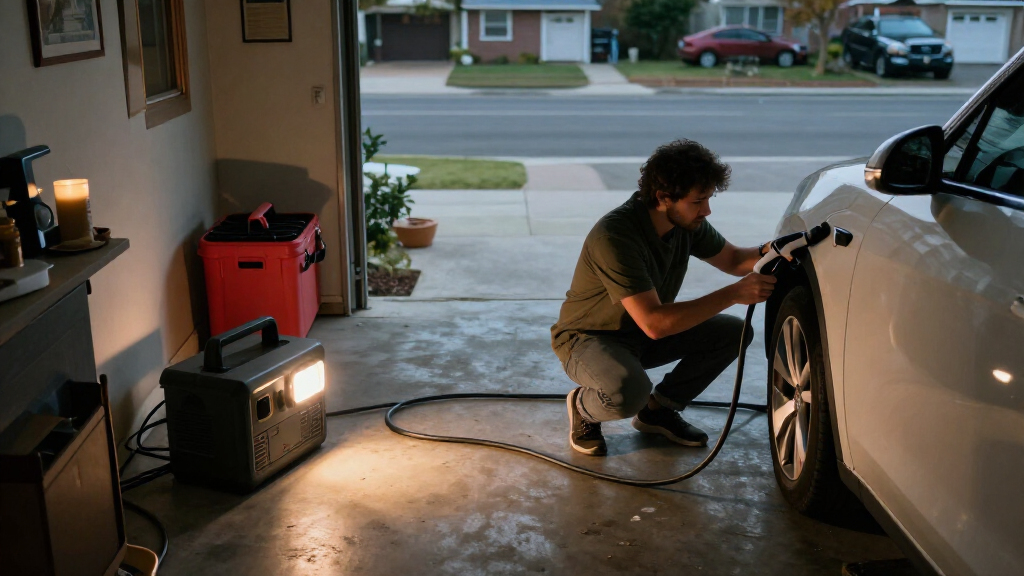
The gap matters because a home using an EV for backup may have to choose between powering household loads and replenishing the vehicle during an extended outage. A system that can island a home from the grid is not necessarily able to manage solar production and vehicle charging at the same time; the equipment and control settings must support both functions safely.
That distinction affects household planning and costs. A buyer who expects an EV to replace a stationary battery could discover that their vehicle, charger, inverter and backup circuits do not work together in the required mode. In the report, the author says they may instead buy a smaller emergency-only battery, despite considering a future plug-in hybrid or EV. That is one person’s purchasing decision, not evidence about how all EV owners are choosing.
For consumers, the practical question is not simply whether a car supports bidirectional charging. They need to check whether the complete installation can disconnect safely from the grid, run selected home circuits, accept solar power and direct it to the vehicle during an outage. The report’s examples suggest those capabilities should be confirmed for the exact vehicle model and hardware before a household relies on them.
Products Worth Considering

Chemical Guys Carbon Force Ceramic Paint Coating Kit, 1 fl oz, with 3 Applicators

DEWALT 20V MAX XR Hammer Drill and Impact Driver Combo Kit with Two 4Ah Batteries and Charger

Chemical Guys 17-Piece Car Detailing Kit
As an affiliate, we earn on qualifying purchases.
How Current V2H Systems Differ
Vehicle-to-home (V2H) describes sending energy from an EV battery to a residence. Bidirectional operation can also mean charging the vehicle from a home energy source, but the report focuses on a narrower use: keeping the house powered while using solar panels to recharge the car during a grid failure. The author says that combination is not widely supported by the products they examined.
The article began with a reader’s question about using an EV’s comparatively large battery instead of buying a separate battery for emergencies. The author notes that their household does not currently own an EV. Their 2013 Honda Fit may eventually need replacing, and they are considering a plug-in hybrid or full electric vehicle, but say their limited driving and relatively frequent long trips make the choice less straightforward for their family.
The author also points to an Enphase bidirectional charger announcement dated February 2, 2026, which targeted volume production in Q4 2026. The company’s quoted caveat says projected vehicle compatibility and bidirectional features depend on automaker enablement, vehicle software, applicable standards and final product specifications. The author suspects timing could slip and says Massachusetts availability might come later; those are their expectations, not confirmed release dates.
“During a power outage, the GM Energy Home Hub safely disconnects your home from the local power grid and enables backup power to flow from the GM Energy Inverter throughout your home.”
— GM Energy Home Hub documentation, as quoted in the report
Compatibility and Availability Remain Open
The report is one author’s review of product information, not a complete market survey or independent test of every configuration. It does not establish that Tesla’s setup is the only system capable of the feature, only that it was the only option the author could identify. The author also does not provide a full list of vehicle models, inverter versions, software releases or local installation requirements tested.
For GM and Ford, the author’s conclusion is based on the documentation and information they reviewed; the material provided does not show whether later software or alternative equipment could change those capabilities. For Wallbox Quasar 2, the report gives no customer numbers or systematic evaluation behind its account of users encountering trouble. Actual performance and compatibility can depend on the specific vehicle, charger, inverter, solar system, backup-panel design and local rules.
Enphase’s stated production target is not a guarantee of delivery, and the company’s own caveat leaves vehicle support and final functionality dependent on other factors. The report does not confirm a Massachusetts launch date, a final price, or which vehicles would be compatible.
Check Product Support Before Buying
Households considering a vehicle as outage backup should ask automakers and installers to confirm, in writing, whether the proposed configuration can power the home and recharge the EV from solar during the same outage. They should also check which circuits are backed up, what equipment is needed to isolate the home from the grid, and whether the vehicle and charger support the feature under the intended conditions.
Enphase’s next reported milestone is its target of volume production in Q4 2026, but vehicle compatibility, final specifications and local availability remain unsettled. Until those details are published, the author says they are leaning toward installing a smaller stationary battery rather than waiting for a bidirectional charger. That decision reflects their household’s plans; the report does not announce a general change to EV backup availability.
Key Questions
Can an EV power a house during a grid outage?
Some vehicle-to-home systems are designed to send power from an EV to a home during an outage. Support depends on the vehicle and the required home equipment, and does not automatically include charging the car during the outage.
Can rooftop solar recharge an EV during an outage?
The report says most systems it reviewed did not appear to support that alongside home backup. It identifies Tesla Powershare with a Cybertruck as an option whose guidance describes solar recharging during an outage, subject to system conditions.
Does GM’s cited V2H system recharge the car during an outage?
The GM documentation quoted in the report describes sending power to the home and says the vehicle begins charging once grid power returns. The author found no mention in that material of recharging the vehicle from solar while the grid is down.
When could Enphase’s bidirectional charger be available?
The report cites an Enphase announcement targeting volume production in Q4 2026. That is a target, not a confirmed shipping date, and the company says compatibility and functionality depend on automaker support and other specifications.
What should buyers confirm before relying on an EV for backup?
Confirm that the exact vehicle, charger, inverter and home wiring support the desired outage functions, including whether solar can charge the car while it powers the home. Ask an installer about grid isolation, backed-up circuits, local requirements and any model-specific limits.
Source: jefftk.com