
To balance combustion and electric power in hybrids, the vehicle’s control system constantly monitors driving conditions, battery status, and power demands. It intelligently decides when to use the electric motor, battery, or internal combustion engine to maximize fuel efficiency and minimize emissions. Regenerative braking captures energy to recharge the battery, helping optimize power use. By seamlessly managing these components, hybrids deliver smooth driving with improved efficiency—continuing will reveal more about how this sophisticated system works.
Key Takeaways
- Hybrid systems dynamically decide when to use electric power or the internal combustion engine based on driving conditions.
- Regenerative braking captures kinetic energy to recharge the hybrid battery, optimizing energy use.
- Advanced control systems monitor battery health, power demand, and driving patterns to balance power sources efficiently.
- Seamless integration between engine, battery, and regenerative braking ensures smooth acceleration and deceleration.
- Ongoing technological improvements aim to enhance system responsiveness, fuel economy, and emissions reduction.
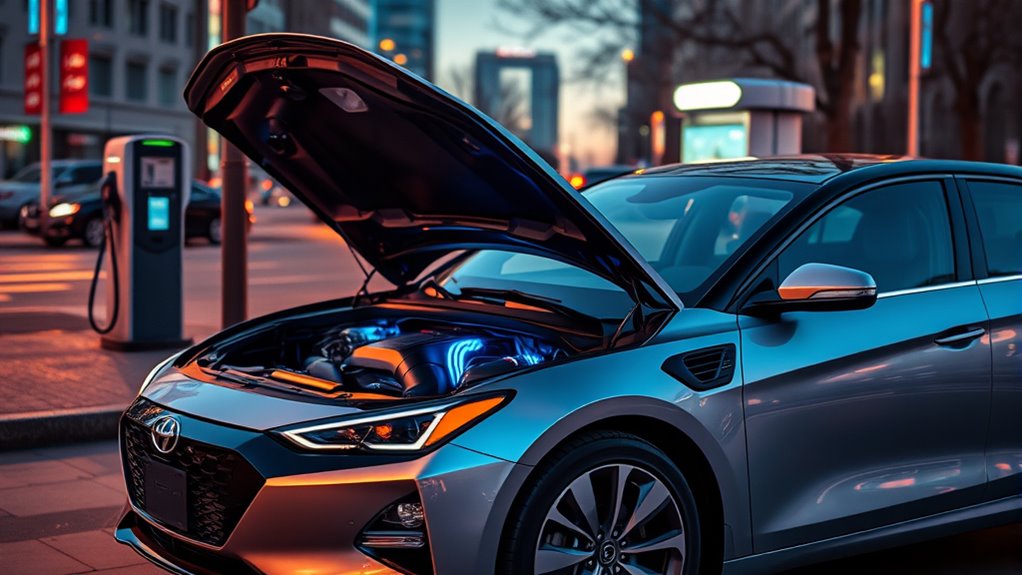
Hybrid vehicles are redefining how we think about power and efficiency, but balancing these elements remains a technical challenge. At the core of this challenge is managing how the vehicle shifts seamlessly between electric and combustion power. When you press the accelerator, your hybrid’s system must decide whether to draw energy from the hybrid battery or engage the internal combustion engine. This balancing act isn’t just about performance; it’s about maximizing fuel economy and reducing emissions. To achieve this, engineers have developed complex control systems that constantly monitor driving conditions, battery state, and power demands. These systems work behind the scenes to guarantee you get the best of both worlds — power when needed, efficiency when possible.
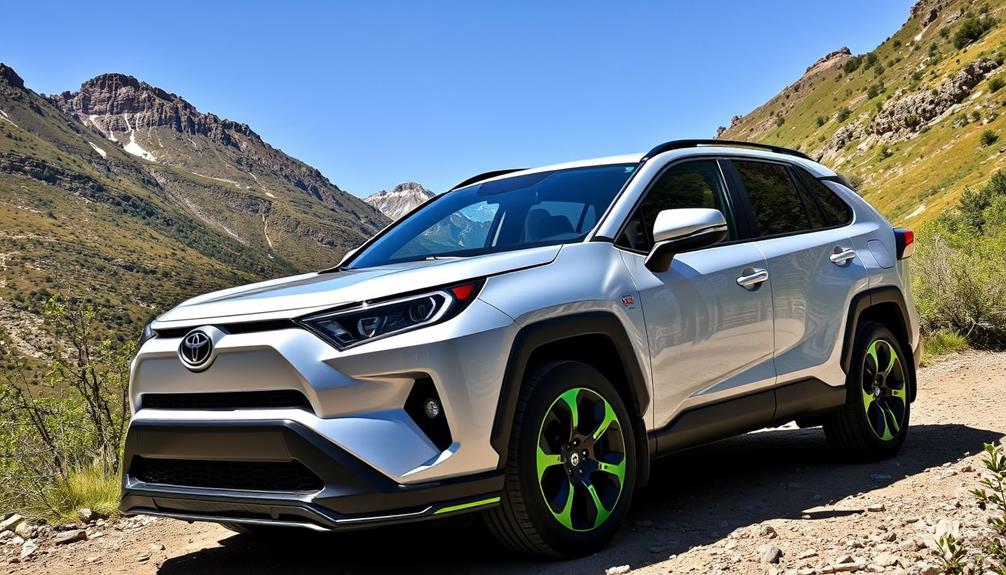
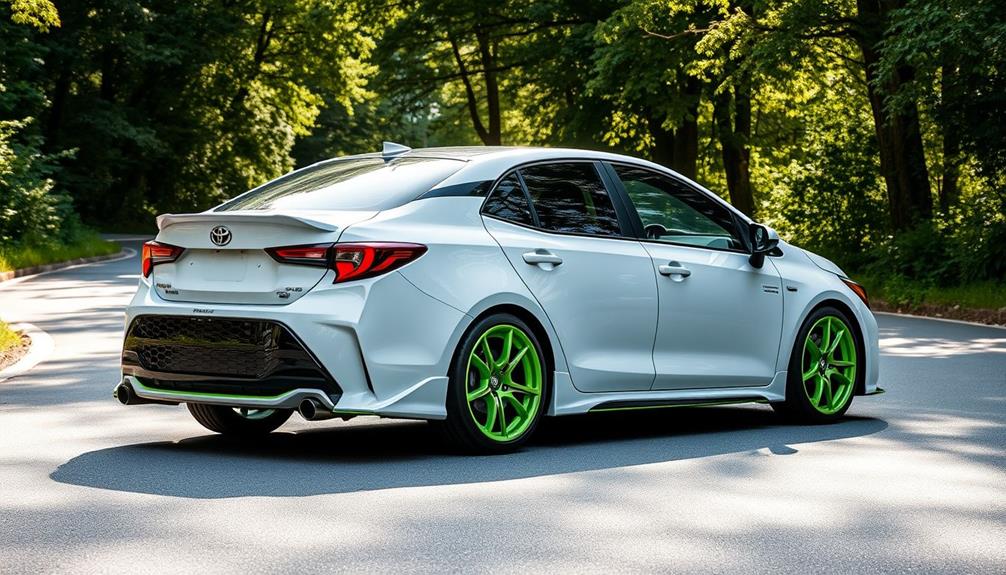
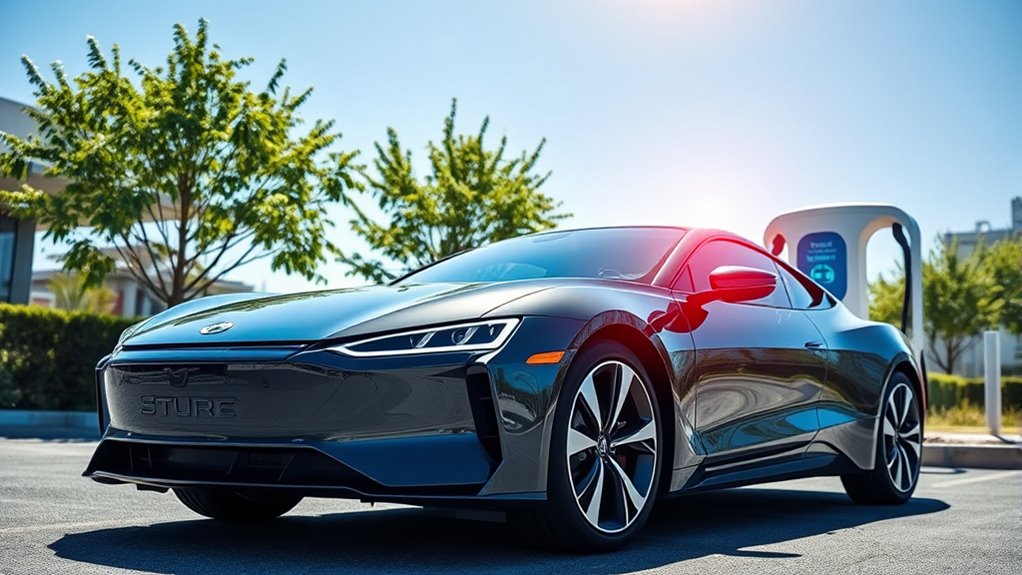
Hybrid systems seamlessly balance electric and combustion power to optimize performance and fuel efficiency.
A key component in managing energy flow is regenerative braking. When you brake or slow down, the system captures kinetic energy that would otherwise be lost as heat. Instead, it converts this energy into electrical energy and stores it in the hybrid battery. This process not only recovers energy but also reduces reliance on the internal combustion engine during low-speed driving. As you brake, sensors detect your deceleration and activate regenerative braking, which smoothly integrates with traditional braking systems to maximize energy recovery without sacrificing stopping power. Over time, this recovered energy enhances the hybrid battery’s capacity, allowing you to drive longer distances on electricity alone before the engine kicks in again.
The hybrid battery plays an essential role in balancing power, acting as a buffer that supplies electric energy when needed and stores excess energy during regenerative braking. Its capacity and health directly impact how efficiently your hybrid vehicle operates. Advanced battery management systems monitor the battery’s charge level, temperature, and overall health, guaranteeing it remains in peak condition. When the battery is full, excess energy from regenerative braking is stored efficiently, preventing waste. Conversely, when the battery is low, the system intelligently decides to draw power from it, supplementing the engine and reducing fuel consumption. This dynamic exchange between the hybrid battery and the engine is what allows hybrid vehicles to deliver a seamless driving experience that balances power and efficiency.
In essence, the harmony between regenerative braking, the hybrid battery, and the vehicle’s control systems is what makes modern hybrids so effective. You benefit from smoother acceleration, more efficient energy use, and reduced emissions. As technology advances, these systems will only become more sophisticated, enabling hybrids to better balance power and efficiency while delivering a driving experience that’s both powerful and eco-friendly. Additionally, innovations in necessary cookies and data analysis are helping manufacturers optimize these control systems for even better performance.
Frequently Asked Questions
How Does Temperature Affect Hybrid Power Management?
Temperature affects hybrid power management by influencing thermal efficiency and temperature regulation. When the engine runs too hot or cold, it can reduce efficiency and increase wear. You’ll notice the system adjusts power sources to optimize performance, ensuring the engine reaches ideal operating temperatures quickly and maintains consistent thermal efficiency. This balance helps improve fuel economy, reduces emissions, and prolongs engine life, all while keeping your hybrid running smoothly.
Can Hybrid Systems Adapt to Different Driving Styles?
Like a chameleon adapting to its surroundings, your hybrid system adjusts to your driving style. It analyzes your driving behavior to optimize power distribution, switching seamlessly between electric and combustion modes. Whether you accelerate smoothly or drive aggressively, the system learns and responds, enhancing efficiency and performance. This adaptability guarantees your hybrid works in harmony with your habits, making every drive tailored and efficient.
What Are the Long-Term Reliability Concerns?
You should be aware that long-term reliability concerns include battery degradation over time, which can reduce electric range and performance. Additionally, if the hybrid system lacks proper system redundancy, failures in critical components might lead to costly repairs or complete system failure. Regular maintenance can help mitigate these issues, but understanding that both battery health and system robustness are key to ensuring your hybrid vehicle remains dependable over years of use.
How Do Hybrids Optimize Battery Lifespan?
You can optimize your hybrid’s battery lifespan by minimizing battery degradation and managing power cycling effectively. Avoid frequent deep discharges and high-speed charging, which accelerate degradation. The vehicle’s control system helps by intelligently balancing the battery’s charge and discharge cycles, reducing unnecessary power cycling. Regular maintenance and driving habits that favor steady, moderate power use also extend your battery’s life, ensuring reliable performance over time.
Are There Environmental Impacts From Hybrid Power Sources?
You should know that hybrid power sources do have environmental impacts, but they also offer benefits like emission reduction. By integrating renewable energy where possible, you can further minimize these impacts. Hybrids help reduce reliance on fossil fuels, lowering greenhouse gases. However, manufacturing and disposing of batteries can cause pollution. Overall, combining renewable integration with hybrid technology makes a positive difference in the environment, but some impacts remain.
Conclusion
You’re like a skilled conductor, harmonizing the fiery hum of combustion with the gentle whisper of electric power. When you strike the perfect balance, you create a symphony of efficiency and sustainability that moves the world forward. Embrace this dance, knowing each choice fuels a brighter, cleaner tomorrow. In this delicate choreography, your role becomes a beacon of hope—guiding us toward a future where power and preservation shine in perfect unison.